Oracle AI World – Day 3

Day 3 was the last day of Oracle AI World and whilst it was only a half day, it was one of my favourites! We all breakfast together, before going our separate ways. It was a lovely start to the day. I managed to fit in two sessions, one on AI Powered EPM and the final one was Amplifying Human Potential. I had lunch with lots of my fellow ACE program members, before we all went off on our ACE Adventure to the Atomic Museum.

The first session was on AI Powered EPM. Not only was the customer panel hosted by Marc Seewald, the EPM Product Manager, but I was able to sit in the front row next to Andy King, the King of EPM. I was surrounded by extensive EPM experience and it was extremely interesting. I particularly liked the inclusion of Andrew, the VP of Finance at Oracle. It was really interesting to hear his perspective on the value EPM brings to Oracle’s internal Finance processes.
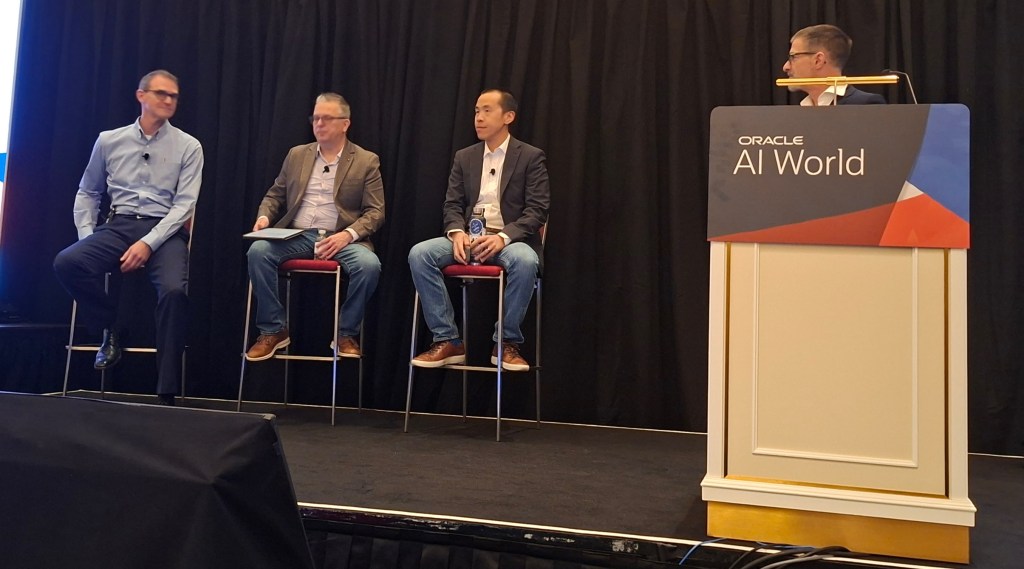
All members of the Panel had extensive experience of Finance Transformation. EPM has been a fundamental part of their financial planning, albeit in different areas. As an EPM novice, it was really interesting to hear the different ways EPM has added value. It definitely has made me want to find out more about EPM. Hopefully I can share my learnings in the future.

The second, and last session of the day was Amplifying Human Potential. Again it was a panel discussion, this time about using HCM Cloud to improve business processes. As a HCM Nerd who loves innovation,  this was definitely the session for me.

It was a really good panel, Julie has a HCM background,  Kamwin has a systems background and Paul recently led an implementation of Recruiting Cloud. It was a great balance of Oracle experience and system viewpoints.
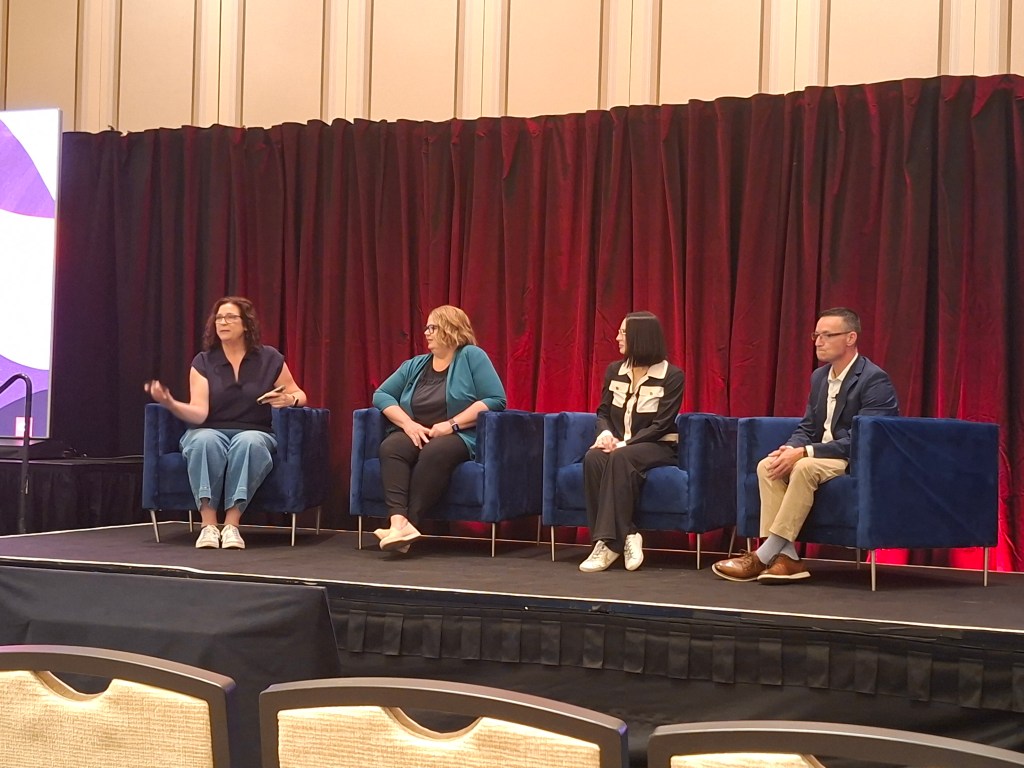
Not only was the knowledge sharing from the panel really inspiring, what I took away most from the session was how much I love the HCM Cloud community. During the Q&A at the end, a number of people asked for advice. One key question was around how to handle incorporating innovation when the organisation had only just gone live and were struggling to keep on top of BAU work. The panel were very reassuring and provided personal experiences,  but so did the audience. A number of people, myself included, stopped to speak to the question asker at the end to provide advice and reassurance. I highlighted the importance of Cloud Success Navigator as they could record the new features that are of interest on their roadmap, then review them in the future when they feel in a better place to start switching on additional functionality. The general conversation and support given made me very proud of the community.

I can’t believe this is the end of my AI World blogs. I hope you found them all interesting. I’d love to hear what you think. Thanks for joining me on this journey.

Please note all screenshots are the property of Oracle and are used according to their Copyright Guidelines
Oracle AI World – Day 2 Part 2

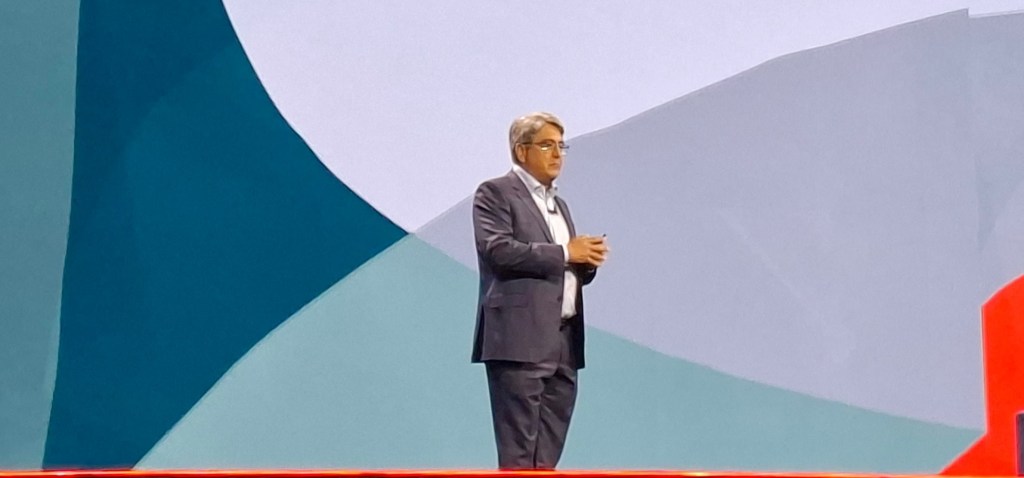
Welcome to second blog on Day 2 from Oracle AI World. My earlier post on the HCM and EPM sessions from Day 2 can be found here. This post focuses on Steve Miranda’s Key Note, which I was fortunate enough to sit in the front row for.

As a Functional Consultant, Steve Miranda’s keynote was a must see. For those of you who don’t know, Steve is the Executive VP of Applications Development.

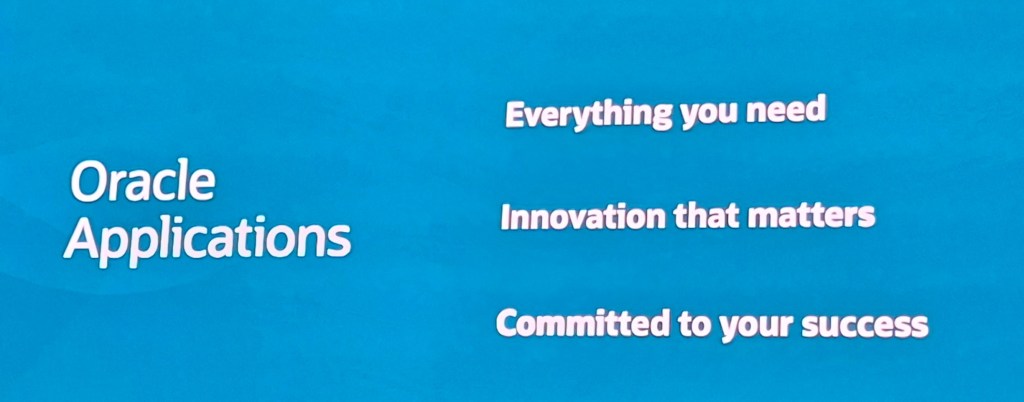
This slide was a good summary of the overall content of the Keynote. Fusion Apps are designed to cover all functionality that a customer needs, but continues to bring continuous innovation in areas that customers want and most importantly,  Oracle are completely focused on solutions that will enable customers to succeed in their aims. There was one statement that really resonated, “we are hyperfocused on growth”. This shows the commitment that Oracle are making to developing Fusion Apps but also to their customers.

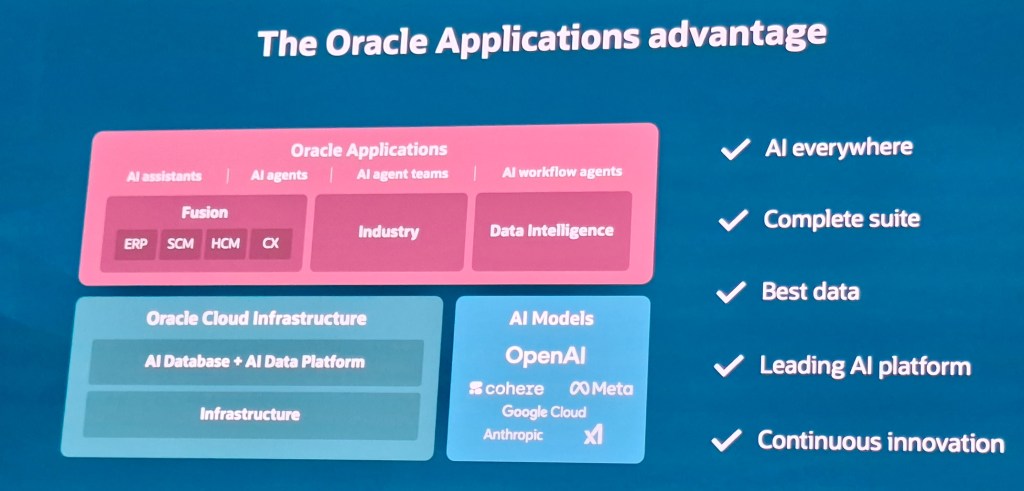
Oracle don’t only provide HCM, ERP, SCM and EPM solutions, which is what a lot of customers think of, but there are numerous industry specific solutions that are available as well. As mentioned in previous sessions, Oracle Apps have the benefits on having AI available throughout the technology stack. It has embedded AI in the actual applications, but also Oracle incorporates AI into their databases and infrastructure,  all of which Fusion uses. The addition of the flexibility that is now available in selecting the AI Large Language Models (LLMs) that customers can use, gives Oracle customers a significant advantage over users of non-Oracle ERP solutions. For other solutions, AI has generally been an afterthought, and there certainly isn’t the option to pick the LLM that best meets the need of the organisation,  usually it is decided for you.

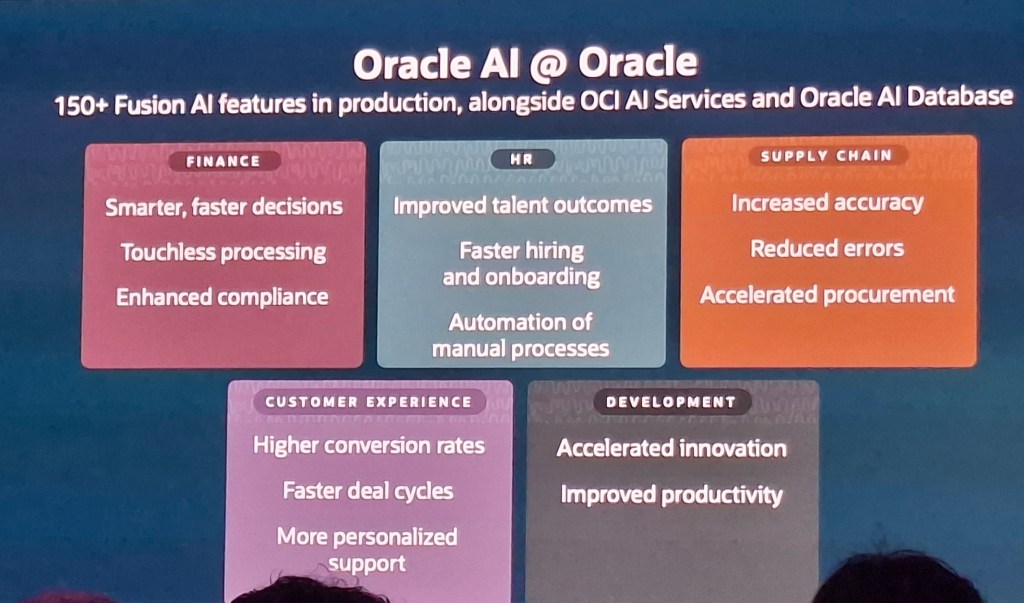
Whilst this slide was also shown in the Partner Summit, it reiterates that Oracle have AI solutions across all aspects of Fusion, but not just within the functional space, there’s additional AI functionality embedded into the development tools that Oracle offers too. The fact that customers can use the same functionality that the Oracle Dev team uses, for example VBS and AI Agent Studio, shows that Oracle are supporting their customers to extend their applications with the best tools possible.

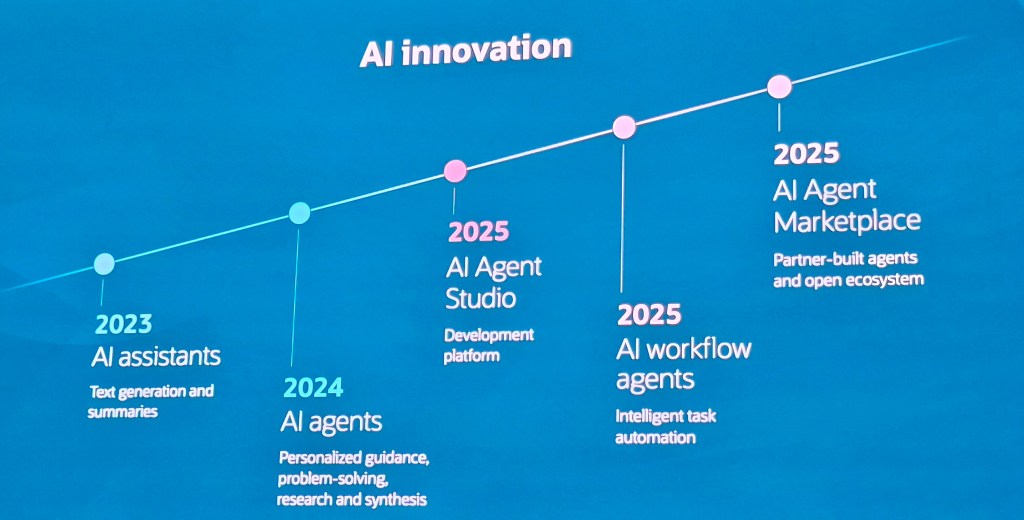
Its remarkable to consider how much progress Oracle have made in their AI journey. I did know it had progressed rapidly, but this time line really brought it all home. To think we’ve moved from the introduction of the first AI Assistant in 2023, to the AI Agent Studio and Marketplace in 2 years is phenomenal. Whilst I know Oracle won’t be resting on their laurels, its hard to think where they can go to next. Having said that, Oracle have reassured us that there will always be a ‘Human in the Loop’.

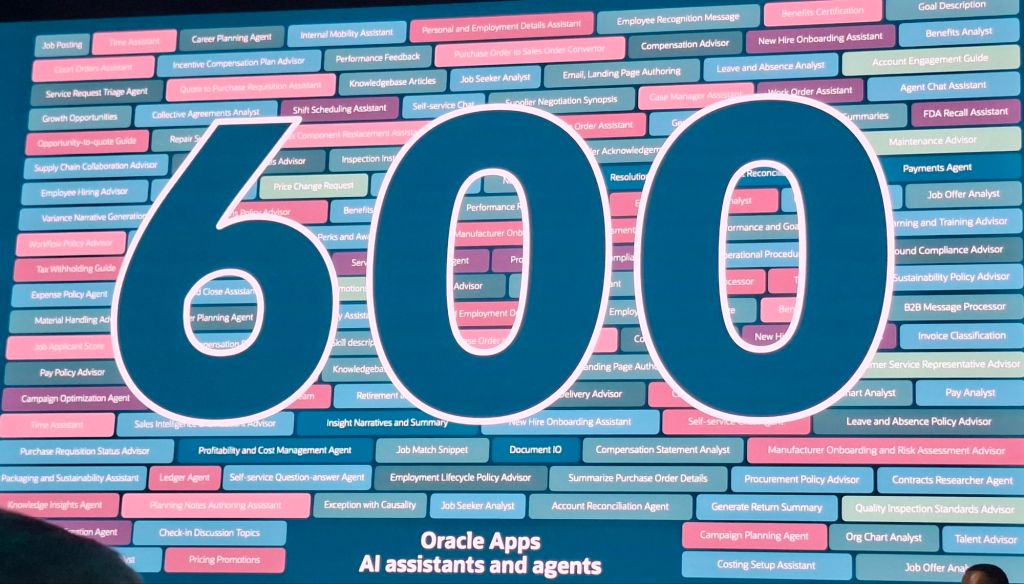
This is an eye watering number and I think it should be appreciated. At Oracle CloudWorld in London in March, Steve announced there would be 100 AI Agents developed in 2025, 7 months later and there are over 600! It should be caveated that 400 are within Fusion and the remaining 200 are across the Industry specific solutions. On top of this, there are a significant number of AI Agents available on the AI Agent Marketplace that was announced this week. As more Partners have their AI Agents vetted by Oracle, this number will continue to grow. This means the development of AI Agents will increase two fold, by Oracle’s in house Development Team but also by third parties who can share their own solutions on the Marketplace. This gives customers the greatest flexibility in obtaining the latest technology in AI Agents without the need to have internal development resource.

This screenshot shows the flexibility of LLMs that Oracle now allow users to utilise in their AI Agents. As the image shows, when creating or modifying an AI Agent, on the Credentials tab,  you can select the appropriate LLM and enter the relevant key. It should be noted that some options can only be used with the premium options and therefore aren’t free.

Steve also reiterated that Oracle will never share customer’s data via AI tools as it always remains within customer’s systems, but equally as importantly Oracle will never use a customer’s data to train their LLMs. This is a frequent question that customers often ask, so it was really good to have this reiterated.

That wraps up my summary of Day 2 at Oracle AI World in Las Vegas 2025. Day 3 was a short one, but was one of my favourites. Please keep a look out for my blog on this which will be coming imminently.

Please note all screenshots are the property of Oracle and are used according to their Copyright Guidelines
Oracle AI World – Day 2 Part 1

Day 2 was a jam packed day! I started with a session on using AI to accelerate HR processes; had another wander around the stands learning about all the upcoming features, attended Steve Miranda’s inspirational Key Note and finished the day with a session on AI use in EPM, which is a product I’m trying to learn more about. It was also the day of the Oracle ACE dinner and the party with Def Leppard, but I was so tired I gave the party a miss! There was so much happening on Day 2 that I’ve had to split it out into 2 blogs. This one will cover Accelerating HR with AI and EPM and AI. Steve Miranda’s key note will be in the second blog.

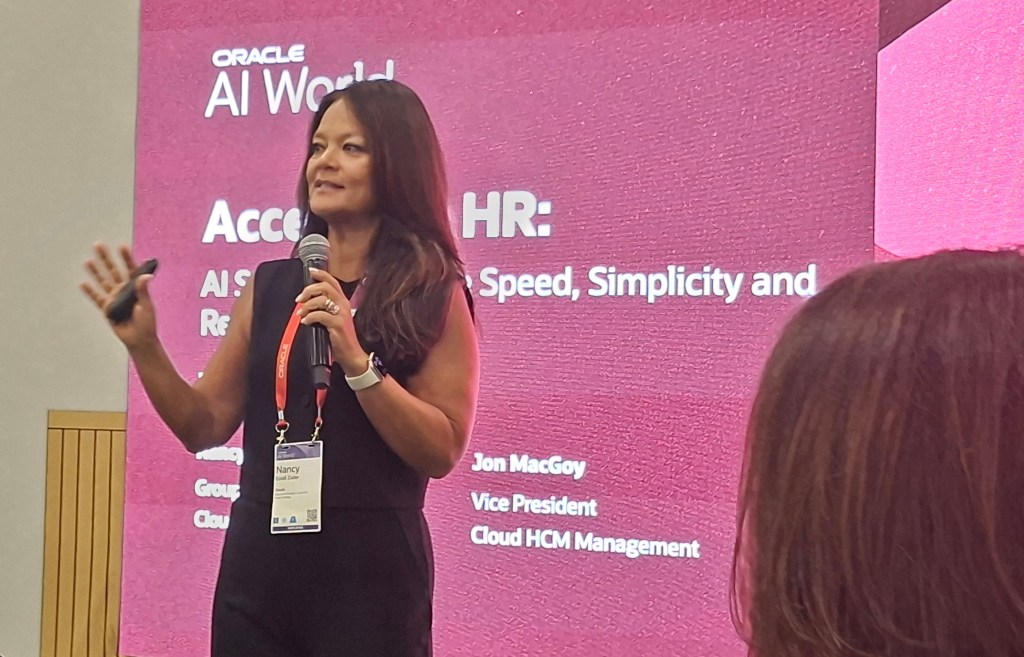
As soon as I saw Nancy Estell Zoder was presenting this session, I knew I wanted to see it. Having attended the Partner Day following Oracle CloudWorld in London, Nancy was a really dynamic presenter and it made me want to attend this one, I wasn’t disappointed! There was the added bonus of Jon MacGoy presenting too.

The overall introduction was really interesting. As someone who loves a stat, I loved hearing how successful the HCM Cloud product has been this year. It also recapped the breadth of the product, which whilst it is known by most, it’s always helpful to see the info graphic listing them all and how they relate to each other.

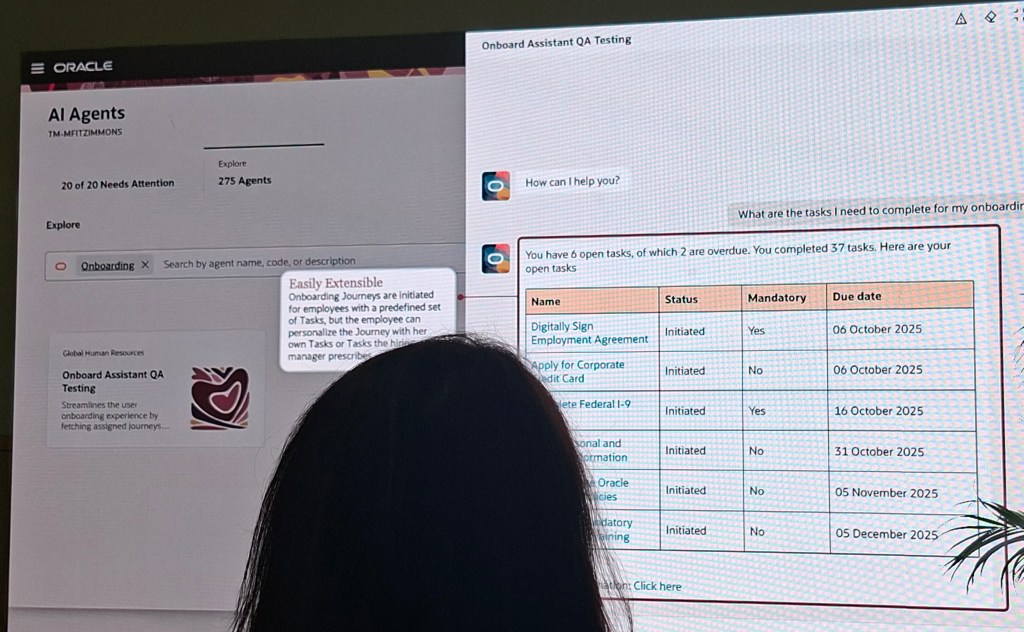
The feature that Jon demoed was one of my absolute favourites of the whole conference. Oracle are introducing a new way to use Journeys, Personal Journeys. If a user has some tasks they wish to carry out, but don’t want to write a to do list to remind them, Oracle have now provided a systemised solution. A user can now add tasks to a Personal Journey and create their own custom checklist of activities. On top of this, an AI Agent can be used to make the creation of the Personal Journey more streamlined. By asking what tasks do I have outstanding, the AI Agent will generate a Personal Journey that will incorporate all outstanding tasks that the user wishes.

AI World has really triggered an interest in EPM. I’ve enjoyed discussions with Product Managers, colleagues and other attendees on EPM. Given this, I was very keen to learn more about AI use in EPM. The session was a customer forum, but was really interactive. Numerous questions were asked of the audience who responded by displaying paddles with responses on.

It was an interesting discussion giving the perspective from both IT and Finance. The key points were the speed and accuracy of Financial Planning, which was cumbersome prior to the use of EPM. It has definitely triggered a lot more questions for me, which I will do further research on. When I do, I will share it with you!

That wraps up my summary of the first part of Day 2 at Oracle AI World in Las Vegas 2025. Keep an eye for more posts, as I’ll be sharing write-ups from Steve Miranda’s key note and also from day 3.

Please note all screenshots are the property of Oracle and are used according to their Copyright Guidelines
Oracle AIWorld – Day 1

Day 1 was a completely different experience to Day 0. The crowds descended, and to be honest, it was a bit overwhelming. On Day 0, I had the freedom to drop into any session I fancied; by Day 1, everything was packed and sessions were full to the brim. Rather than resting on my laurels, I took the opportunity to explore the exhibition stands, chat with Oracle Product Managers, and get a sneak peek at what’s coming soon in the Fusion product line.

My background is in HCM, so I really appreciated the chance to speak with the ERP and SCM Product Owners and watch their demos, which, unsurprisingly, centred around AI Agents. There’s been a fair bit of frustration among customers over the limited AI functionality in the ERP space, so I’m genuinely pleased to see how much is now in the pipeline. There are some brilliant AI Agents on the horizon, and it’s clear that ERP customers have a lot to look forward to.

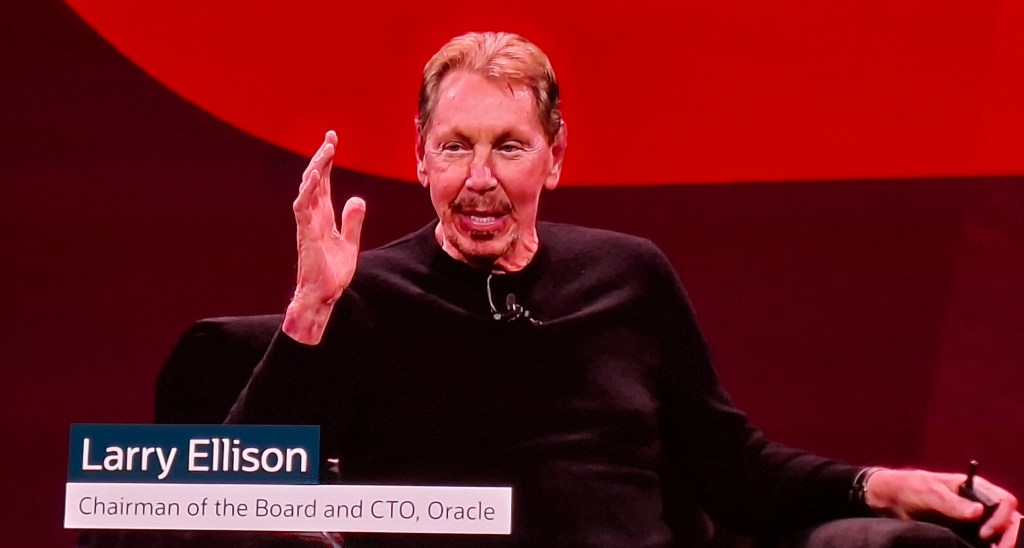
The big Key Note of Day 0 was Larry Ellison! Sadly he wasn’t able to join us in the room, but his presence was still very much felt! The key points that I immediately think of are the innovations that Larry and Oracle have been involved in, but might not directly impact our work in Fusion, but actually listening back to it, there were a number of changes covered that actually are relevant to us all.

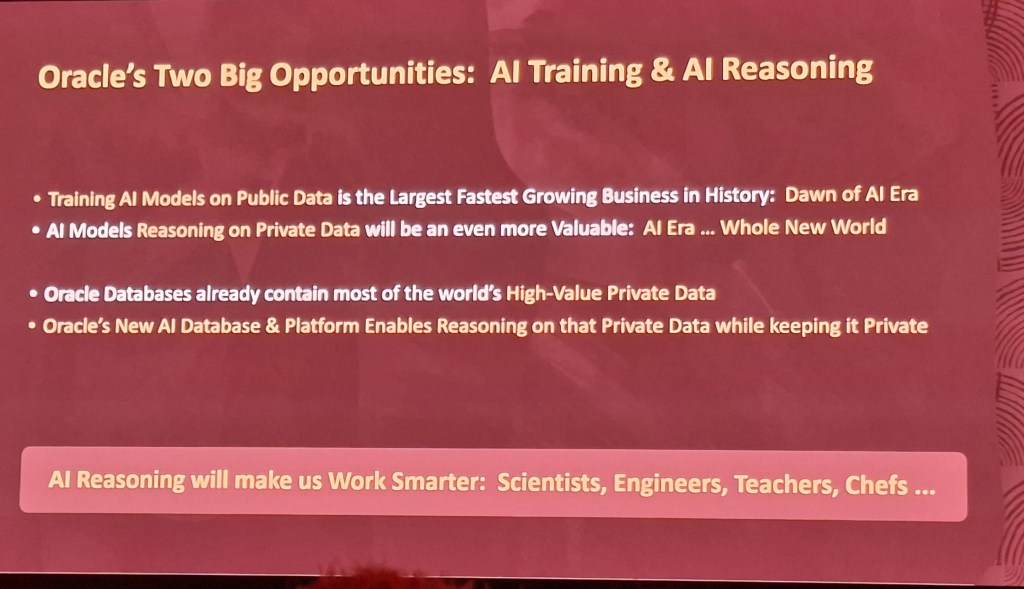
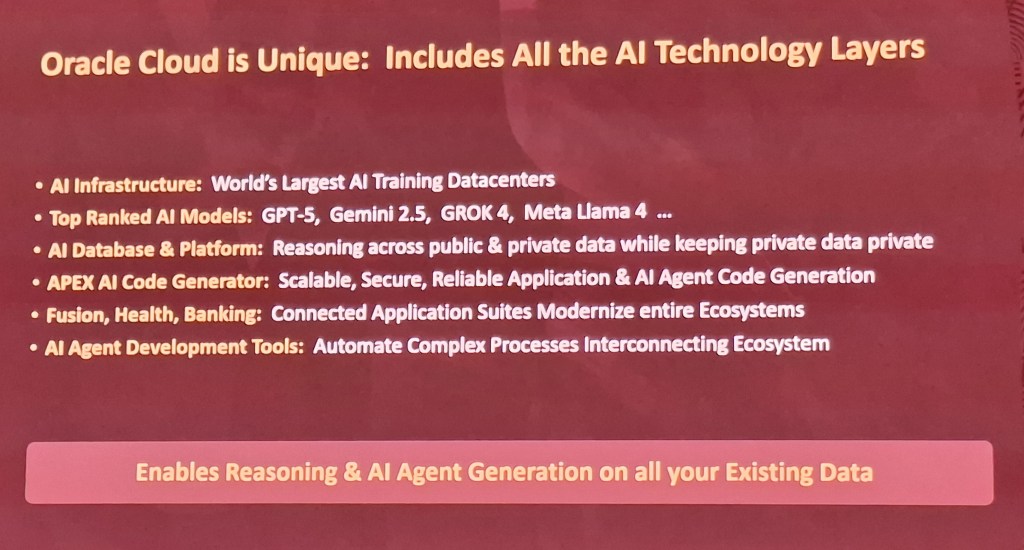
I think this slide is particularly significant. It highlights that Oracle isn’t just focused on training AI models, but also on developing AI Reasoning. If, like me, you weren’t familiar with the term, AI Reasoning refers to the ability of AI systems to apply logic to analyse information, draw inferences, and reach conclusions, essentially mimicking human thought processes. It goes beyond basic pattern recognition by using structured logic and knowledge to solve problems, make decisions, and deliver transparent, explainable outputs. This approach will enhance the quality of AI Agents and, in turn, improve the experience for all Oracle Fusion users.

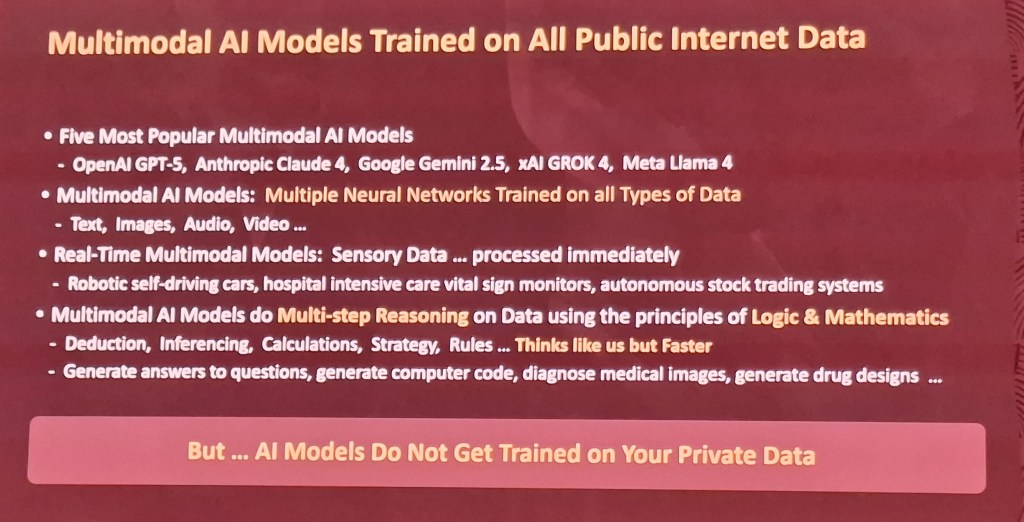
This is another crucial point. Many organisations are understandably concerned about how their data is handled when using AI. It’s reassuring to know that not only is your organisation’s data not shared, but it’s also not used to train Oracle’s AI models. Another exciting development is the flexibility around which AI models can be used. You’re no longer limited to a single provider, Fusion AI Agents now support models from OpenAI, Claude, Gemini, xAI and Meta. So, if your organisation has a preferred or approved model, there’s a much greater chance it can be integrated seamlessly.

This slide really captures the essence of Larry’s announcements. Oracle stands out by offering a complete stack, infrastructure, database, and applications, all from a single provider. On top of that, there are industry-specific solutions, such as those tailored for healthcare. By choosing a fully integrated Oracle solution, organisations can ensure they’re getting the most out of the available AI functionality. It’s a exciting proposition for customers looking to maximise value and innovation.

Larry’s passion was unmistakable throughout his keynote, but I’ve aimed to keep this focused on the key takeaways that matter most to Oracle users. If you get the chance, I’d highly recommend watching the keynote back online, the future really is here. Keep an eye out over the next few days, as I’ll be sharing write-ups from the remaining two days of the event. There’s plenty more insight and innovation still to come.

Oracle AI World – Day 0 Part 2

Following on from my previous blog covering Day 0 of Oracle AI World (do give it a read if you haven’t already), this post shifts the focus to the afternoon’s Partner Success Summit. Day 0 served as the partner-focused launch for Oracle AI World, and while my earlier piece explored the morning sessions, this one dives into the insights and highlights from the summit itself.

The session was hosted by Leah Yomtovian and featured insights from Oracle’s new CEOs, Clay Magouyrk and Mike Sicilia, alongside Steve Miranda, Executive Vice President of Applications Development. It was genuinely refreshing to hear directly from such senior leaders about Oracle’s strategic direction and, importantly, how Partners are being positioned within that vision.

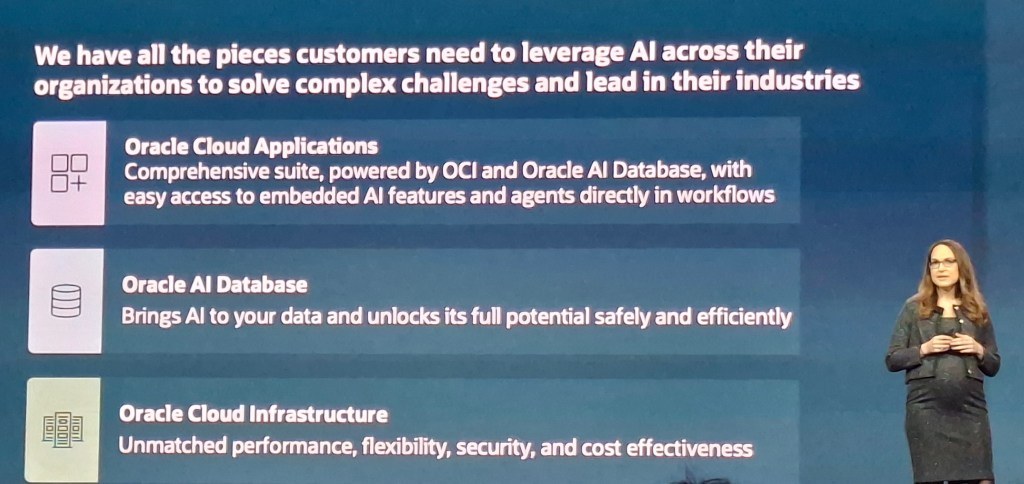
What truly sets Oracle apart from other providers is its comprehensive suite of solutions – spanning Applications, Database, and Infrastructure. For Fusion Apps customers, this means we benefit from the best of all three. The platform is powered by OCI and leverages Oracle’s database technology, all of which is designed to scale seamlessly for AI. This enables customers to access cutting-edge innovation straight out of the box, without the need for complex integrations or custom builds.

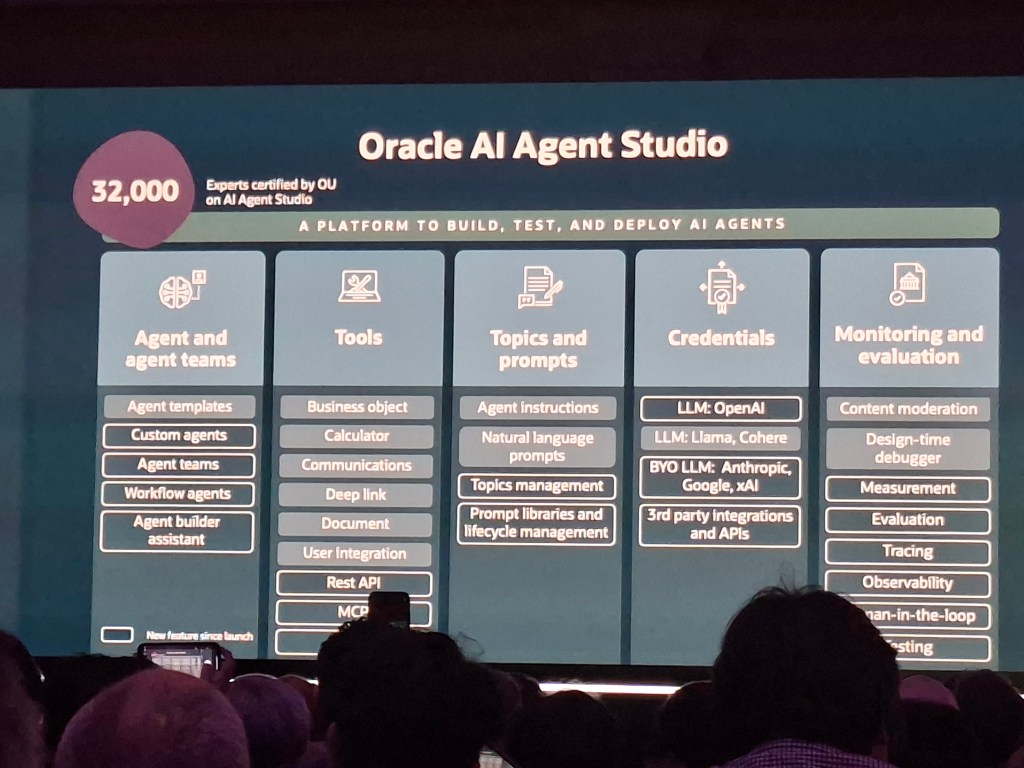
I’m already a big fan of AI Agent Studio, it offers our customers the flexibility to use out-of-the-box AI Agents or to copy and tailor the seeded ones to suit their needs. I’m also proud to be among the 32,000 individuals who’ve successfully earned their AI Agent Studio certification.

The slide below summarises the impressive functionality that makes up AI Agent Studio. The features shown in white boxes are all new additions since its initial launch in release 25C, highlighting the rapid pace of development Oracle is driving.

One standout capability is Agent Teams, which allow multiple niche AI Agents to be linked together to deliver complex, end-to-end solutions, which is a real game changer. The ability to call REST APIs opens the door to integrating data from third-party systems directly into the AI Agent, creating exciting opportunities for broader integration.

The introduction of a Prompt Library is another brilliant enhancement. It empowers users to be more creative by browsing, copying and tweaking prompts to meet business needs, all without requiring deep coding expertise.

Support for OpenAI, Anthropic, Google, and xAI means users can now work with their preferred Large Language Models (LLMs), offering even more flexibility for tailored solutions.

Finally, the monitoring tools introduced in release 25D give organisations clear visibility into how AI Agents are performing. This not only ensures optimal usage but also provides senior leadership with confidence in the value of their AI investment.

Oracle is actively exploring how AI can enhance processes across Finance, HR, Supply Chain and Customer Experience, alongside broader innovation in the development space. These advancements are all aimed at boosting productivity, speeding up processing and freeing people from repetitive tasks so they can focus on more strategic work. Since announcing a target of 100 AI Agents in the first year at Oracle CloudWorld London in March 2025, Oracle has far exceeded expectations, with over 600 AI Agents already released. The launch of the AI Agent Marketplace, where third parties can showcase and promote their custom-built AI Agents, adds even more depth to the ecosystem. Combined with the powerful capabilities of OCI AI Services and the Oracle AI Database, the opportunities for innovation and integration are truly phenomenal.

That wraps up my summary of Day 0 at Oracle AI World in Las Vegas 2025. Keep an eye out over the coming days, as I’ll be sharing write-ups from the remaining three days of the event, there’s plenty more insight and innovation to come.

Please note all screenshots are the property of Oracle and are used according to their Copyright Guidelines
Oracle AI World – Day 0 Part 1

I’d never been to Vegas before, so I wasn’t entirely sure what to expect. It’s a city that’s often described in extremes, and I was curious to see how it would all unfold. Thankfully, Oracle made the transition smooth with their Partner-focused Day 0 sessions, which offered a relaxed and informative start to what promised to be a busy and exciting week.

The first session was a brilliant way to kick things off, featuring none other than the AI legend himself, Chris Leone. If you’ve even a passing interest in how AI is being used within Fusion Apps, you’ll know exactly who Chris is. I was incredibly fortunate to hear him speak in an small setting alongside a group of fellow partners, where he shared insights, which led to lots of interesting discussions afterwards.

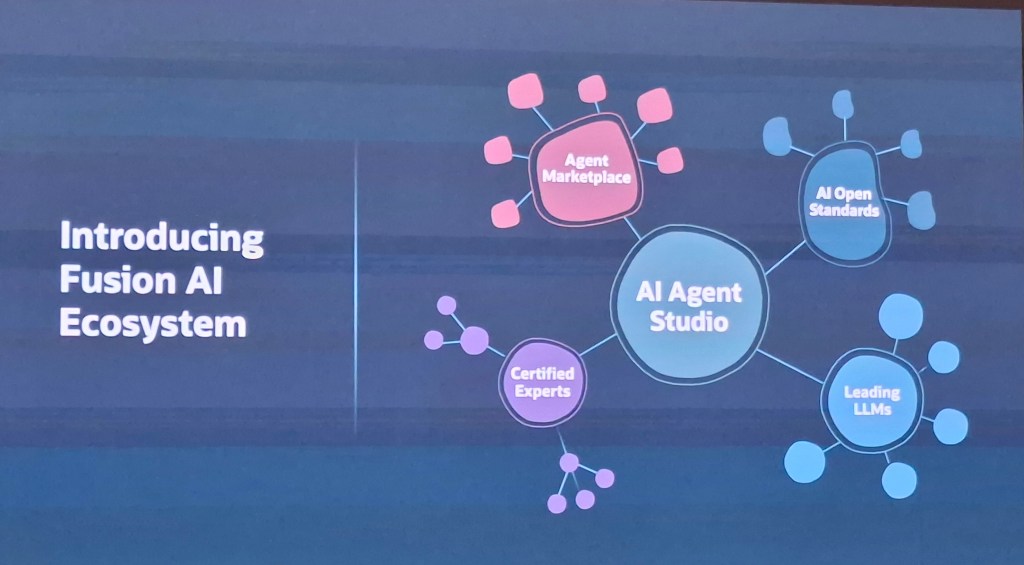
The big announcement from Oracle AI World for Fusion Applications was the launch of the AI Agent Studio Marketplace. Chris gave us an early preview ahead of the official reveal later in the week. In essence, it’s an App Store for Fusion AI Agents, allowing third parties to showcase and share the agents they’ve developed, while customers can browse and purchase those that meet their needs. This opens up exciting possibilities for organisations to access ready-made AI Agents for use cases where Oracle hasn’t yet built a native solution.

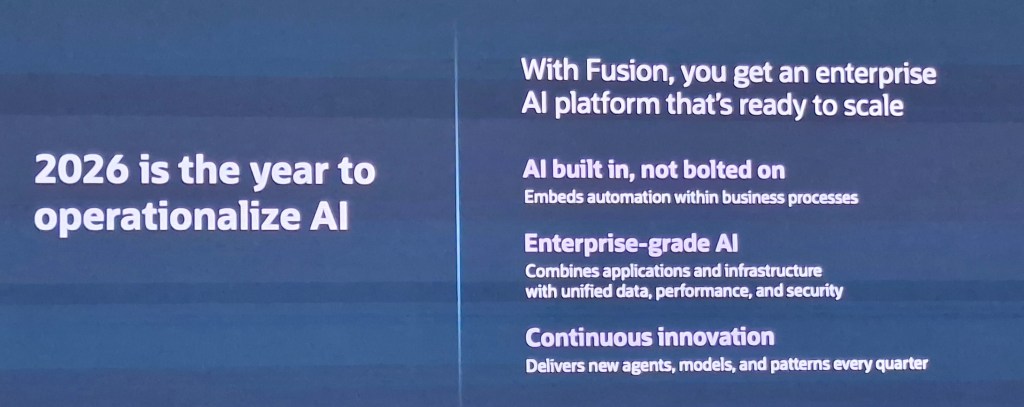
One statement that really stood out for me was: “2026 is the year to operationalise AI.” It struck a chord, especially as so many organisations have told me they’re keen to adopt AI but struggle to justify it with a clear business case. Often, the ‘why’ hasn’t been considered — it’s simply a case of needing AI because senior leadership says so. What’s exciting about AI within Oracle Fusion Applications is that it changes this narrative entirely. The AI isn’t bolted on as an afterthought; it’s embedded within the core applications, designed to enhance everyday business processes seamlessly. With Oracle’s quarterly release cycle, there’s no room to rest on your laurels — innovation is constant. The AI functionality is a key driver in this ongoing cycle of continuous improvement.

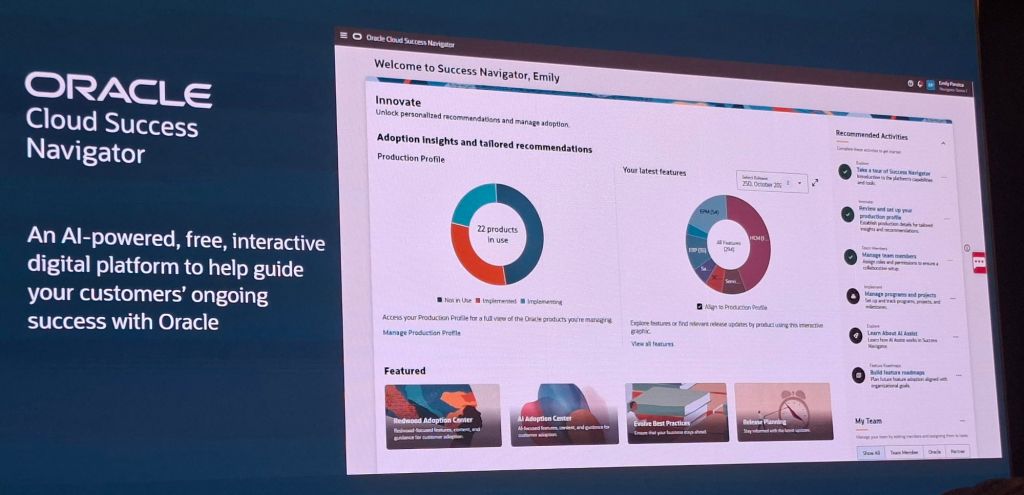
The second session of the morning was a long one, but packed with valuable insights. As soon as I saw that it included the Cloud Success Navigator, I knew I was in the right place! I even persuaded my colleague Marc to join me so he could see just how brilliant the tool is. It was also a real pleasure to finally meet Lorin Bookout in person, after having exchanged messages with her for so long — putting a face to the name made the experience all the more rewarding.

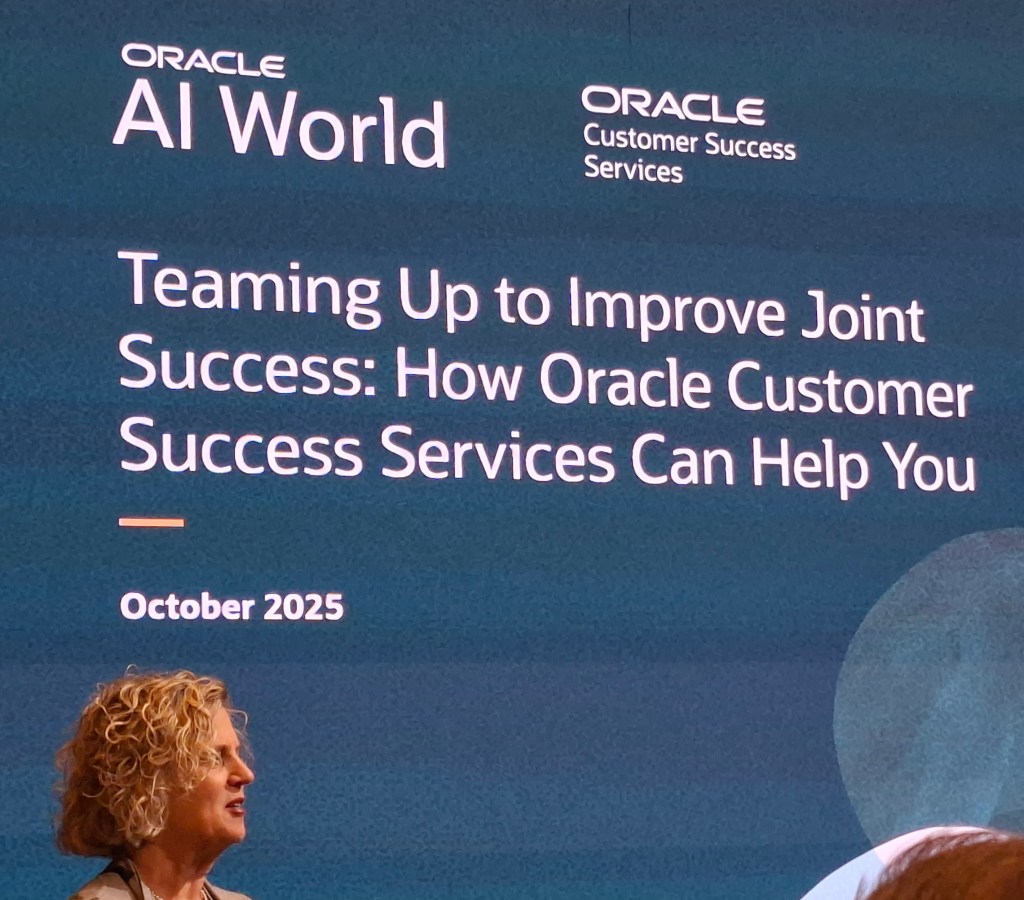
The core focus of the session was on how Oracle Customer Success Services can collaborate with Partners to deliver the best possible outcomes for our customers. The Cloud Success Navigator has played a pivotal role in enabling this three-way success, so it was encouraging to hear that Oracle Customer Success Services are embedding this collaborative approach across everything they do. It’s a clear sign that the commitment to partnership and customer value isn’t just a talking point — it’s being actively put into practice.

The introduction to Cloud Success Navigator was very well received in the room. Having been involved since the pilot phase and watching it grow into such a powerful tool has been genuinely rewarding. That said, I was quite surprised by how many organisations admitted they weren’t using it yet. It’s clear there’s still work to be done in raising awareness and helping teams understand the value it can bring.

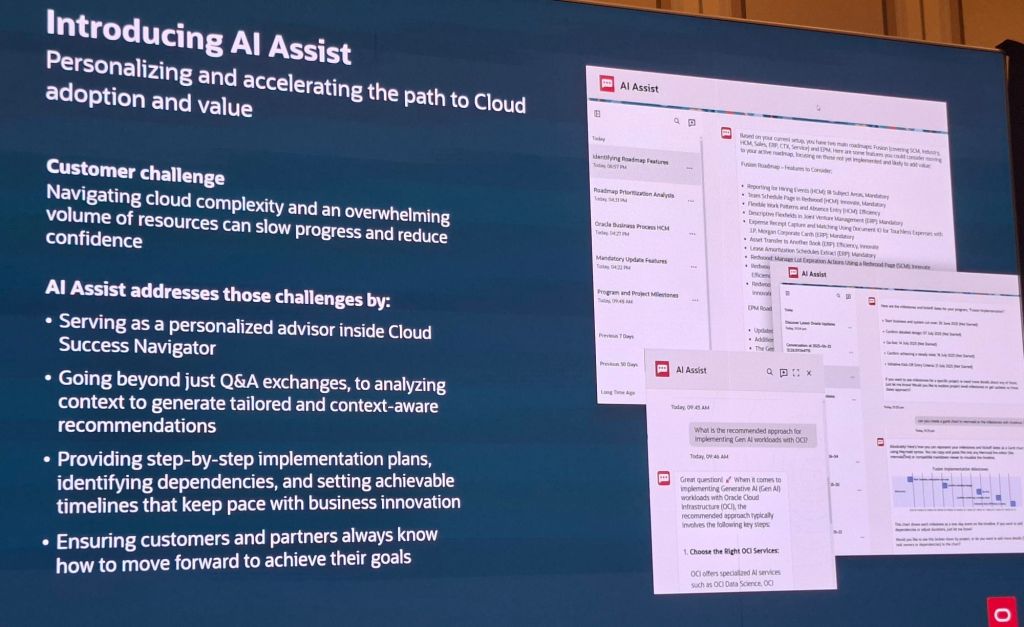
The demo of Success Navigator was very well received by the audience, but the real highlight was the new AI functionality that went live just a few weeks ago. Rather than having to trawl through Oracle documentation or Cloud Customer Connect to find answers, you can now simply enter your query into Success Navigator’s chatbot and get an instant response, complete with links to the source material. What’s more, this functionality is available to customers in the UK Gov Cage, who don’t yet have access to the full suite of Oracle AI features within Fusion Applications, as it operates as a standalone tool. This means UK Gov Cage customers can begin exploring Oracle’s AI capabilities sooner than they might have expected, giving them a valuable head start.

All in all, it was a brilliant start to my first AI World experience. If you enjoyed this, do keep an eye out for my second blog from Day 0, coming soon! I’ll be covering the key takeaways from the Partner Summit held that afternoon — definitely not one to miss.

Please note all screenshots are the property of Oracle and are used according to their Copyright Guidelines