It’s quarterly release time again and, while Talent Management doesn’t have quite the same headline-grabbing AI announcements we’ve seen elsewhere in Oracle Fusion Cloud, Release 26D delivers something arguably more valuable. It removes friction.
Across performance management, succession planning and skills, Oracle continues to focus on helping managers and HR teams spend less time navigating processes and more time focusing on their people. There is a clear theme running through many of the enhancements in this release: making the information you already have easier to access and turning time-consuming tasks into something much simpler.
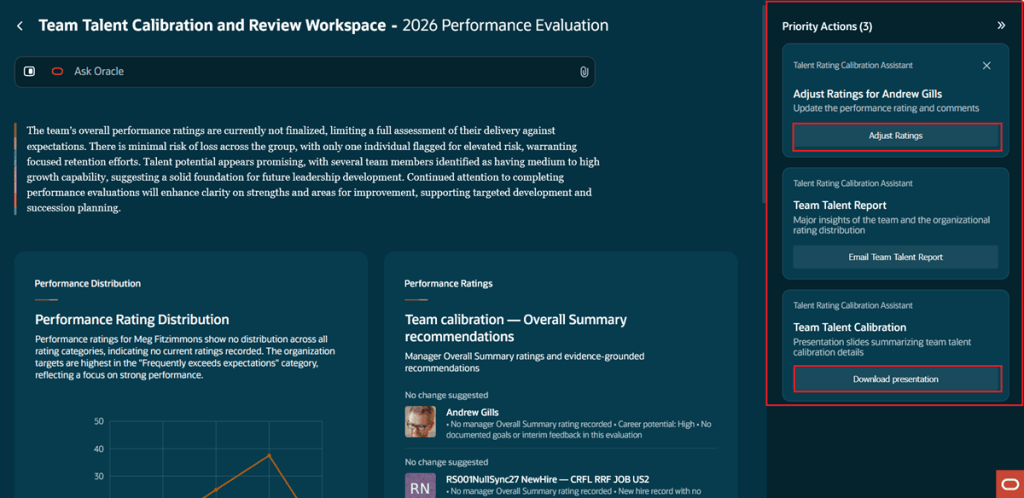
Oracle introduced the Team Talent Calibration and Review Workspace in 26C, but Release 26D feels like the point where it starts delivering real value. Managers can now see AI recommendations suggesting whether an employee’s overall performance rating should be adjusted or remain unchanged. What makes this more interesting than a simple AI-generated recommendation is the amount of information Oracle is now evaluating behind the scenes.
Rather than looking at a narrow set of data, Oracle is drawing on feedback, check-ins, goals, questionnaire responses and other performance information to build a richer picture of an employee’s contribution throughout the year. Let’s be clear, AI should never replace managerial judgement, particularly when it comes to performance discussions. However, it can help surface information that might otherwise be forgotten or overlooked during calibration sessions, especially in larger teams where managers are balancing multiple priorities.
One feature I particularly like is the new Talent Summary presentation. Oracle can now generate a ready-made presentation covering each employee’s performance and talent indicators, along with AI-generated strengths and development opportunities. Anyone who has ever spent hours building calibration packs before a talent review meeting will immediately understand the value of that enhancement.
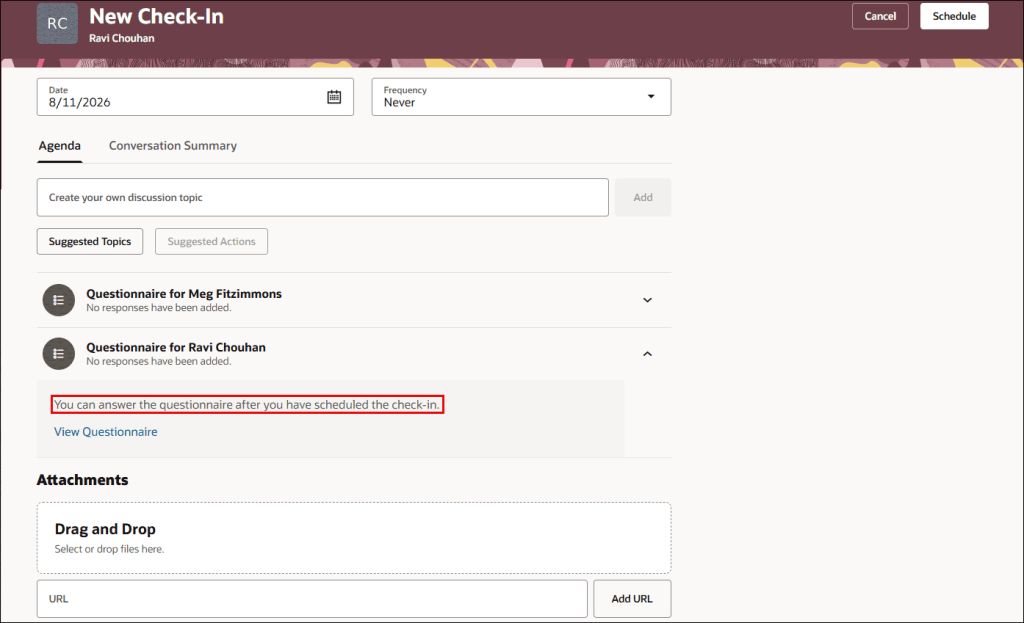
Check-ins have quietly become one of the strongest parts of Oracle Performance Management and 26D continues that steady evolution. Several enhancements have been introduced that make the experience more structured and, perhaps more importantly, easier for managers to prepare for.
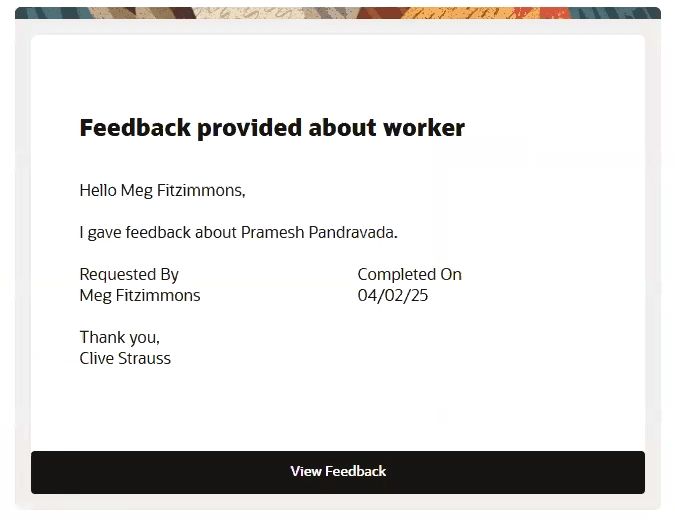
Organisations can now define default templates for check-ins, helping to drive consistency while reducing the amount of setup required when creating new conversations. Oracle has also introduced the ability to include questionnaires directly within check-ins and surface recent employee feedback alongside the discussion. What I like about these changes is that they help managers come into conversations with context already available.
One of the biggest challenges with performance management isn’t collecting information. It’s getting the right information in front of managers at the point they need it. By bringing feedback, discussion points and supporting information together in one place, Oracle is helping make those conversations more meaningful.
The AI-generated summaries introduced in earlier releases have also been enhanced, allowing Oracle to use a broader range of information when generating check-in notes and conversation summaries. Individually, these enhancements may seem relatively small. Together, they make the entire check-in process feel much more mature.
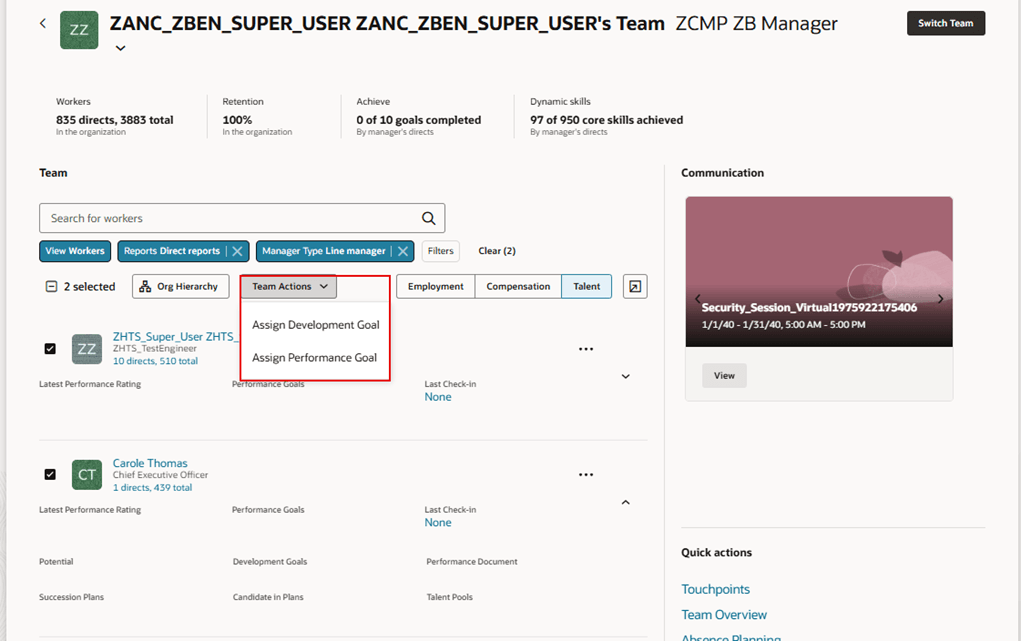
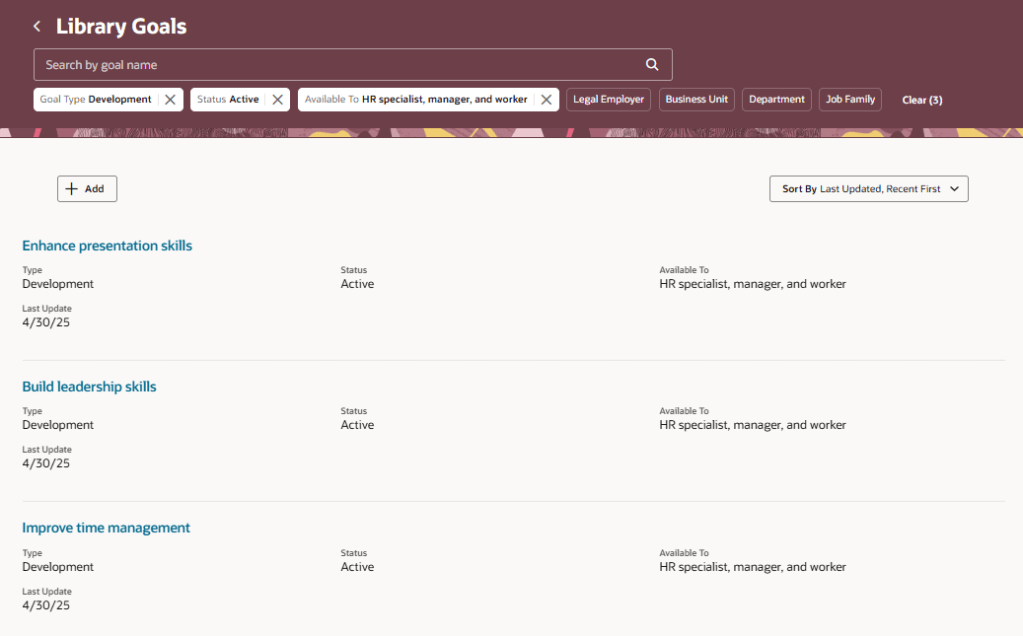
One of my favourite enhancements in this release is also one of the least complicated. Managers can now assign performance and development goals to multiple employees at the same time from the Team Activity Centre This isn’t an exciting AI announcement. It isn’t revolutionary. It’s simply practical.
Many organisations establish common goals across teams or departments, yet managers have traditionally had to assign those goals employee by employee. It’s not difficult, but it is repetitive and time-consuming. Release 26D removes that unnecessary administrative effort and allows managers to assign goals to multiple team members in a single action. Features like this don’t usually make marketing headlines, but they’re often the ones users appreciate the most because they save time every single day.
Most organisations recognise the importance of succession planning. The challenge is often finding the right information when you need it. Even organisations with well-maintained talent profiles and strong skills data can struggle to identify suitable successors quickly and consistently. Release 26D aims to simplify that process through enhancements to the Succession Planning Agent. HR teams can now describe the type of candidate they’re looking for using natural language and receive recommendations based on available workforce, talent and skills information.
What stands out to me is not necessarily the AI itself, but the accessibility it creates. For years, organisations have invested significant effort building richer talent profiles, managing skills data and maintaining employee information. Features like this finally make that data easier to use during real-life talent decisions. That’s where the true value lies.

Skills continue to be a major focus area across Oracle HCM, with many organisations looking beyond traditional job-based workforce planning and moving towards a more skills-driven approach. For customers using Techwolf, Oracle has introduced a new integration that synchronises Techwolf skills directly into Oracle Fusion HCM.
Now, I appreciate this won’t apply to every organisation. However, for those already using Techwolf as part of their skills strategy, this could remove a significant amount of ongoing administration. Maintaining multiple skills repositories is rarely a sustainable long-term approach. Automating the movement of skills data between systems helps improve consistency and gives organisations greater confidence in the information they’re using to support talent decisions. As skills initiatives continue to mature, integrations like this become increasingly important.
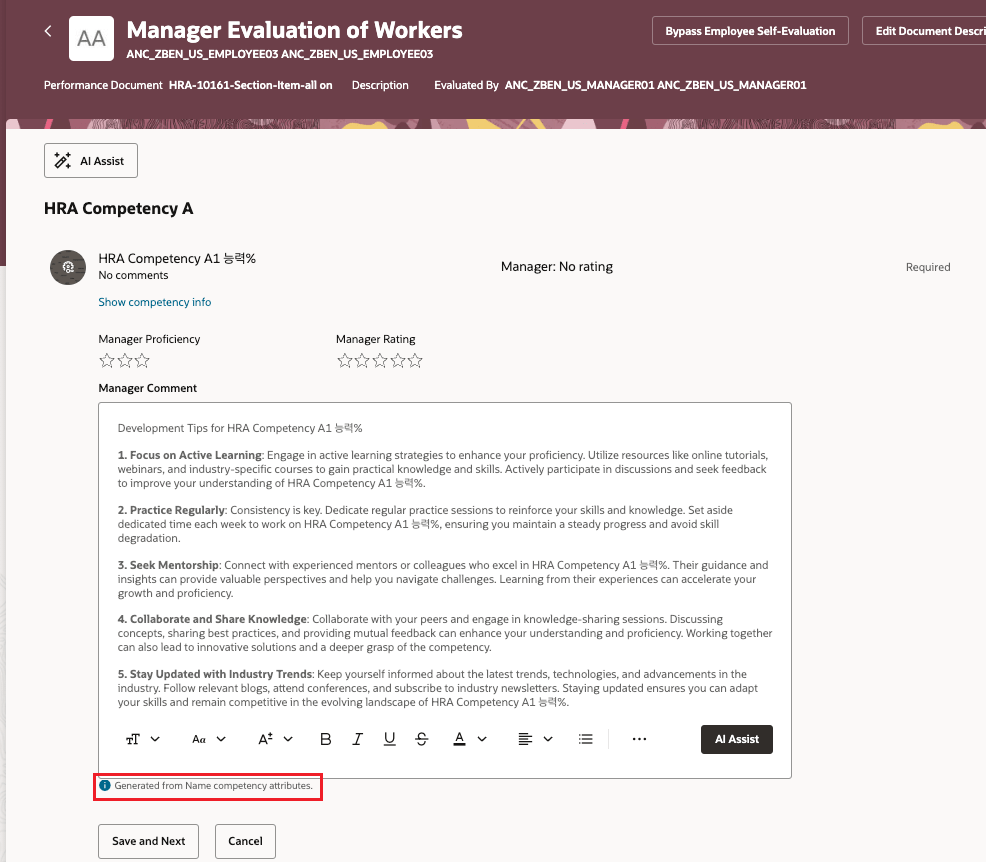
A smaller enhancement that shouldn’t be overlooked is the additional flexibility Oracle has introduced within All-in-One Evaluations. HR teams can now make greater use of star-based ratings, define read-only sections within evaluation documents and customise some of the terminology displayed to managers and employees. None of these changes are transformational on their own, but they provide welcome flexibility for organisations that have invested time tailoring performance processes around their own ways of working.
The ability to lock down completed sections is particularly useful for organisations that want tighter control over different stages of the evaluation process while still maintaining visibility for managers and employees. Sometimes success isn’t about introducing entirely new functionality. It’s about giving organisations more control over the tools they already use.
Talent Management 26D isn’t a release packed with revolutionary new capabilities, and honestly, I think that’s perfectly fine. Instead, Oracle has focused on making existing processes easier, smarter and less time-consuming. Calibration becomes more informed, check-ins become more effective, goal management becomes simpler, succession planning becomes more accessible and skills information becomes better connected.
What links all these enhancements together is a common objective: helping managers and HR teams spend less time administering talent processes and more time focusing on the people behind them. Sometimes those are the releases that deliver the biggest impact. As always, Oracle may add additional functionality to the release over the coming weeks. If any significant talent features appear, I’ll be sure to cover them in a future update.
Please note all screenshots are the property of Oracle and are used in accordance with Oracle’s Copyright Guidelines.