Oracle HCM Cloud Core HR 25D

This year seems to be flying by — it’s hard to believe we’re already talking about Release 25D! That said, Oracle has now published the initial set of documents for 25D. As is usually the case, further features are expected to be added throughout the month, but for now, let’s take a look at what’s been announced so far.

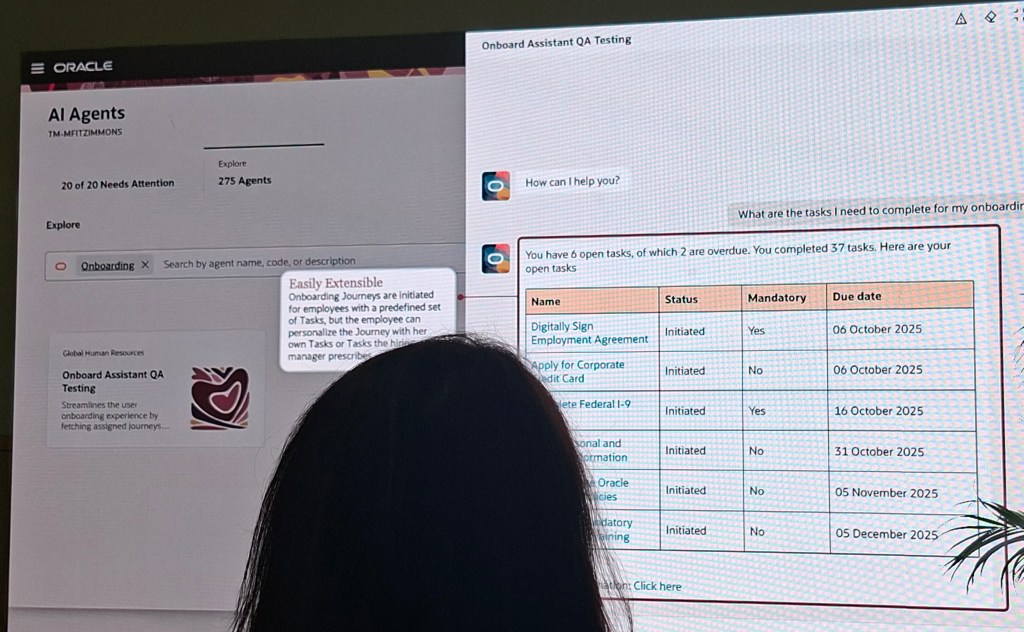
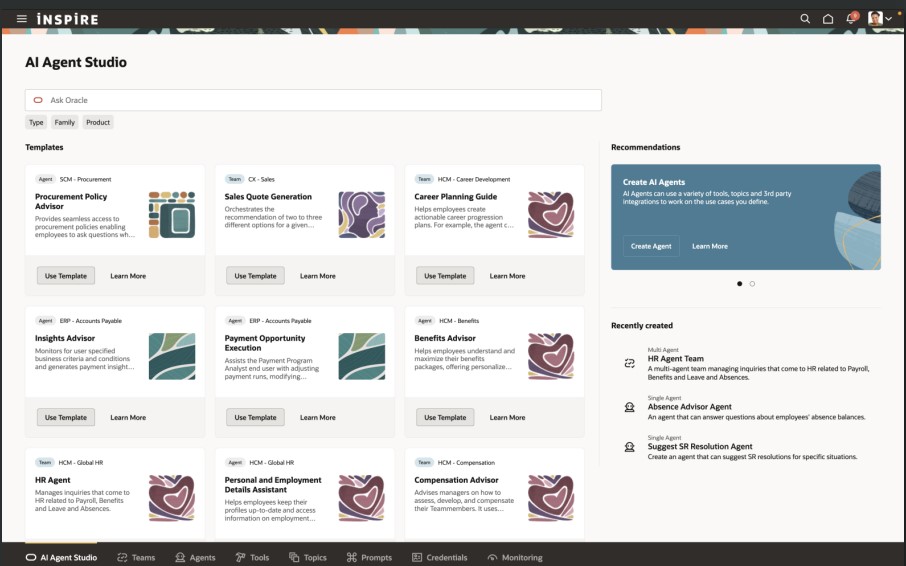
Unsurprisingly given AI Agent Studio was released in 25C and the current focus on AI, this is an AI heavy release. The first feature I want to highlight is for AI Agents. Oracle has introduced a smart enhancement to Guided Journeys on Redwood pages by allowing AI Agent tasks to appear at the section level, not just across the whole page. This means users get more focused, real-time support exactly where they need it, helping them move through transactions faster and with more confidence. Once enabled via a profile option, this feature brings cleaner UI design, smarter guidance, and reduced reliance on support teams—all without storing any interaction data. It’s a subtle but powerful upgrade that makes Redwood journeys more intuitive and intelligent.

AI Agent Embedded in Guided Journeys

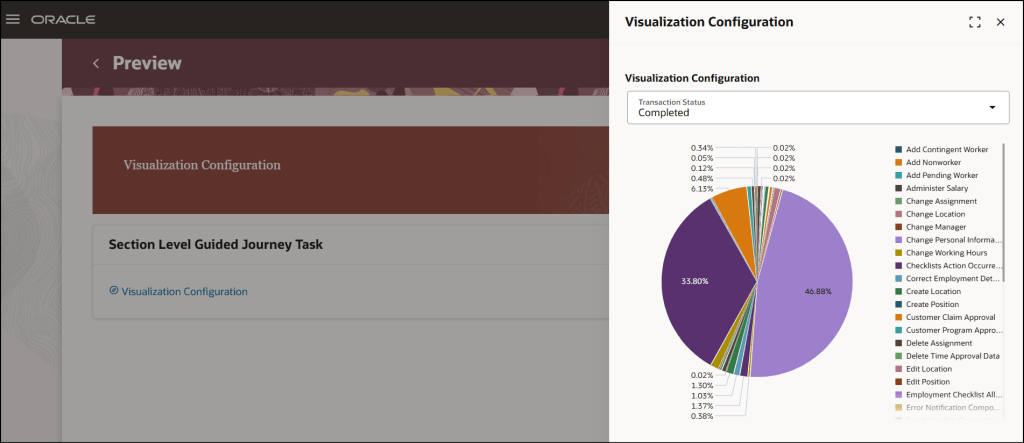
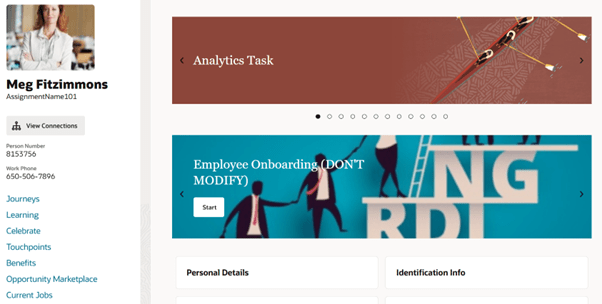
Another key focus for Oracle lately has been the embedding of Analytics into pages. As a data nerd I love any opportunity to embed a graph or other visualisation of data into a page. Oracle have now introduced a new enhancement to the Analytics task type in Journeys, the Visualization Configuration subtask, which enables users to seamlessly view Oracle Transactional Business Intelligence (OTBI) analyses, including any supported parameters, directly within a journey task. This integration allows for real-time insights and decision-making without leaving the task flow. It should be noted that users configuring these will not only need Journeys config access, but also security access to the new Visualization Configurator. There are three new privileges for this: ZCA_VIEW_DATA_VISUALIZATION_CONFIGURATION_PRIV, ZCA_MANAGE_DATA_VISUALIZATION_CONFIGURATION_PRIV and HRC_MANAGE_SYSTEM_SEARCHES_PRIV.

Visualization Configuration in Guided Journeys

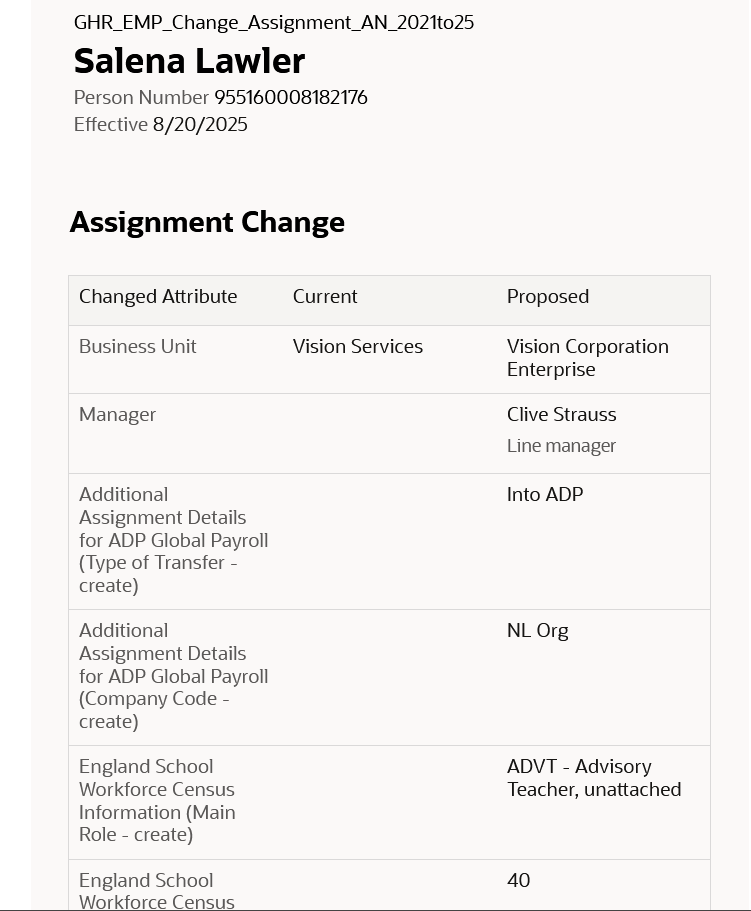
The next feature might not be the most thrilling, but it’s one you’ll want to be aware of. Oracle’s been steadily shifting notifications from the old Responsive style to the newer Redwood look, and now it’s Employment notifications getting the makeover. If you’re using Oracle’s seeded notification, it’ll automatically switch to the Redwood version, just a heads-up, there’s no going back unless you move to a custom notification. If you are using custom notifications, you’ll need to tweak your template to the Redwood style. On the plus side, the new notifications automatically adjust to the screen they’re being viewed on, so they’ll look spot-on whether you’re on a laptop, tablet or mobile. If you haven’t customised your existing notifications, the update rolls out without you lifting a finger. The fresh design is cleaner, more user-friendly, and helps you get things done quicker. Plus, it now supports date, time and number formats based on each user’s preferences.

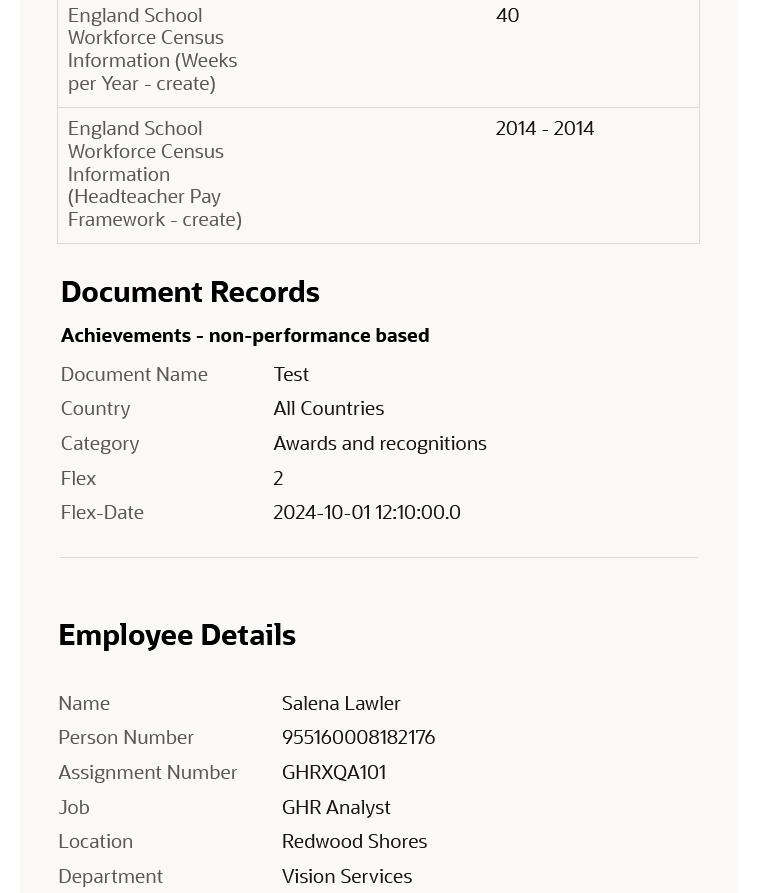
The final update I’d like to highlight is for those who’ve not yet transitioned to Redwood. I understand some organisations have held off for various reasons, so it’s important to note that from release 25D, the Redwood Document of Records page will be automatically enabled, and the Responsive page will no longer be displayed. If you’re not quite ready to move to Redwood, you can revert to the Responsive version by setting the profile value ORA_PER_DOCUMENT_RECORDS_REDWOOD_ENABLED to ‘N’. However, as with other Redwood transitions, once the deadline has passed, any issues with the Responsive page will no longer be supported, and Oracle Support will only recommend using the Redwood version. That said, the Redwood page offers a significantly improved experience, including the need for fewer clicks and faster load times, so this change should be seen as a positive step forward rather than a forced inconvenience.

Redwood Document of Records

As previously mentioned, Oracle is set to introduce new features in Core HR later this month. Should these enhancements prove to be particularly noteworthy, I’ll publish an updated blog post. In the meantime, please keep an eye out for forthcoming blogs that will explore additional modules within Fusion as part of Release 25D.

Please note all screenshots are the property of Oracle and are used according to their Copyright Guidelines
Oracle HCM Cloud Recruiting 25C

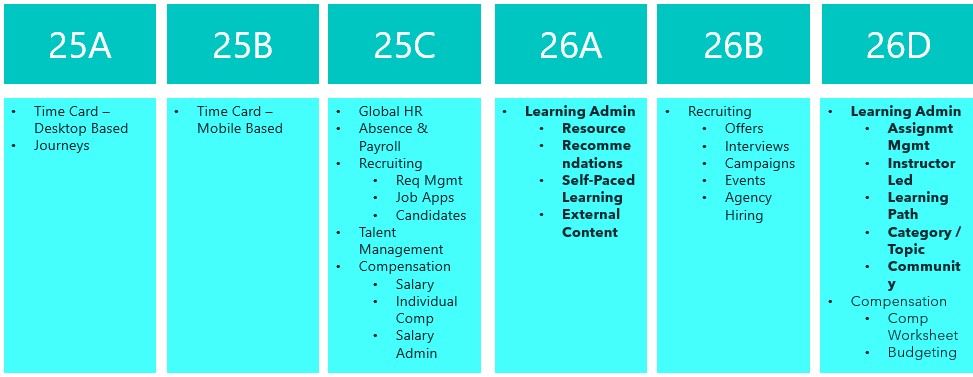
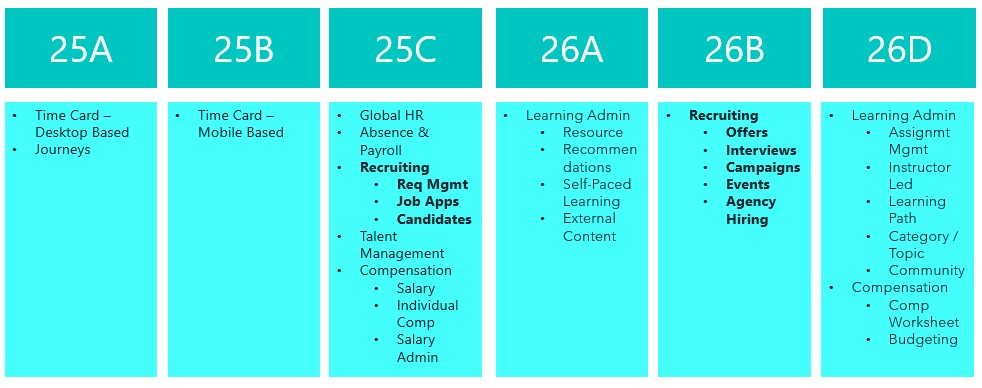
Earlier this year there was a split in the timelines for when Recruiting becomes mandatory in Redwood. Requisition Management, Job Applications and Candidate Management are all mandatory by Release 25C. Offer and Interview Management, Campaigns, Event and Agency Hiring are now mandatory by Release 26B. With this in mind, there are a lot of new features in release 25C to prepare for the second phase of Redwood for Recruiting. Oracle continues to deliver innovation, with new features rolling out throughout the quarter. I’ll be keeping a close eye on the updates, and if anything particularly noteworthy emerges, I’ll share a follow-up post to keep you in the loop.

Updated Redwood Timeline

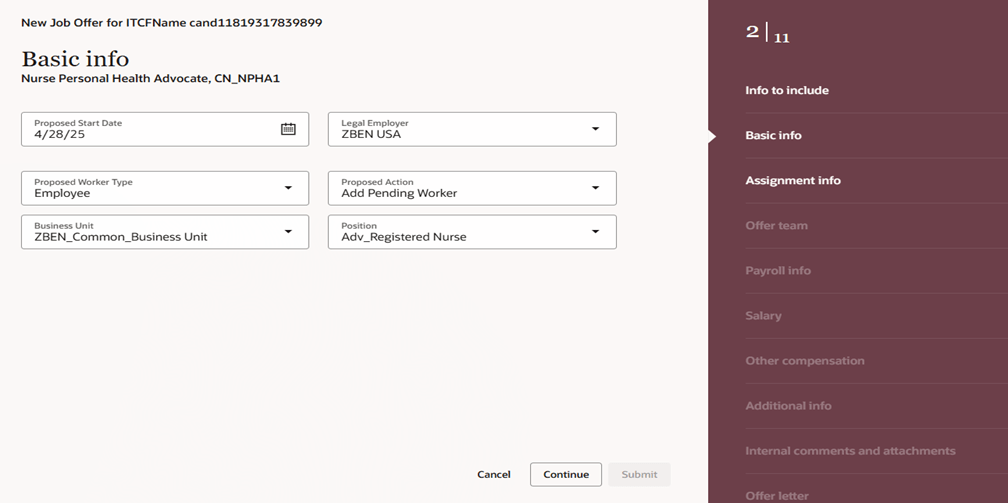
This release introduces Redwood functionality for Offers. It’s now possible to both create and delete an offer within Redwood. It’s possible to override information from the position during the offer process, unless Position Sync is switched on and then the option is greyed out. As with all new Redwood pages, I would recommend switching it on in your Development pod and checking out the functionality as soon as you receive 25B. The earlier you start testing, the easier it will be to adopt Redwood for Offers.

Create an Offer in Redwood

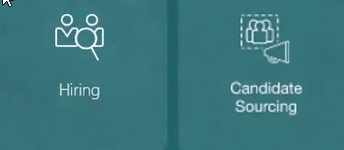
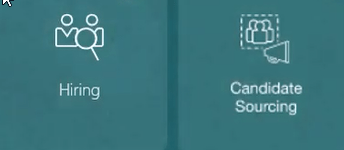
In this release Oracle have split out the Hiring tab, into two separate ones: Hiring and Candidate Sourcing. The Hiring tile now contains these tabs: Activity Centre; Messages; Requisitions; Offers; Candidate Search; Pools; Campaigns and Events. The new Candidate Sourcing tile contains these tabs: Events; Candidate Search; Pools; Messages and Campaigns. The separation of tiles will automatically happen if you have the ORA_REC_RECRUITING_REDWOOD_ENABLED profile. Only users who have security access to Candidate Sourcing will have access to the tile and it’s content.

Hiring Tile and Candidate Sourcing Tile

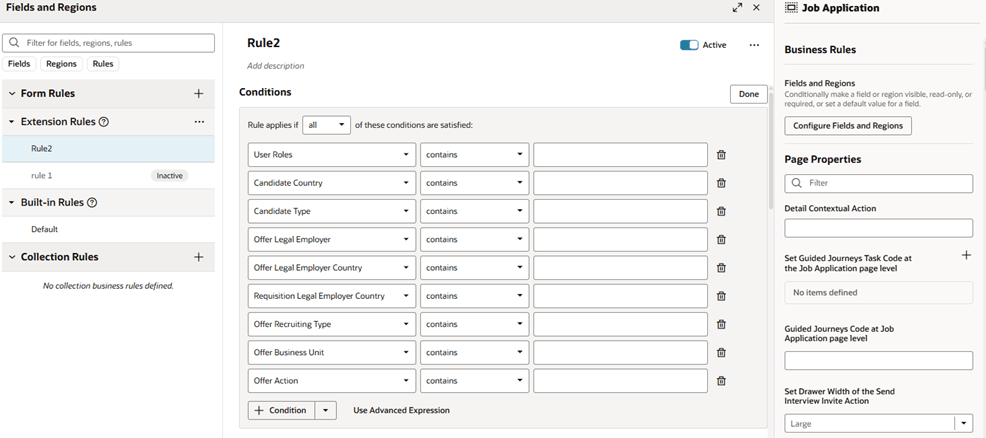
Whilst Job Applications are mandatory in Redwood by Release 25C, Oracle have added extra functionality within VBS to personalise the Job Application page. This is following customer feedback that requested additional fields to be available within Job Applications. Whilst the move to Redwood hasn’t always been smooth, I do think Oracle’s response to client feedback on additional personalisations that are requested and movement on mandatory timelines has been significantly more flexible than I would expect of an organisation of their size.

Visual Builder Studio to Personalize the Job Application Page

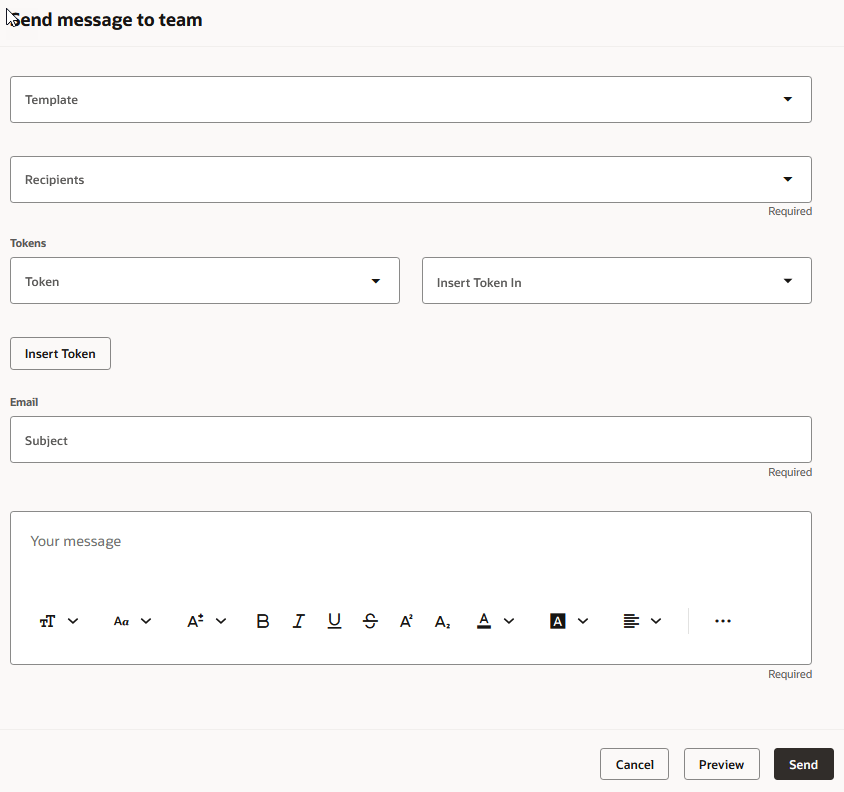
The Send Job Requisition and Job Application Related Messages to members of the hiring team has now been moved to Redwood. You can use a template to create the message or create it from scratch. The Recipients list will automatically display all the hiring team members, but you can type in the list to find other recipients. When you’re ready to send it, you can preview the message to ensure the content is correct and tokens are being resolved as expected. Once the message is sent, it’s available on the Messages tab of the job requisition, and on the Activity tab of the job application. 

Send Message to Team Panel

As I said earlier, Oracle generally continue to add new features throughout the quarter. I’ll be keeping a close watch on the updates, and if anything particularly impactful comes through, I’ll share a follow-up post to keep you informed and ahead of the curve. Please check out my blog on the new features in Core HR for Release 25C here.

Please note all screenshots are the property of Oracle and are used according to their Copyright Guidelines
Oracle HCM Cloud Core HR 25C

It doesn’t feel that long since we started talking about 25B, but now its time for 25C! With Core HR being mandatory in Redwood by Release 25C, I would be lying if I said there were a significant number of new features for Core HR in 25C, but there are some features of note! Please keep in mind that Oracle will continue to roll out additional features throughout the quarter, if there are any subsequent features of note, I will do a follow up blog on these.

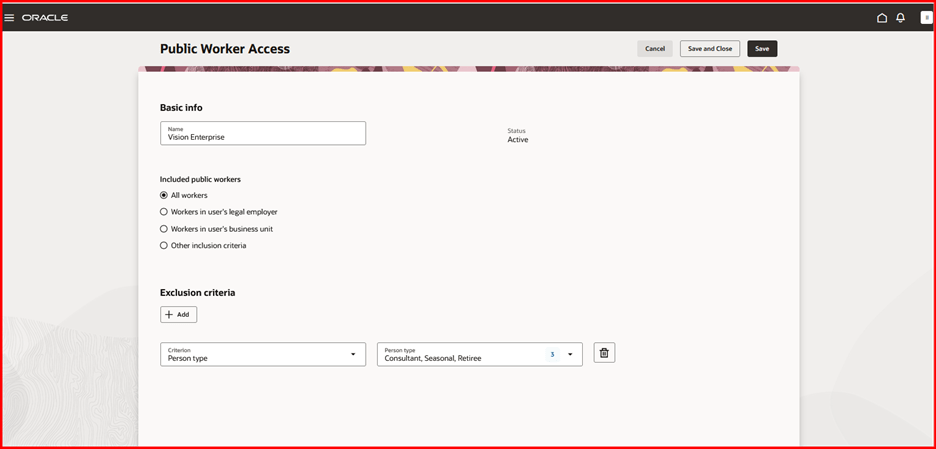
A lot of organisations, particularly in the public sector have been eagerly awaiting the changes to the Public Worker Search functionality. For those of you who don’t know what Public Workers Access is, it determines which employee records are returned in searches and other public-facing views. This allows for controlling the visibility of sensitive information like job codes or positions by applying user-defined criteria. 25C is the first release that brings Public Worker Access support to Oracle Search and Redwood. So what does this mean? If you need to limit employees or positions being available in Public Search due to the confidential nature of their role, now you can! It can be configured in a variety of ways including adding exclusion criteria.

Public Worker Access

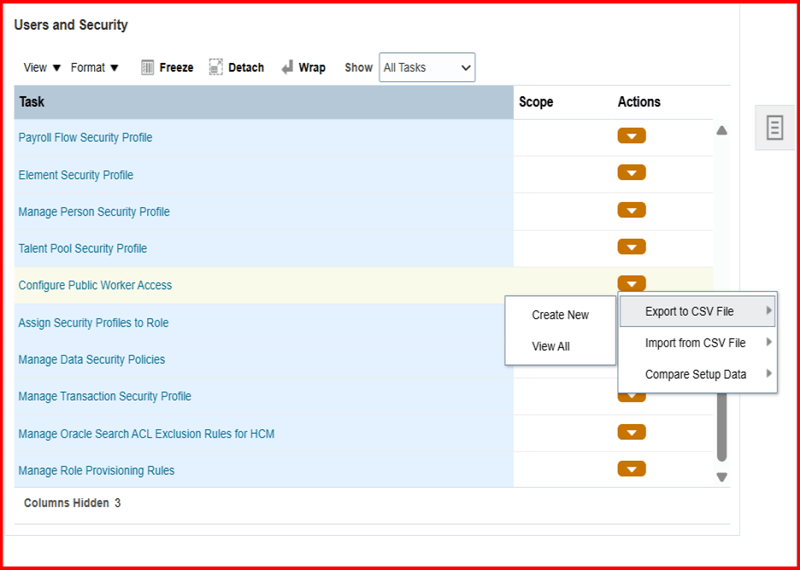
In addition, Oracle have introduced the ability to export your Public Worker Access between pods. This will allow the migration of Public Worker Access configuration to be much simpler and remove any risk of human error. It will ensure that the config that has been tested in your development pod is the same as what is deployed in Production.

Exporting Public Worker Access Configuration

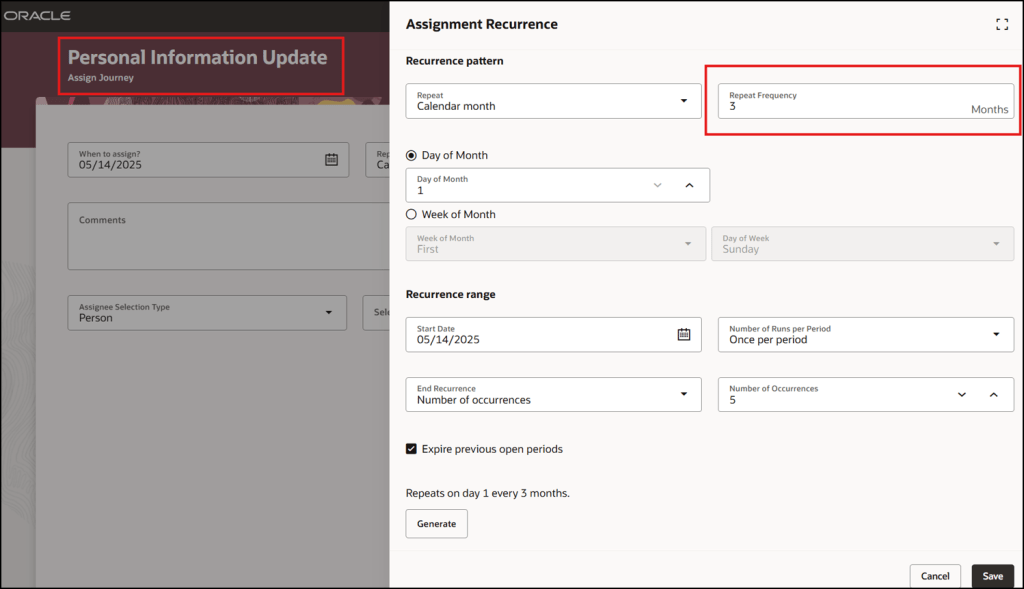
There are a lot of Journey related features in this release. One I particularly like is quite a simple change but I think it will add significant value. The ability to easily schedule recurring Journeys will make Journey administration a lot easier. The flexibility of being able to chose the frequency, but also limit the number of times the Journey is assigned makes this such a great addition.

The final Journey feature that I want to highlight is the ability to embed Multi Agents into Guided Journeys. This will allow a variety of different AI Agents to be embedded into pages with ease. Added AI Agents to pages is done via Guided Journeys and this new functionality makes it much easier. This is the perfect time for this improvement when we’re all prepping for the introduction of AI Agent Studio to speed up the process of creating AI Agents!

Embedded Multi AI Agents in Guided Journeys

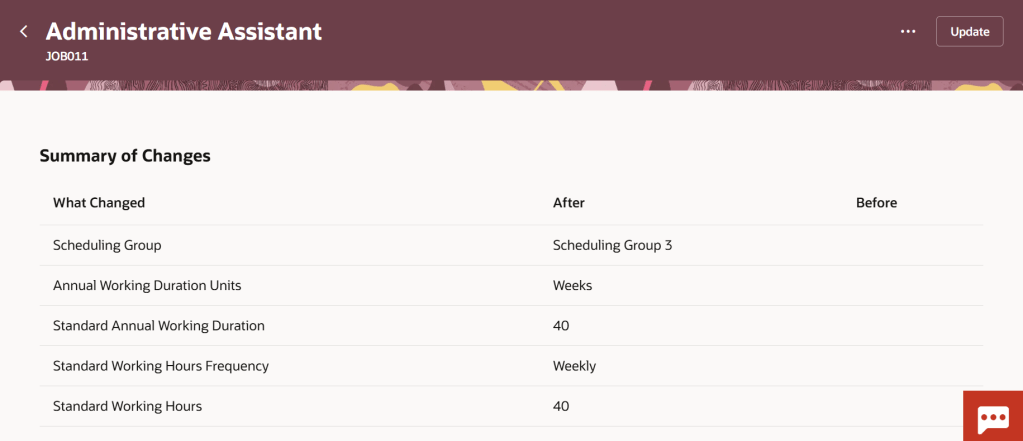
The other area of Core HR with significant changes are within the Workforce Structures workspace. There are a number of new pages that have moved over to Redwood, including the  Legal Entity HCM Information and Legal Reporting Unit HCM Information pages. Additionally Oracle have given more flexibility in adding extra attributes on the summary of changes page for all Workforce Structure changes. These fields can be added in via VBS to allow for the easy review of changes to fields that are important to your organisation.

Additional Attributes in Redwood Workforce Structures Change Summary

As mentioned earlier, Oracle plans to roll out new features in Core HR later this month. Should these updates turn out to be noteworthy, I’ll publish a refreshed blog post. Additionally, keep an eye out for upcoming posts that will cover other modules within Fusion for Release 25C!

Please note all screenshots are the property of Oracle and are used according to their Copyright Guidelines
Oracle HCM Cloud Core HR 25B

It’s my favourite time of the quarter again, new features time! 25B is an important one for Core HR as it is mandatory for Core HR to have made the move to Redwood by 25C. This is really your last chance to make that move to ensure you remain in support with Oracle. So what’s new in 25B? Lets take a look! Please keep in mind that Oracle will continue to roll out additional features throughout the quarter, if there are any subsequent features of note, I will do a follow up blog on these.

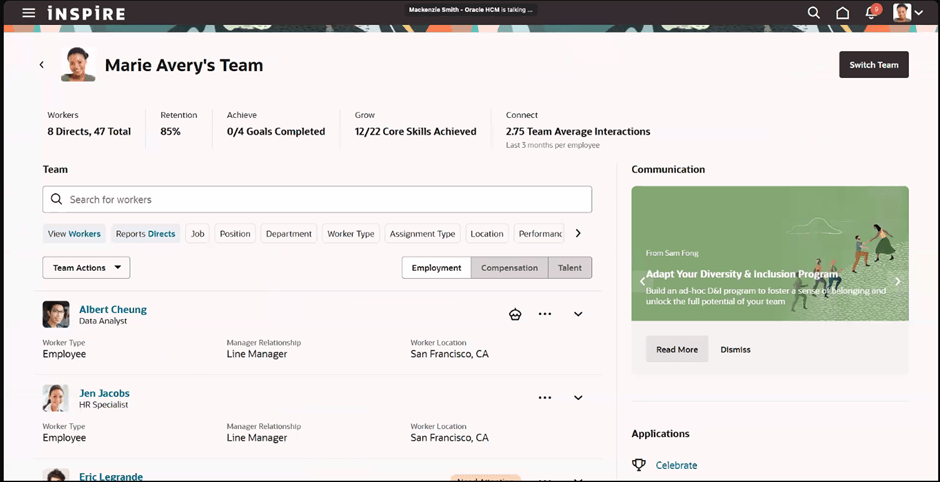
I love the Activity Centres and in 25B the Team Activity Centre has had some enhancements. If you don’t know about Activity Centres, check out my post on them here. Oracle have added in a lot more attributes that can be added to the page via VBS, including additional fields relating to employment, compensation and talent on the Worker View. Additional fields can also be added to the Position and Offer Views. Following feedback, the Vacancies quick action has now been removed from the Team Activity Centre as it wasn’t being utilised. In the top right hand corner of the image, there is a new ‘Needs Attention’ flag. These appear for employees in the Person Activity Centre if they have a KPI that requires attention. It should be noted that the Populate HCM Data Feed Information ESS process needs to be run for these to display, with the Data Feed Flow parameter set to ‘Team Activity Center’.

Continuing the Activity Centre theme, I’m delighted that Guided Journeys are now supported on the My Activity Centre and the Person Activity Centre. As the name suggests, Guided Journeys help guide a user through a process. They are particularly useful in adhoc scenarios that the user might only do once or at most, infrequently. The introduction of Guided Journeys on the Activity Centres is the final piece that many organisations were waiting for to complete their Redwood move.

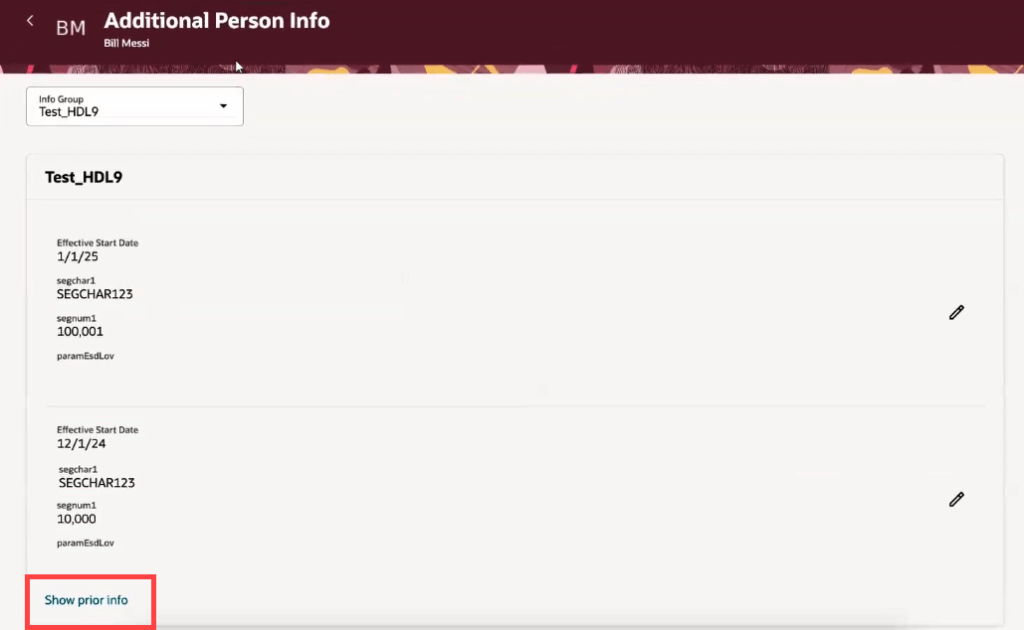
One thing Oracle have done really well during the process of moving to Redwood is to listen to their customers. On many other Redwood date effective pages, it is possible to see prior and future dated records, but it wasn’t possible on the Additional Person Info page. Now it is! Not only that, but they’ve added in extra validation to control who can see what. If you’re accessing your own Additional Person Info page via ‘Me’, you will only be able to see current and future dated records, but if you access via ‘My Client Groups’, you will be able to see historic, current and future dated records.

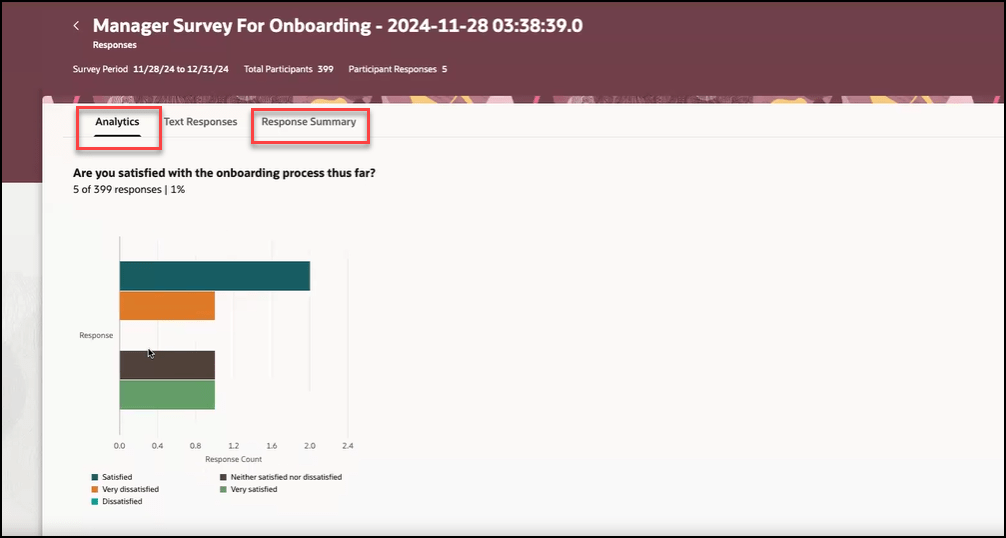
One of the key points of interest to most customers is the addition of AI to pages. Surveys within Journeys have always had analytics as part of them, to enable organisations to analyse the responses. Now it’s possible to incorporate Gen AI to not only analyse the data, but display it in a graphical format of your choosing. Additionally it will summarise the key text based responses. All of this will speed up the analysis and make it easier to present the findings to other relevant parties. For more details of the use of AI in HCM Cloud, please check out my blog here.

As mentioned earlier, Oracle plans to roll out new features in Core HR later this month. Should these updates turn out to be noteworthy, I’ll publish a refreshed blog post. Additionally, keep an eye out for upcoming posts that will cover other modules within HCM Cloud for Release 25B!

Please note all screenshots are the property of Oracle and are used according to their Copyright Guidelines
Redwood for Global HR – What Do you Need to Know?

As you will know, Redwood is mandatory for Global HR from Release 25C, so now is time to make the move!  The first question I am asked is will there be a replacement for Person Management? I’ll be honest with you, I love Person Management! The good news is that Oracle have confirmed that there will be, the ‘HR Activity Centre’. The date for release hasn’t been confirmed, but it is coming. Oracle have caveated that it won’t be a like-for-like replacement, but it will be a centralised location for transactions rather than having to go to different quick actions.

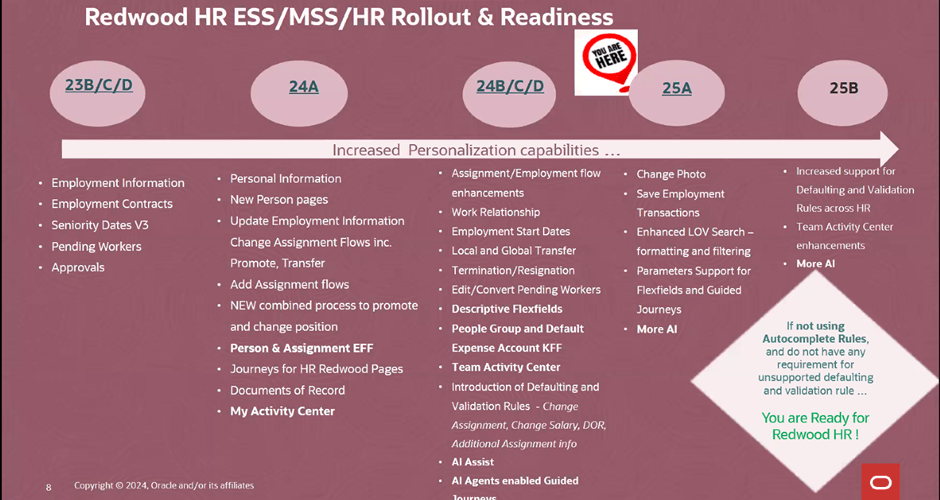
Oracle massively ramped up the number of Global HR features available within Redwood in 2024, so the majority of features are already available to you right now. As the picture above shows, if you’re not currently using autocomplete rules and have no requirement for creating unsupported defaulting rules, you can move to Redwood for Global HR right now. If you do have a requirement to default in data using rules, the amount of rules for defaulting data available will be significantly increased in 25B. This doesn’t mean wait for 25B though, it’s important that if you haven’t started, to start the switch in a non-production pod. Using a dedicated Redwood pod is always my recommended approach as it won’t impact on quarterly regression testing or issue resolution, due to the pod not matching what is currently in Production.

Global HR differs slightly to other modules when moving to Redwood. There are the usual steps, enabling Oracle Search, Updating Custom Security Roles; Reviewing and Migrating Personalisations using the Personalisation Helper Tool and Switching on the Redwood Flows via Profile Options. For Global HR, there are two additional prerequisites. Firstly, to be able to use the Redwood pages for Termination and / or Resignation, you must have migrated to Termination V3. To be able to use the Redwood page for Seniority Dates, you must be using Version 3 of Seniority Dates. So what happens if you’re not using one or both of the prerequisite versions? For terminations and resignations, you won’t be able to use the Redwood page. For Seniority Dates, there is an alternative, you can manage the dates via the Redwood Work Relationship page. If you want the full Redwood experience, I would recommend making the move to the latest versions of both Termination and Seniority Dates. My other recommendation is to migrate the V3s now, not after you’ve moved to Redwood. This will make the process more straightforward and therefore easier.

So what are my top tips? The Redwood ‘Bible’ only lists the key flexfields the need switching on. Check the What’s New Documents for all related modules for all the historic Redwood updates. Have you seen the Feature Listing Report on the Cloud Readiness website? From here you can download every upgrade since 2023 for every Fusion module in a handy spreadsheet. You can then use filters to find all the Redwood features for a given module.

A lot of users have reported issues with flexfields whilst testing Redwood. If this happens, redeploy the flexfields and make sure all flexfield personalisations have been migrated. Likewise if you’re having issues with pages, firstly ensure that the appropriate profile options for Oracle Search are switched on. If that doesn’t work, ensure custom roles have the correct privileges.

The Redwood Personalisation Tool is extremely helpful. Whilst it can’t migrate all personalisations, it will migrate some of them and reduce the amount of manual personalisations that will need to be applied. I would always recommend only using it in Migration mode for a small subset at a given time. Preferably one flow at a time. This gives you the chance to review the personalisations and make corrections more easily. Additionally once the tool has been used to migrate a flow, you can’t use it again for that specific flow. Even if a newer version of the tool provides more migration options within that flow.

Finally, use the new Activity Centres. Within the Global HR space, there is currently one for employees and one for line managers. These are a one stop shop for users to access all their and their team’s HR records and carry out their tasks. As I said earlier, one for the HR Team to replace Person Management is coming, so watch this space! Check out my earlier blog on Activity Centres here.

Please note all screenshots are the property of Oracle and are used according to their Copyright Guidelines.

Discover Oracle HCM Cloud’s Activity Centres

Have you seen the new Oracle HCM Cloud Activity Centres? They’re a fundamental part of the new Redwood pages and I love them! When they first came out, they were called ‘Spotlights’, but they’ve since been rebranded and now there are 4 Activity Centres.

The original Activity Centres were for Employees and Line Managers. All Activity Centres are ‘One Stop Shops’ for the relevant user. Focusing first on the Employee Activity Centre, this is where an employee can view / update their personal details; view their payslips; book annual leave and absences and many other things. If there is information that need to be shared with employees in bulk, they can be posted on there too. Any activity the employee is likely to carry out can be linked from the activity centre. If there are tasks that aren’t needed, they can be easily hidden via VBS.

Employee Activity Centre

In the Manager Activity Centre, Line Managers can easily access all of their team members records in one place. From here you can view employment and compensation details and also monitor talent and performance. Again important communications for line manager can be posted in here. Additionally bulk actions can be carried out for team members, such as creating communications, adding Journeys and creating surveys for feedback.

Manager Activity Centre

The Recruiting Activity Centre was the first one that was launched as an ‘Activity Centre’ and I regularly talk about it to my customers. It’s a great landing site for the Recruitment team to use. Originally it was only available to Recruiters and Hiring Managers, but last year it was extended to Collaborators too, so the whole team has access to this great tool. It summarises key data like high priority tasks and the number of new applicants that need reviewing. It’s easy to view the status of requisitions and offers and, my personal favourite, communication history between the Recruitment team and the candidate in conversation format. This is something that a lot of my customers have enquired about in the past.

Recruiting Activity Centre

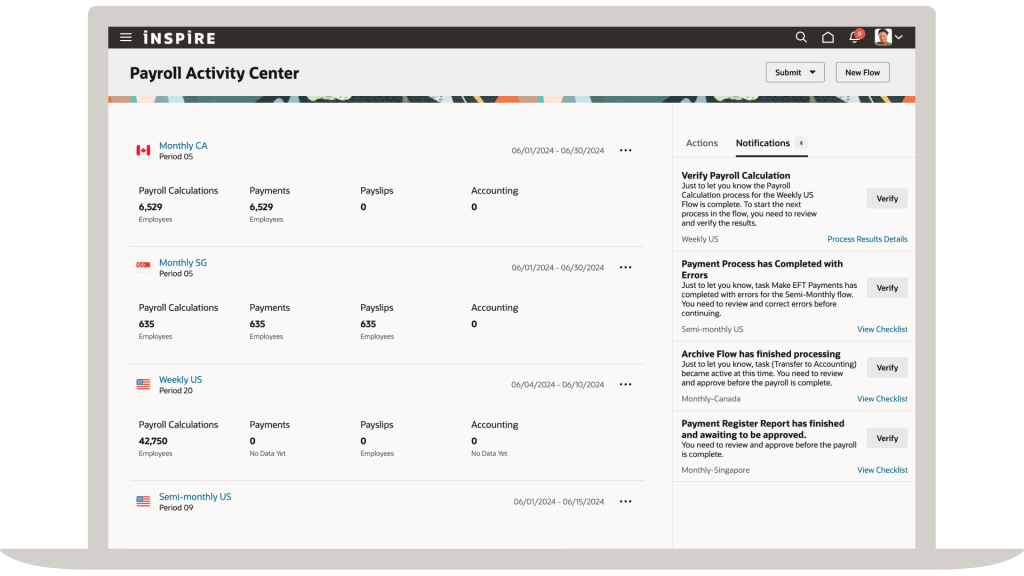
The final, and most recent, Activity Centre is the Payroll one. It allows the Payroll team to view all payrolls in one location, easily view notifications that might indicate their has been an error or significant disparity in a payroll run and investigate the root cause. All the usual actions that the team would need to carry out are easily accessible, such as calculation cards, element entries, costing etc as well as to be able to submit payroll flows. It speeds up the time to run processes and investigate issues.

Payroll Activity Centre

The Activity Centres are all designed to improve the user’s experience and reduce the number of menus / clicks they need to make. It has all the information that you need at your fingertips and in my personal opinion, is a massive improvement! I’m sure this won’t be the last of the Activity Centres that we see and Oracle are constantly improving the existing ones, so keep an eye out on those quarterly release updates for more news.

Please note all screenshots are the property of Oracle and are used according to their Copyright Guidelines
Redwood Updates from Oracle HCM Cloud CoE Summit

I’ve already blogged about the Key Note from Chris Leone that kicked off the HCM Cloud Centre of Excellence Customer Summit. If you haven’t seen it, check it out here. The main themes for the summit were AI and Redwood. The ‘Jump Into Redwood Session’ with Laura Froehlich and Todd Wall was extremely interesting and a good follow up to the key note on the first day.

Having recently completed my Prosci Certified Change Practioner qualification, I was delighted when the session kicked off with ‘Why Change’. I think this question is often skipped because it’s a mandated change from Oracle, but as there are so many benefits to moving to Redwood, it’s a really important question. It’s true that change can be scary and users and organisations can be reluctant to do so, but there are so many advantages when you embrace that change.

One of the key benefits is the integration of AI. It’s so fundamental to the way businesses anticipate operating, a number of customers have added objectives to their team to incorporate AI into their daily work. Oracle are making it so much easier to achieve this goal by embedding AI and AI Agents into the Redwood applications. Whilst not everyone wants to use AI, Oracle have incorporated in such a way it can appease both those who do and those who don’t want to use AI. For those who don’t want to use it, it is delivered switched off. For those that do, a quick change to the page in VB Studio, involving ticking a box and publishing it and you have AI embedded in the particular page. It really is that easy! It should be noted that AI functionality is not available to all users, it depends on the server / region the organisation is in. Those in the UK Government Cage cannot access it at present, but it will be available in 2025.

When talking to customers about the new features being delivered in a particular quarterly release, they often only apply to the Redwood versions of the pages. So, if you want the latest functionality, switching to Redwood is your only option. The final key benefit is the improved performance Redwood brings. This wasn’t just a ‘lift and shift’ project to create the Redwood pages, they were completely rewritten from scratch in a new toolset.

5 Myths about Redwood

One of the stand out parts of the session was the 5 myths about Redwood. Some I’ve heard before and some I haven’t, but I thought they were interesting and I wanted to share them with you. The first one about the profile options being automatically switched on when reaching the the quarterly update uptake date is actually a complex one. Whilst the quarterly release date is when it is mandatory to have made the move, it’s not actually delivered switched on. If you raise an SR after the uptake date, the analyst will advise you to move to the Redwood page, as the non-Redwood pages are out of support. One key announcement during this session was that in 25B, Learn will be delivered switched on in Redwood and in 25C, Timecards will be delivered with Redwood switched on. Whilst this isn’t on the uptake date, it’s 2-3 quarters later, it does mean that at some point Redwood will be automatically switched on for all organisations.

The second myth is around the product not being ready yet and therefore there is no point in starting work on testing and personalising pages. Whilst new features are constantly being released in Redwood, the uptake date is just that, the date you should have made the move for that module, it’s not a date to start making the move. The third myth is that it’s a massive and complex reimplementation. The move is only complex if the organisation chooses to make it such. It is possible to switch on the Redwood pages, make the appropriate security changes, migrate personalisations (using the Personalisation Helper Tool), test and deploy. If you wish to make it more complex by revisiting features that weren’t previously implemented or fundamentally change your existing configuration, this is when it becomes a reimplementation.

The fourth myth is that Redwood is optional. It really isn’t, if you wish to continue being in support, you must make the move. As announced on the session, eventually Oracle will force Redwood on users by delivering it switched on. It’s better to do it early so you’ve got time to test and update users as once it’s automatically applied, it will be too late. The final myth is not one I’ve come across, but that organisations are going to wait until ERP and SCM is available in Redwood, before moving HCM over. It might be because I’ve been regularly discussing the disparity between the timelines of ERP and HCM in terms of Redwood, that I haven’t heard this discussion before. With regards to SCM, Self Service Procurement is mandatory in Redwood from 25C, so this is on a similar timeline to HCM anyway.

The final item I want to share from the session is the Redwood Adoption Checklist. This is really helpful to remind us all of the steps involved in moving to Redwood. If you’re anything like me, you’ll love ticking items off the list!

Please note all screenshots are the property of Oracle and are used according to their Copyright Guidelines

Key Highlights from Oracle’s HCM Cloud Centre of Excellence Summit

This week was the HCM Cloud Centre of Excellence Customer Summit. This was my first one, but I believe it was Oracle’s fifth summit. Oracle tried to be as inclusive as possible with the timings to accommodate different time zones, but I will be honest the 4-9pm UK time was a bit tricky to juggle, but I was able to go to every session and I’m really glad I did.

Chris Leone, the EVP of HCM and SCM apps development kicked things off. Some of the things announced on Chris’ key note were so new, the session couldn’t be recorded. It’s always a delight to hear Chris speak, he’s so passionate about Cloud Apps and makes you want to join him on his journey. As you would expect, the theme of the whole summit was Redwood and AI as these are the main two key areas of interest from HCM Cloud customers at the moment.

It was nice to get a recap on the functionality that Redwood brings, both embedded within the new pages, but also the ability to extend them using VBS. There was a recap on the Personalisation Helper Tool, both for HCM and SCM. If you don’t know what this is, check out my earlier blog on the tool. If you’ve never used it, I would recommend you check it out!

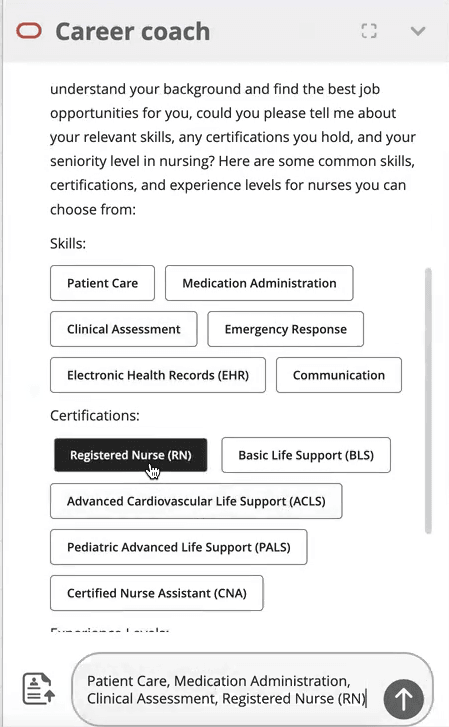
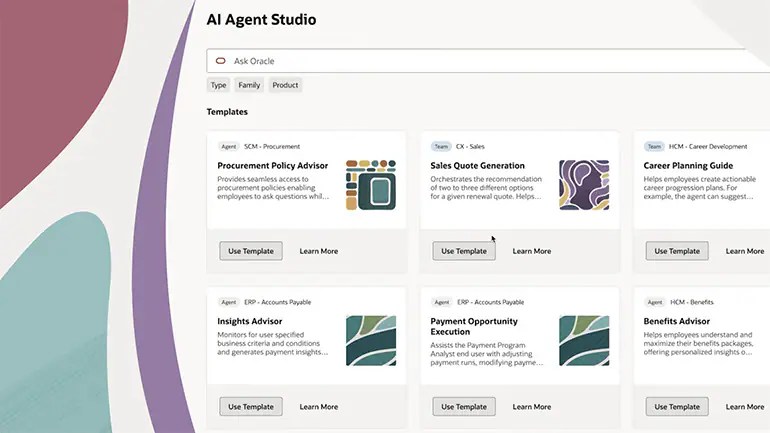
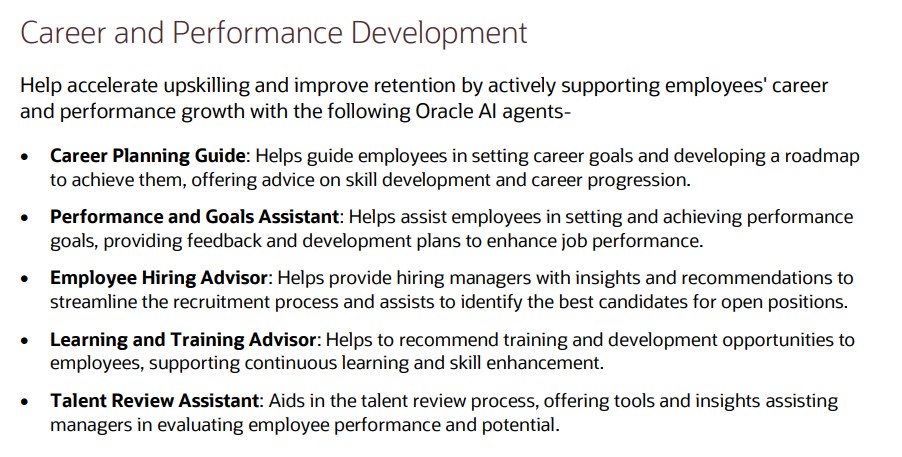
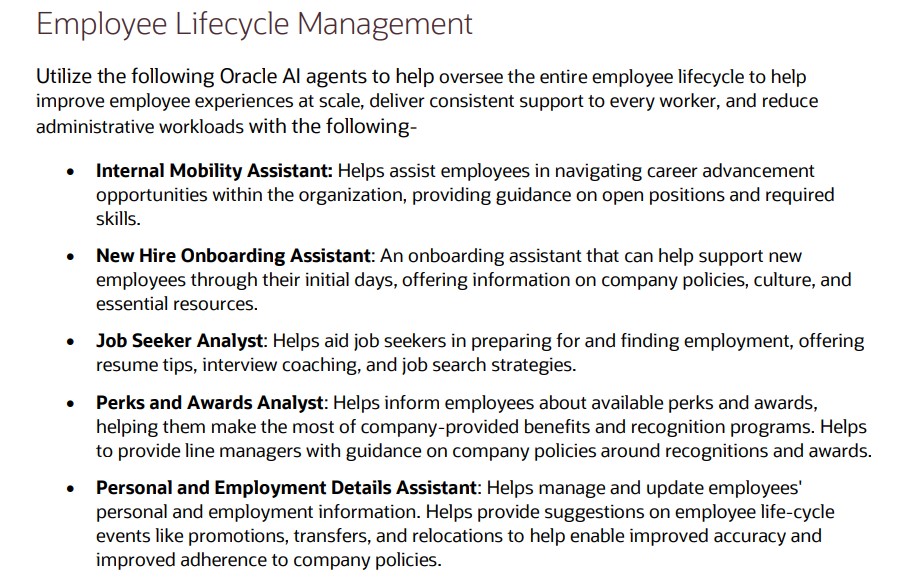
The piece that excited me the most, was the AI. We’ve all heard of Gen AI, check out my earlier blog on the use of it within Oracle HCM Cloud, if you missed it. Agentic AI takes it to the next level and I’m delighted that Oracle are incorporating it into their applications. Agentic AI is a type of AI that can independently make decisions and solve problems. It takes Machine Learning (ML), Large Language Models (LLM) and Enterprise Automation to create agents that can learn and adapt over time. The slide above refers to RAG based agents, but what are they? RAG stands for Retrieval Augmented Generation and RAG agents are part of RAG applications, which combine external data retrieval with LLMs to generate answers to user queries. In terms of practical application, the AI Agents can complete tasks autonomously, but also know when to loop in an actual user, either for approvals or review.

Oracle already have all of the above AI Agents available now. They can be activated in any process flow that supports Guided Journeys. This is just the start though, Oracle are in the process of developing more AI Agents, with plans for Agentic Agents too, for solutions such as sourcing candidates and scheduling interviews in Recruit and Succession Planning within Talent.

It’s a very exciting time in the Oracle HCM Cloud world and I can’t wait to see all the upcoming AI developments. I’ve got so many things to share from the Summit, so keep an eye out for more blogs. I’ll also write more updates on AI as Oracle announce them.

Please note all screenshots are the property of Oracle and are used according to their Copyright Guidelines
Generative AI in Oracle HCM Cloud

Everyone is talking about AI these days and Oracle is no different! The use of AI within Oracle applications isn’t new – Digital Assistant, Oracle’s chatbot has been in action for a while. Digital Assistant uses ‘skills’ similar to Alexa which are used as a basis for enquiries. Oracle provides seeded skills but custom ones can also be created.

But what about Generative AI or Gen AI? Gen AI uses machine learning to learn patterns from the data and then create content based on it. Oracle have been incorporating Gen AI into HCM Cloud since release 24A. All of the features released require Redwood as they can be activated via VB Studio. Oracle have introduced AI Assist in a lot of applications, although predominantly in the Talent and Performance modules. AI Assist will take the information provided and summarise it. For instance, when a Line Manager reviews all Performance Documents, the AI Assist button will compile and summarise all pertinent performance information for that Employee. This feature saves the manager time by providing an editable summary, designed to enhance efficiency without eliminating the human touch.

Gen AI is also available in Recruit to help produce content for your Career Site. By populating the topic, how many words you require it to be and a few key terms / words, the AI Assistant will generate the text for you. As with all Gen AI within Oracle, you can tweak the content as much as required, but it will make the process much easier.

The new AI features continued in 24D, which included the introduction of AI Assistance for Market Composites in Compensation Info. This allows organisations to utilise Gen AI to generate explanations for market composites to Line Managers within the Compensation module. This will help guide the conversations between Line Managers and Employees about the competitiveness of their compensation package.

Oracle are constantly working on new use cases for Gen AI. It is anticipated that in 25A, the Benefits Analyst Agent will be available. This will allow Employees and Line Managers to ask the chatbot about available benefits for them, but also question why things have changed etc. It can also link to the sources that it used to determine the response, so the Employee can validate the information, if required.

Oracle is investing heavily in Gen AI and other ways to optimise user’s experience, so there will be more announcements soon. I expect a number of features to be included in 25A, not just the Benefits Analyst Agent. Once they are announced, I will do another post.

About the author:

Kate Mead is an Oracle-certified HCM Consultant and Solution Architect at Version 1 with 14 years of experience in Oracle HR and Payroll systems, including 7 years with Oracle HCM Cloud. She has worked across implementation projects and managed services, has a sound knowledge of UK Payroll legislation and — before becoming a consultant — was an HR Manager.

If you have any questions or would like more information on how Version 1 can help you realise the full potential of your Oracle Cloud instances, please contact her at kate.mead@version1.com

Please note all screenshots are the property of Oracle and are used according to their Copyright Guidelines
Redwood Notifications in Release 24D

Lots of people have asked about the move to Redwood for notifications in release 24D, so I thought I’d better write a blog on it! In several modules, including Compensation, Absence and Recruit, the seeded notifications have moved over to the new Redwood style.

So what does this mean for organisations? If you’re already using Redwood, there is nothing needed to be done. However, what if you’ve not made the move to Redwood yet? Unfortunately it isn’t possible to switch off the Redwood notifications for these modules. There are two options available, firstly to use the notifications as delivered with the Redwood theme applied. Alternatively, create a custom BI notification to replace the seeded Oracle BI notification. It is the specific seeded Oracle BI notifications that have moved to Redwood, rather than all notifications within those modules being in the Redwood toolset.

So what do these notifications look like? An example is below, but they are cleaner and easier to read. The actual content hasn’t changed, it is the layout that has.

The only issue is where organisations have a mix of seeded and custom notifications within the modules that have made the move to Redwood notifications. This will mean that some notifications will be in the Redwood look and feel and some won’t. Additionally, where organisations have a mix of modules where some notifications are now in Redwood and some aren’t, they will have the same issue. This will potentially cause confusion with some users, but if I’m honest, the majority are unlikely to notice.

If custom BI notifications have previously been created and they are causing an issue due to the inconsistency of appearance with the mix of Redwood and non-Redwood notifications, it is possible to move the existing custom BI notifications to the Redwood style. If you create a copy of the custom BI notification, the Redwood style will automatically be applied. This can then be set as the active notification.

About the author:

Kate Mead is an Oracle-certified HCM Consultant and Solution Architect at Version 1 with 14 years of experience in Oracle HR and Payroll systems, including 7 years with Oracle HCM Cloud. She has worked across implementation projects and managed services, has a sound knowledge of UK Payroll legislation and — before becoming a consultant — was an HR Manager.

If you have any questions or would like more information on how Version 1 can help you realise the full potential of your Oracle Cloud instances, please contact her at kate.mead@version1.com

Please note all screenshots are the property of Oracle and are used according to their Copyright Guidelines