
Don’t worry, I haven’t abandoned the world of HCM for ERP just yet. My enthusiasm for Oracle AI is very much alive, and with four new AI agents landing in Financials this release, I simply couldn’t ignore it. I’d never claim to be a Financials expert, but I do know how long ERP users have been asking for meaningful AI capabilities, and this release feels like a real response to that demand. Oracle has clearly leaned in, and there’s plenty here worth getting excited about.

The long awaited Ledger Agent brings an intelligent, AI‑powered experience to General Ledger, helping finance teams work more efficiently and proactively. It continuously monitors balances, journals, and transactions using configurable prompts, surfacing clear, contextual insights only when attention is needed. Accountants can ask natural language questions about balances, variances, journals, and process statuses, and receive precise, easy‑to‑understand explanations backed by correlated ledger and subledger data. By combining proactive monitoring, root‑cause insight, and seamless access to related ledger actions in a single guided experience, the Ledger Agent reduces time spent navigating multiple screens or compiling information manually, supports earlier detection and resolution of issues, and helps teams maintain accurate, up‑to‑date financial positions while respecting existing security and access controls.
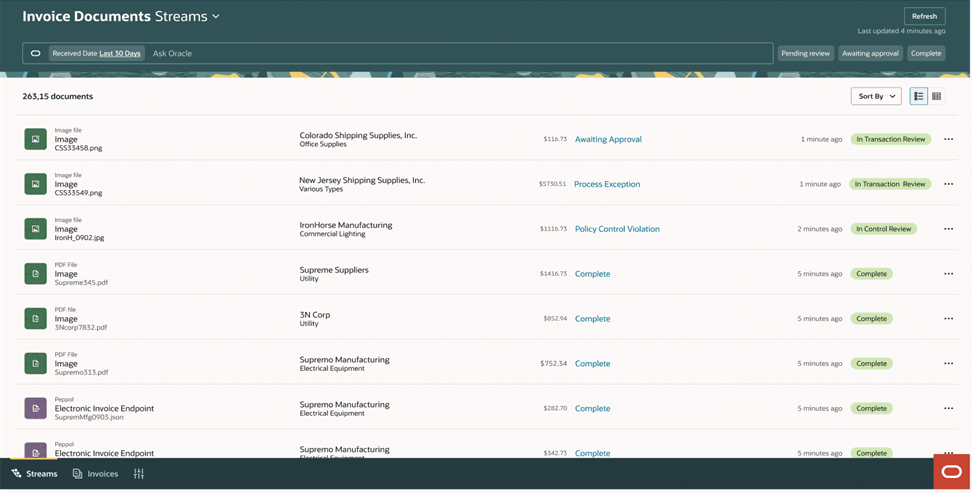
The Payables Agent delivers a modern, AI‑driven approach to invoice processing, helping organisations move towards a truly touchless Payables experience. It automates invoice ingestion, compliance, and control across multiple sources and formats, using GenAI to reduce manual effort, improve data accuracy, and surface only the exceptions that need attention. With unified capture, automated attribute defaulting, intelligent anomaly detection, and a single, streamlined view for managing invoices, teams gain full visibility and control across the invoice‑to‑pay lifecycle. The result is faster processing, stronger compliance, reduced risk of errors or fraud, and improved supplier satisfaction, allowing Payables to shift from a reactive cost centre to a value‑generating function that supports better financial outcomes.
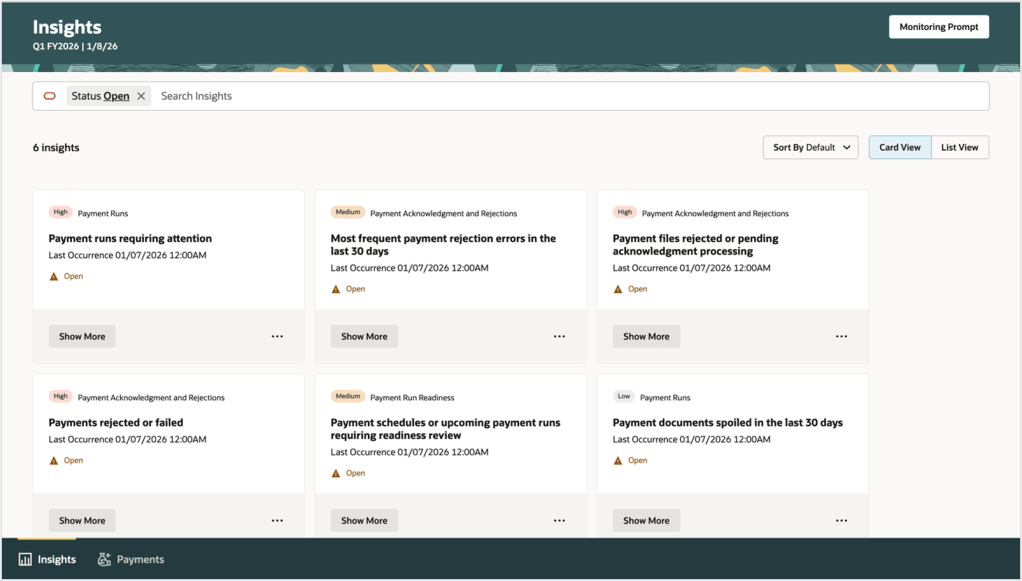
The Payments Agent introduces a smarter, more strategic approach to supplier payments by helping organisations optimise how and when they pay, rather than simply executing scheduled runs. Using AI‑driven insights and conversational guidance, it supports users across the full payment lifecycle, from evaluating payment options such as dynamic discounting and virtual cards, through creating and managing supplier offers, to executing and monitoring payments securely. By assessing the financial impact of different payment programmes in real time and translating decisions seamlessly into action, the Payments Agent improves cash flow, generates incremental financial benefits, and strengthens operational control. The result is a more proactive, insight‑led Payables function that reduces manual effort, highlights exceptions early, and enables finance teams to focus on working capital optimisation and stronger supplier relationships.

The Expenses Agent simplifies expense reporting by allowing employees to complete and submit expenses entirely through email, using natural language. Employees can forward receipts directly to the agent, which automatically creates the expense and prompts for any missing details, such as justifications, attendee information, or cost centres, via a simple email reply. Once all required information is captured, the expense is ready for submission or can be auto‑submitted in line with company policy. This conversational, email‑based approach reduces manual data entry, minimises errors, and cuts down on back‑and‑forth, accelerating reimbursements while improving compliance and delivering a far more intuitive experience for both employees and finance teams.
To wrap up, this has been my first step into writing about ERP Cloud Financials, and I’ve genuinely enjoyed exploring what Oracle is doing in this space, particularly around AI. I’d really welcome your feedback on this post, whether it’s what resonated, what you’d like to see more of, or where I could go deeper. If there’s interest, I’d be more than happy to write further blogs on Financials and continue sharing my perspective as these capabilities evolve.

 K8 Mead