
It’s quarterly release time again, and there are some genuinely strong updates in Financials this quarter. I don’t often cover ERP features, but I did last quarter for the same reason and 26C feels similar. As always, more may follow later in the month, but here’s what’s been announced so far and what’s caught my attention.

There are three Fixed Asset Agents in this release. The new Retirement Request Assistant makes it much easier for asset custodians to initiate and track asset retirements. Using a guided, conversational approach, users can submit requests for assets assigned to them or search for others using identifiers such as serial or tag number. They can capture key details like retirement date and reason, then track progress from submission through to completion. This removes the need for emails and manual coordination, giving users a simple self-service route that speeds things up and improves accountability.
Supporting this, the Retirement Assistant helps finance teams review and process those requests. Fixed asset accountants can manage retirements through the same conversational interface, whether dealing with individual assets, multiple assets or file-based uploads. The assistant guides users through the required steps, validates the data, and highlights failed transactions so they can be corrected and resubmitted without starting again. The result is less manual effort, less rework, and quicker, more controlled processing.
The assistant also improves how exceptions are handled. Finance users can review requests, update key details such as retirement dates or proceeds of sale, and post transactions directly within the same experience. Because everything is handled in one place, there is less need to switch between screens or rekey data, which helps reduce errors. Overall, it creates a smoother end-to-end process while supporting stronger governance as volumes grow.
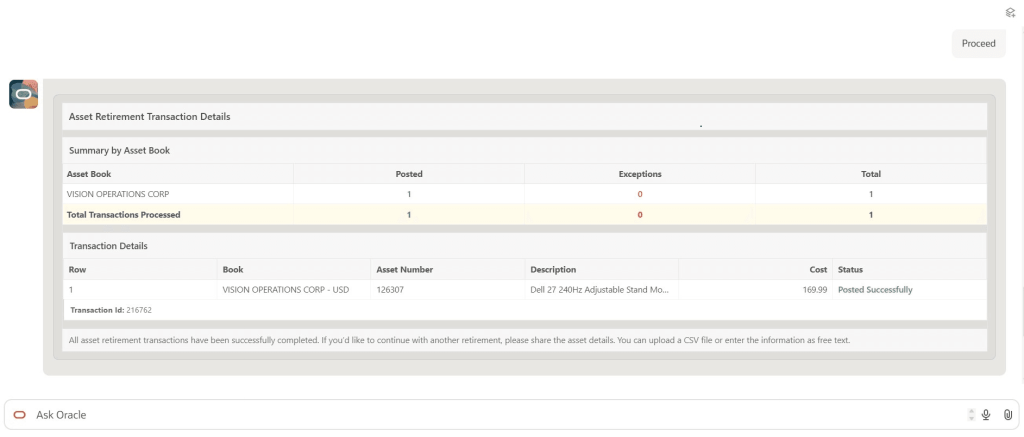
Alongside this, the Fixed Asset Inquiry Assistant offers a much more intuitive way to access asset information. Users can ask questions in natural language to retrieve details across financials, depreciation and distributions, as well as view current period activity. This makes it easier to understand asset movements, validate transactions and respond to audit queries without relying on multiple reports. Taken together, these assistants represent a clear step forward in usability, helping teams reduce effort while improving visibility and control across the asset lifecycle.
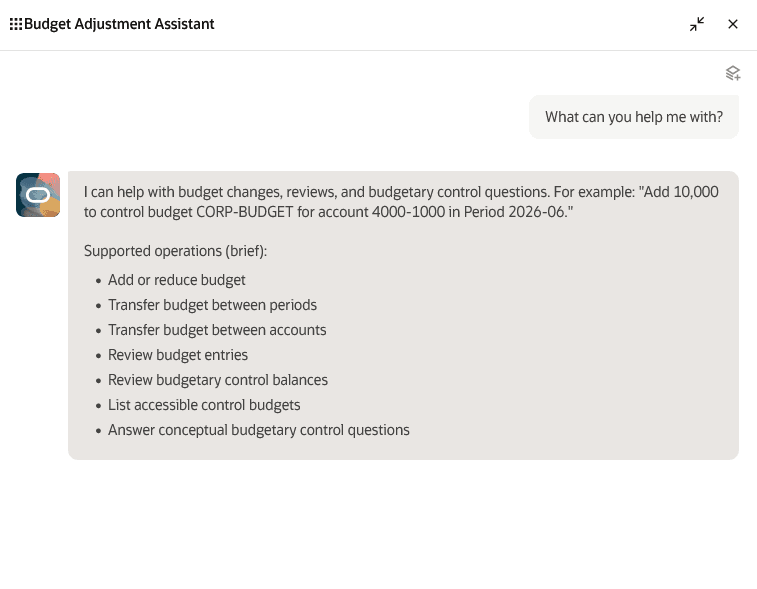
The Budget Adjustment Assistant introduces a more straightforward way for budget office users to manage EPM control budgets. Using natural language, users can create and review budget entries, add or reduce budgets, transfer amounts between accounts or periods, and review balances or previously approved entries. The assistant also flags and helps resolve issues at the point of entry, reducing the likelihood of errors and avoiding rework later.
For organisations, this translates into better efficiency and control. Users no longer need to navigate multiple forms or screens, which speeds up processing and reduces effort. At the same time, built-in validation improves data quality before transactions reach the ledger. The result is faster adjustments, fewer issues, and a more streamlined experience for teams managing complex budgets.
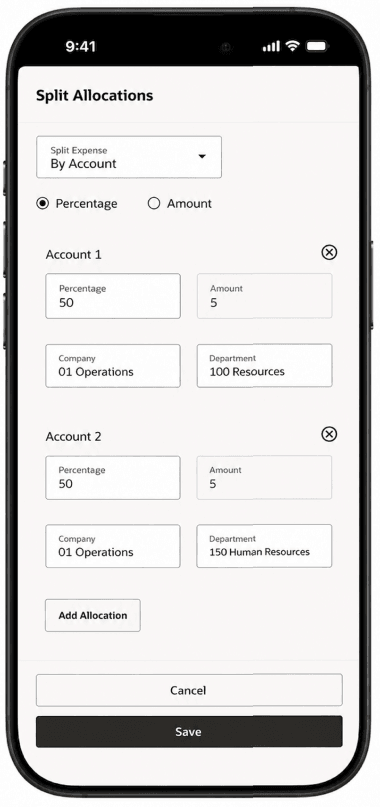
The next two enhancements build on the Expenses Agent introduced previously, extending its conversational, touchless approach into more complex scenarios. Cost allocation now allows users to split expenses across multiple cost centres, projects or tasks directly within the agent. Instead of manually distributing costs across lines, users can simply instruct the agent how to allocate amounts. This improves both accuracy and efficiency, ensuring costs are recorded correctly with far less effort.
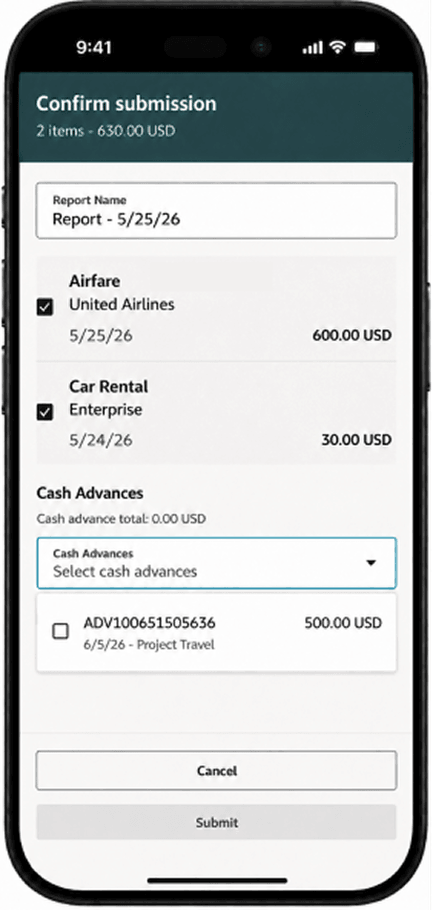
Another useful addition is the ability to apply cash advances during expense submission. Employees can select one or more available advances, or choose not to apply them and provide a justification where needed. The agent also handles rejected or withdrawn reports by automatically removing applied advances and notifying the user, helping maintain clarity throughout the process.
Together, these updates strengthen the Expenses Agent by reducing manual intervention and improving financial control. Organisations benefit from more accurate allocations, fewer unapplied advances, and better visibility where advances are not used. Employees benefit from a simpler, more guided process that keeps expense reporting moving and reduces delays across the end-to-end lifecycle.
As always, Oracle may introduce additional ERP Agents later in the month. If anything else stands out, I’ll share a follow-up once the full picture is clearer.
Please note all screenshots are the property of Oracle and are used according to their Copyright Guidelines


