
Anyone who has worked in Accounts Receivable or treasury knows that some tasks simply consume more time than they should. Matching receipts to invoices, investigating unidentified payments, tracking cash positions across multiple accounts, and working out how to address funding shortfalls are all activities that can eat into the working day. They are important, but they’re also repetitive, manual, and often frustrating.
That’s why Oracle’s new Cash Processing Agent caught my attention. Rather than simply helping users analyse information faster, it actively performs many of the activities that finance teams traditionally carry out themselves. It creates receipts, matches payments to invoices, identifies exceptions, monitors liquidity, and even recommends actions when it detects potential cash shortfalls. For finance teams, this has the potential to change the way day-to-day cash management is handled.
Applying customer receipts can be one of the most labour-intensive processes within Accounts Receivable. Payment information arrives from different sources. Bank statements show money arriving in the account, remittance advice may be sent separately by email, and someone then needs to connect the two before applying the payment to the correct invoices.
The Cash Processing Agent automates much of that process. It can create receipts directly from bank statement transactions, extract information from remittance emails and attachments, identify the related invoices, and apply receipts automatically where sufficient information is available. When something doesn’t match, the agent doesn’t simply leave users with an unexplained exception. Instead, it surfaces the issue along with the information needed to investigate and resolve it.
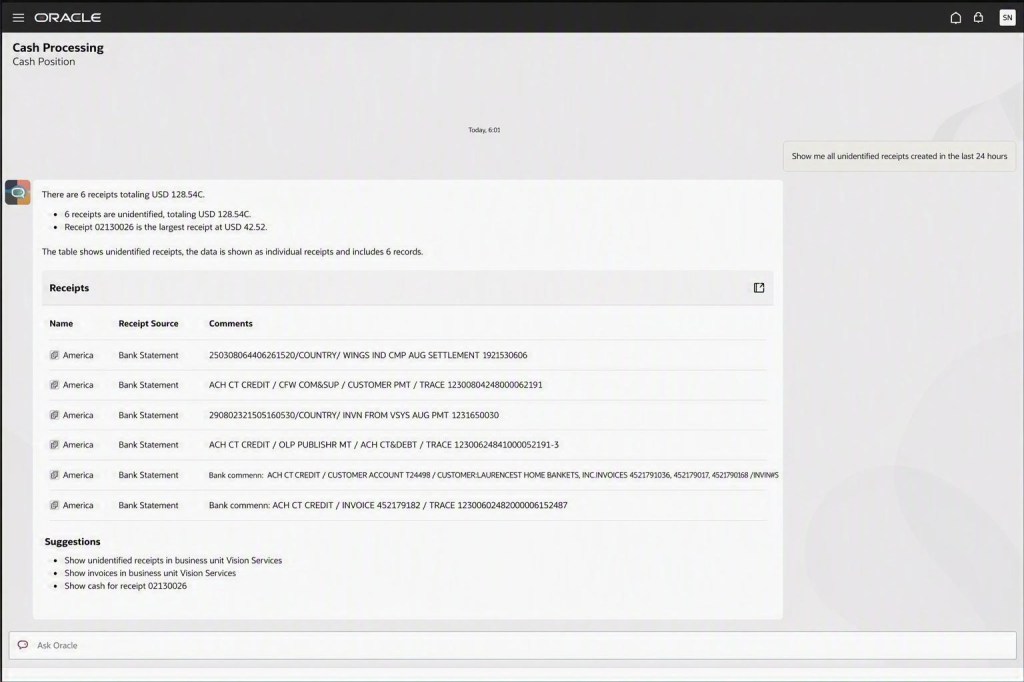
What I particularly like is the conversational approach. Rather than navigating between multiple screens and work areas, users can investigate receipts, review supporting information and take corrective action from within the same experience.
For finance teams, the practical benefit is straightforward:
- Less manual receipt processing
- Faster application of customer payments
- Reduced exception backlogs
- More time spent resolving genuine issues rather than routine matching
The second area where the Cash Processing Agent adds value is cash position and liquidity management. Many treasury teams still spend a significant amount of time monitoring balances, identifying funding gaps and determining how those shortfalls should be addressed. Traditionally, this has been a reactive process. An analyst identifies a problem and then investigates the underlying cause before deciding what action to take.
The Cash Processing Agent takes a more proactive approach. It continuously monitors cash positions and highlights potential shortfalls as they emerge. Instead of simply raising an alert, it provides context by identifying the transactions contributing to the position and highlighting available surplus funds elsewhere. The agent can then recommend transfers that could be used to address the shortfall.
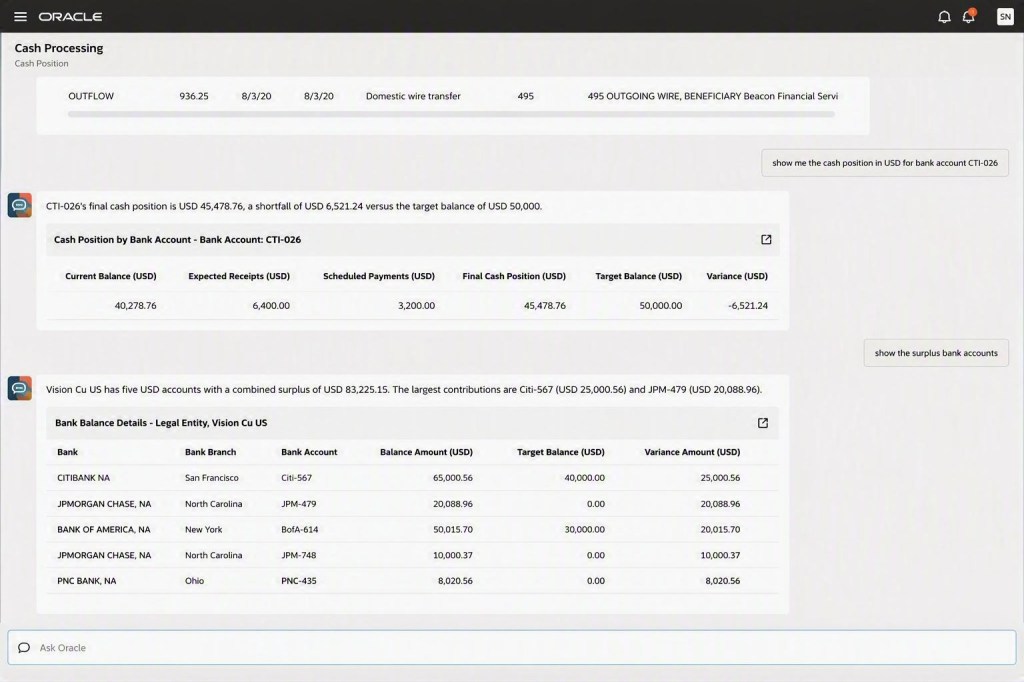
Users remain in control of the decision, but much of the investigation work has already been completed for them. This means treasury teams can spend less time gathering information and more time making informed decisions.
Like most AI capabilities, outcomes will depend heavily on the quality of the information available to the system. If bank statement imports are unreliable, customer payment data is incomplete, or cash management configurations need attention, those issues should be addressed before enabling the agent. The better the underlying data, the more accurately the agent can perform.
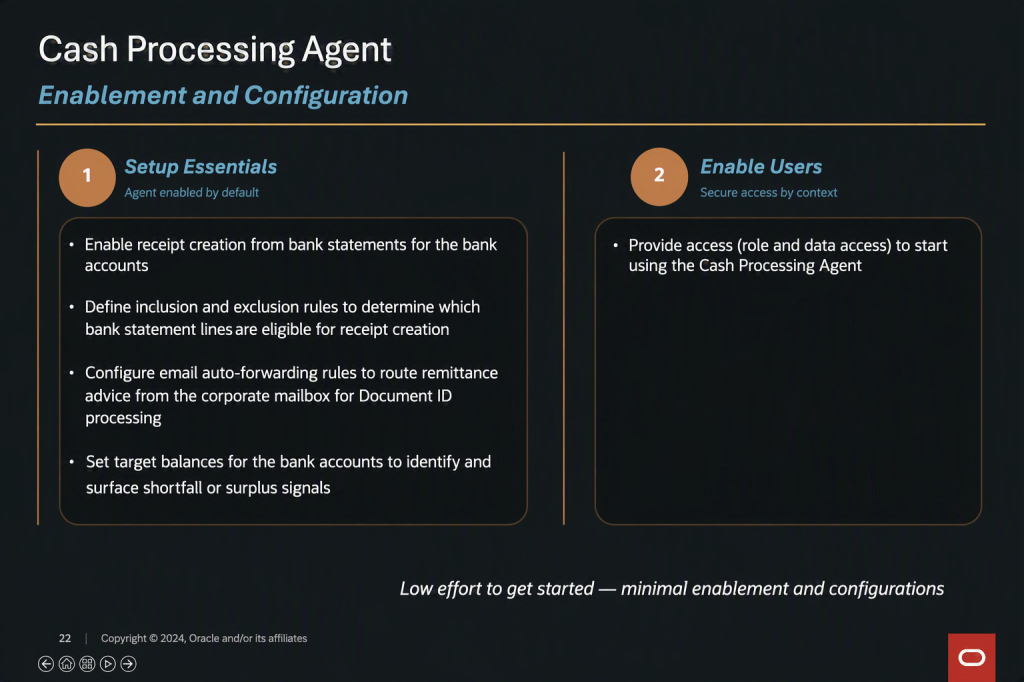
Fortunately, Oracle has kept the setup relatively straightforward. Organisations need to configure how bank statement transactions are processed, define which transactions the agent should work with, and establish how remittance information is captured. For liquidity management, threshold balances can be configured to determine when potential shortfalls should be highlighted.
There’s no shortage of AI announcements in the ERP market at the moment, but many still focus on helping users analyse information or generate content. What makes the Cash Processing Agent different is that it performs work that finance teams have traditionally completed themselves.
By automating receipt processing, identifying exceptions, monitoring liquidity and recommending actions, it has the potential to remove a significant amount of repetitive effort from both Accounts Receivable and treasury operations. For users, that means spending less time matching transactions and investigating balances, and more time focusing on the activities that genuinely require human judgement.
Please note that all screenshots are the property of Oracle and are used in accordance with Oracle’s Copyright Guidelines.


