
Cash management has traditionally relied on a combination of spreadsheets, separate banking platforms and a significant amount of manual effort to build forecasts, manage liquidity and chase overdue payments. Oracle is taking a different approach by embedding AI directly into Oracle Fusion Cloud ERP, helping finance teams make better decisions using the same platform where transactions already exist.
Recent developments across cash forecasting, banking connectivity, payments and collections all point towards a common goal: helping finance and treasury teams spend less time gathering information and more time acting on it. Rather than introducing another standalone tool, Oracle is bringing intelligence directly into day-to-day finance processes.
For many organisations, obtaining an accurate view of future cash position remains a challenge. Forecasting often relies on multiple spreadsheets, assumptions and manual updates, making it difficult to respond quickly when circumstances change.
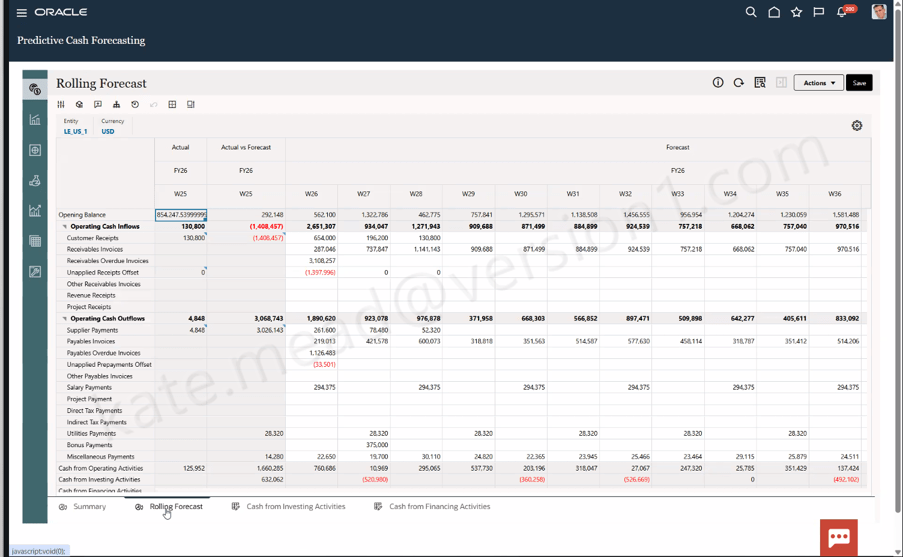
Oracle’s Predictive Cash Forecasting capability aims to improve visibility by bringing together current cash balances, expected inflows, expected outflows and cash flow projections into a single rolling forecast. Finance and treasury teams can view projected cash positions over future periods, supported by visual cash flow analysis and cash position forecasting.
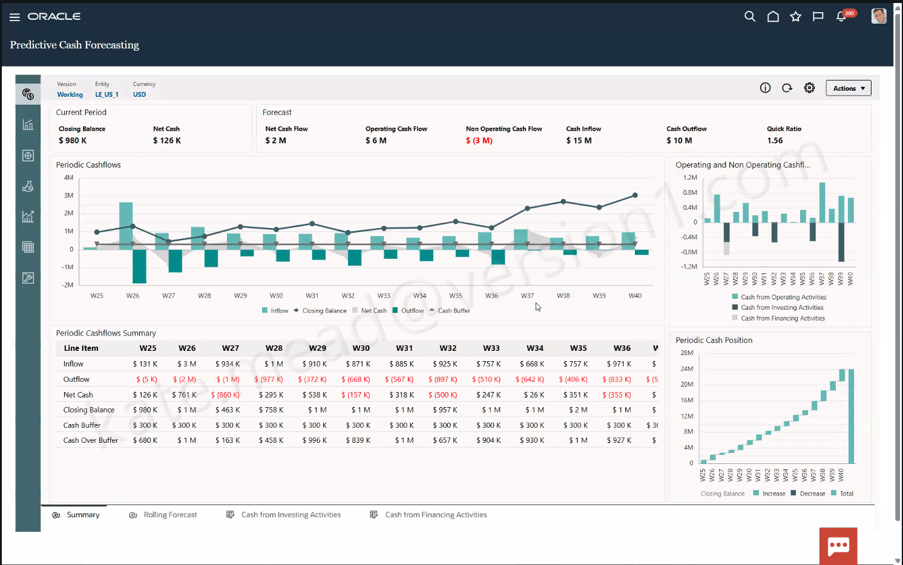
One particularly useful feature is the ability to compare forecasted and actual cash flows across successive periods. This helps identify variances early, allowing treasury teams to investigate unusual spending patterns or unexpected changes in cash movement before they become larger issues.
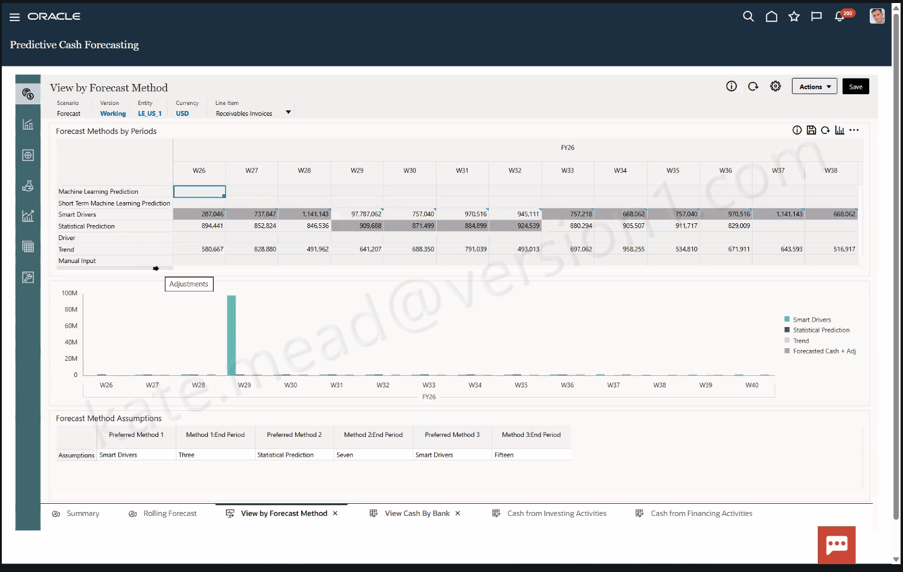
The AI capability becomes more apparent through Oracle’s forecasting methods. Organisations can review forecasts generated using different approaches, including machine learning models, statistical forecasting techniques, moving averages and trend-based methods. Rather than relying on a single forecasting model for every scenario, finance teams can select the most appropriate forecasting approach for different periods within the forecast horizon.
This flexibility can help improve forecast accuracy while giving users greater confidence in the forecasts they rely on for decision-making.
Before planning an implementation, it is worth noting that Predictive Cash Forecasting requires Oracle EPM Planning licensing. Organisations should confirm their current licensing position and security roles before including it within their roadmap. Businesses already using the standalone Predictive Cash Forecasting capability within Oracle EPM can continue to do so, as the existing solution remains fully supported.
Banking connectivity has often been an area where finance teams depend on custom integrations, file transfers and manual reconciliation activities. Oracle’s embedded banking strategy seeks to simplify these processes by connecting Oracle Fusion Cloud ERP more directly with participating banking partners.
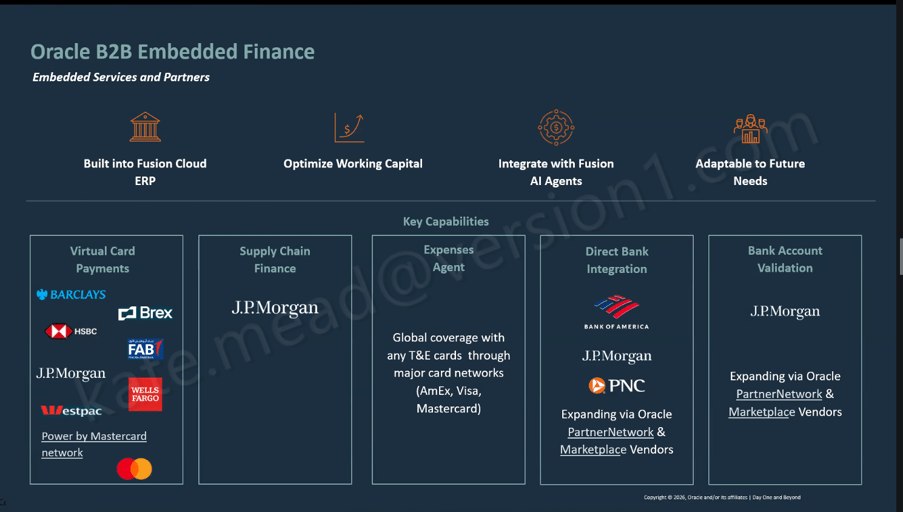
The capability supports a range of services including virtual card payments, direct banking connectivity, supply chain finance, bank account validation and real-time banking information. Oracle continues to expand its ecosystem of banking partnerships to support these services.
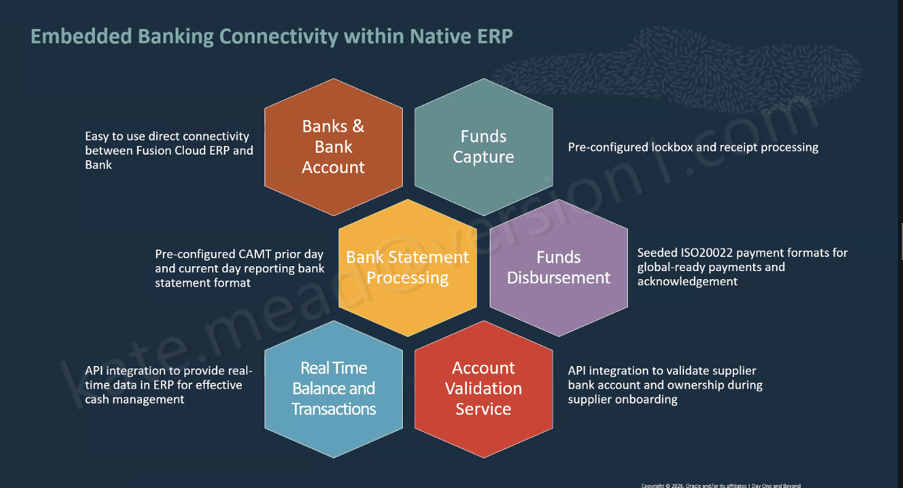
From an operational perspective, embedded banking simplifies several key activities, including bank account setup, receipt processing, bank statement processing, payment execution and balance visibility. Standard support for ISO 20022 payment formats also reduces the effort traditionally associated with formatting payments for different banking providers.
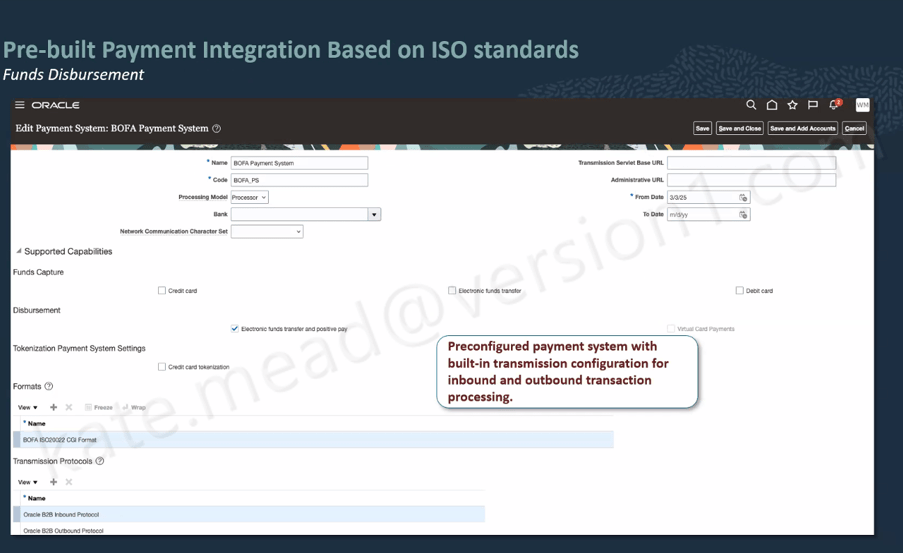
One feature attracting particular attention is supplier bank account validation. During supplier onboarding, bank account details can be validated automatically, helping organisations confirm account ownership and reduce payment risks before transactions are processed. The immediate benefits are clear. Finance teams can reduce failed payments, improve supplier data quality and strengthen controls designed to prevent payment fraud.
Organisations should be aware that bank account validation currently has geographical and banking partner limitations. If this capability forms part of your business case, it is worth discussing current coverage with Oracle before implementation to ensure it aligns with your supplier population and operating regions.
Within Accounts Payable, Oracle’s Payments Agent focuses on helping organisations make better payment decisions while improving processing efficiency. For many finance teams, payment runs are often viewed as an administrative activity. However, payment timing can have a significant impact on working capital, supplier relationships and available discounts.
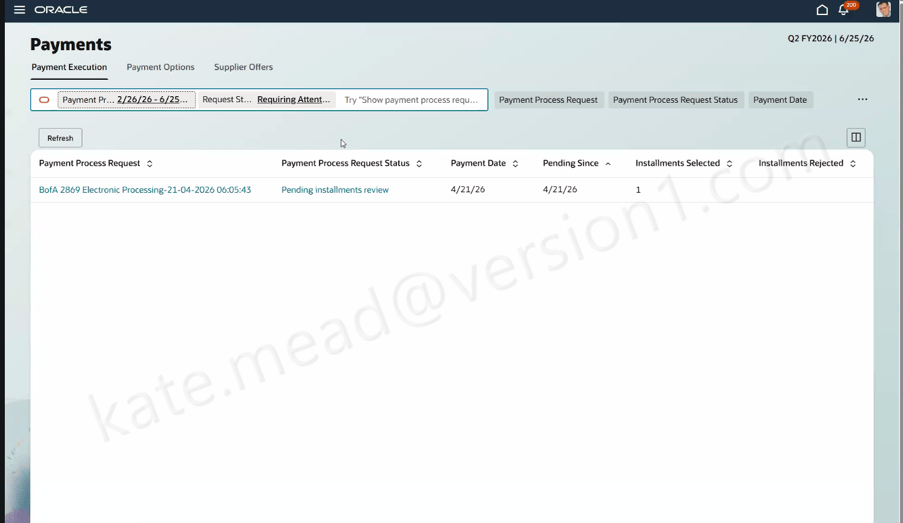
Oracle’s Payments work area provides visibility of payment proposals, supplier offers and outstanding balances within a single workspace. This makes it easier for AP teams to identify early payment discounts, supplier incentives and rebate opportunities that may otherwise be overlooked.
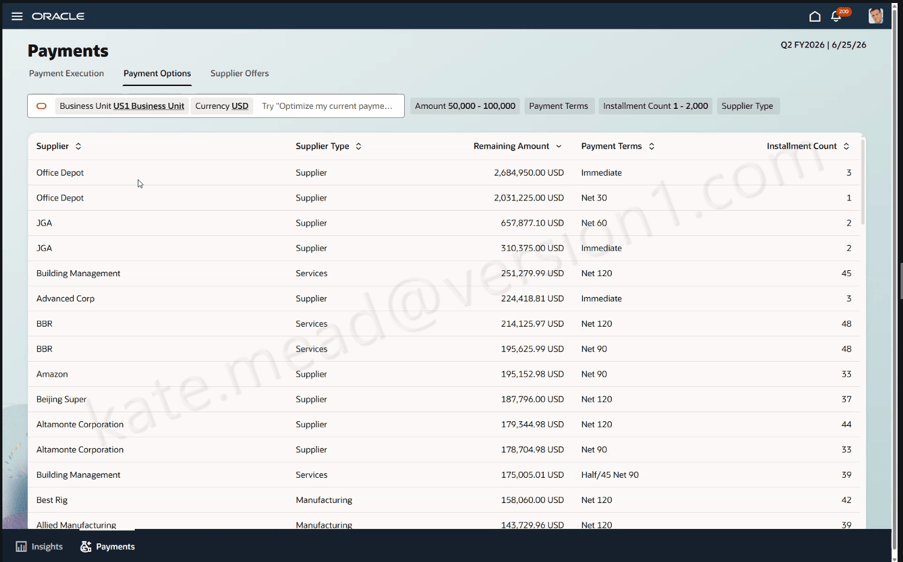
Additional views allow users to analyse payment information at supplier level, providing insight into balances, payment terms and instalment arrangements. This helps finance teams validate payment recommendations and understand the potential impact of alternative payment decisions. The result is a more informed approach to payment management, where teams can balance cash preservation with supplier engagement and commercial opportunities.
While all of these developments are valuable, the most significant day-to-day impact may come from Oracle’s AI-driven Collections Workspace. Managing collections has traditionally been heavily dependent on individual collector experience. Determining who to contact, which accounts present the highest risk and how best to approach each customer can consume a significant amount of time.
Oracle’s Collections Workspace brings this information together in a prioritised view, helping teams focus on the accounts that require immediate attention. Customers can be ranked based on overdue balances, risk factors, broken payment commitments and unresolved disputes.
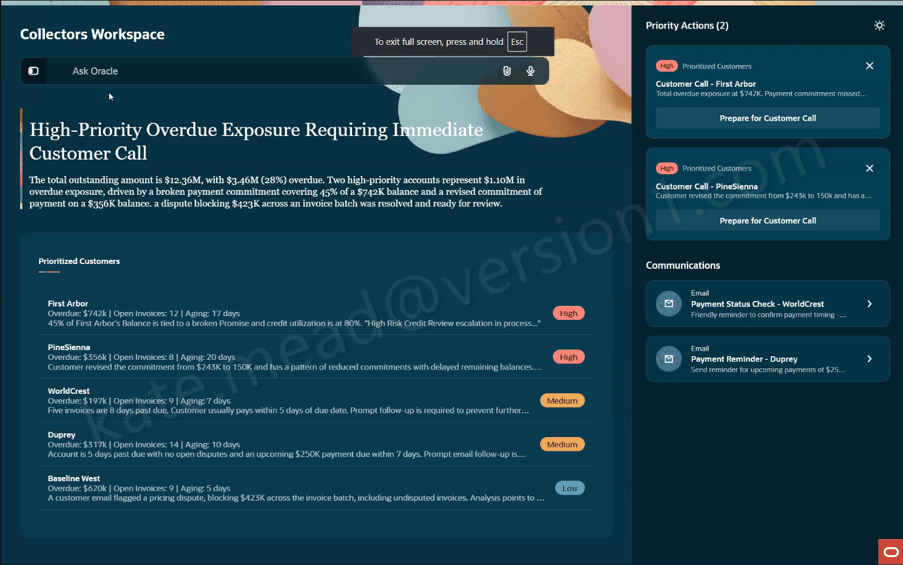
The embedded AI assistant provides collectors with account summaries, collection histories and recommended next actions. Rather than spending time researching account details before every customer interaction, collectors can access the information they need in a single workspace.
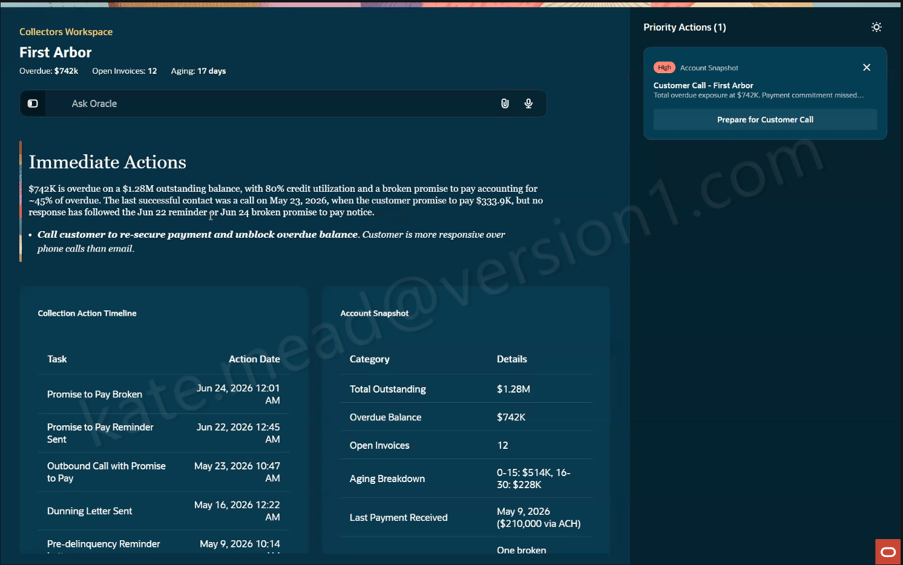
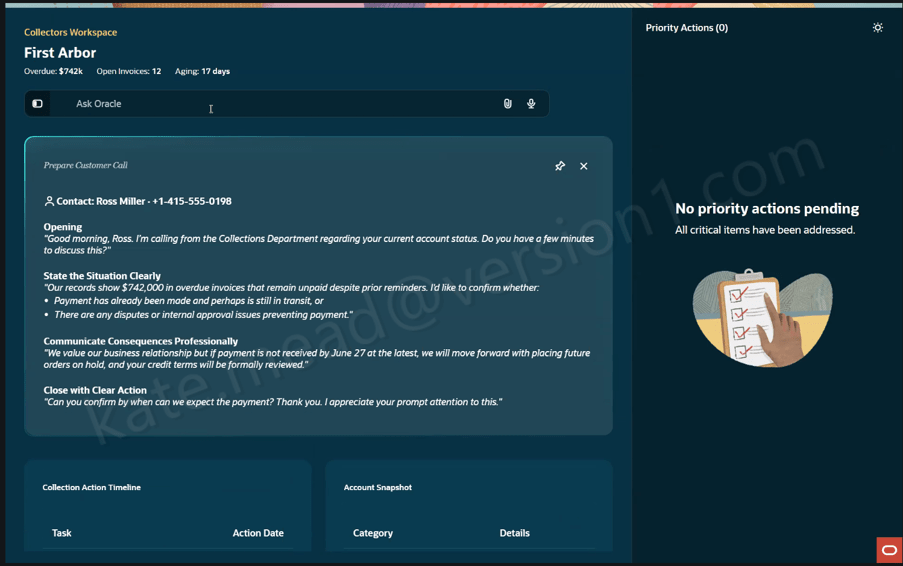
Perhaps most impressive is the ability to generate suggested call preparation notes based on a customer’s payment history and current account status. This helps collectors enter conversations better prepared and with a clearer understanding of the issues that need to be resolved.
The workspace also supports post-call follow-up activities. By analysing conversation records and account information, Oracle can identify actions that may require attention and help route information to the appropriate teams.
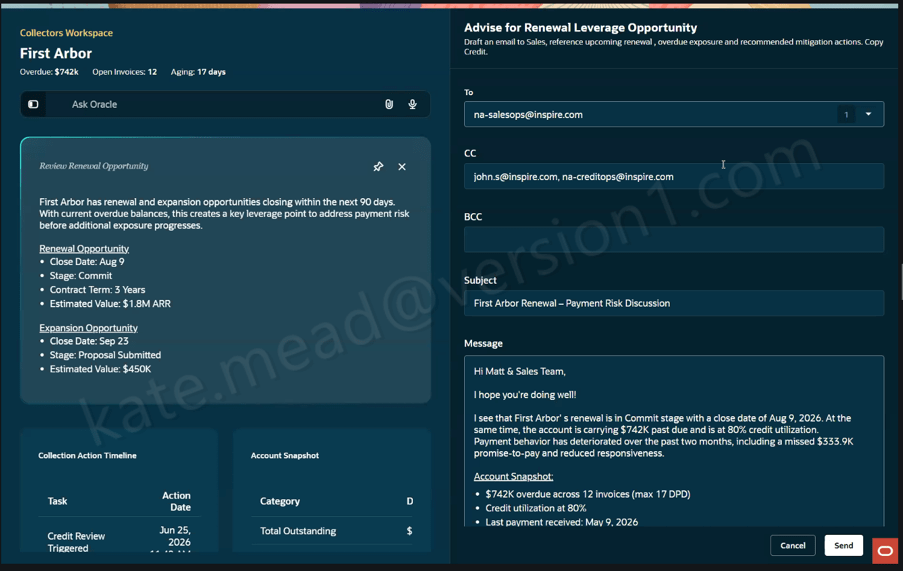
For collections teams, the practical benefit is simple: less time spent preparing for conversations and more time focused on resolving outstanding debt and improving cash collection performance. It is important to note that the Collections Workspace forms part of Oracle’s Agentic Applications strategy and requires the appropriate licence to be enabled.
As with any new capability, success depends on understanding the prerequisites before embarking on an implementation. Predictive Cash Forecasting requires Oracle EPM Planning licensing, whether accessed through Oracle ERP or a standalone EPM environment. Appropriate security roles should also be reviewed early in the project lifecycle. Organisations considering bank account validation should confirm current banking partner support and geographical coverage before building business processes around the capability.
The good news is that these innovations do not require a complete finance transformation programme to begin delivering value. Many organisations can adopt individual capabilities incrementally, allowing them to target specific business challenges while building towards a wider AI-enabled finance strategy.
What stands out across all of these developments is that Oracle is focusing on practical outcomes rather than AI for its own sake. Whether it is improving cash forecasting accuracy, reducing payment risk, identifying supplier discount opportunities or helping collections teams recover debt more effectively, the emphasis is on solving real business problems.
For organisations looking to improve liquidity management, strengthen financial controls and increase efficiency across finance operations, these capabilities are well worth exploring.
Please note all screenshots are the property of Oracle and are used according to their Copyright Guidelines


