
With the final deadline for Redwood Recruiting having passed in 26B, the 26C release introduces further innovation, with a strong focus on AI alongside additional Redwood pages to improve the overall user experience. With that in mind, let’s take a look at what’s coming for Recruiting in 26C. As always, Oracle may introduce additional features as the quarter progresses, and if anything particularly notable appears, I’ll share a follow-up update.

The first feature I want to highlight introduces an AI-driven approach to initiating sourcing activity directly from the Recruiting Activity Centre. Oracle has provided a preconfigured agent template designed to sit within recruiting workflows and respond to key requisition activities. Once set up, the agent can automatically trigger when certain activity states are reached, such as when a requisition is awaiting submission, formatting, posting or approval. At that point, the agent can create candidate pools and, if activity slows, generate recruitment campaigns, for example where there have been no recent applications. This all runs in the background once the activity is assigned and the relevant scheduled process is running, removing the need for recruiters to step in manually.
The benefit here is removing friction at the start of the sourcing process and maintaining momentum without relying on manual intervention. Routine but essential tasks such as building candidate pools or launching campaigns are handled automatically and at the right time. This allows recruiters to focus on higher value activities such as engaging with candidates and hiring managers. It also introduces a more consistent approach to sourcing, with the same logic applied across requisitions. Over time, this should lead to faster pipeline creation, fewer delays in attracting candidates and a more proactive hiring approach, even when activity slows.
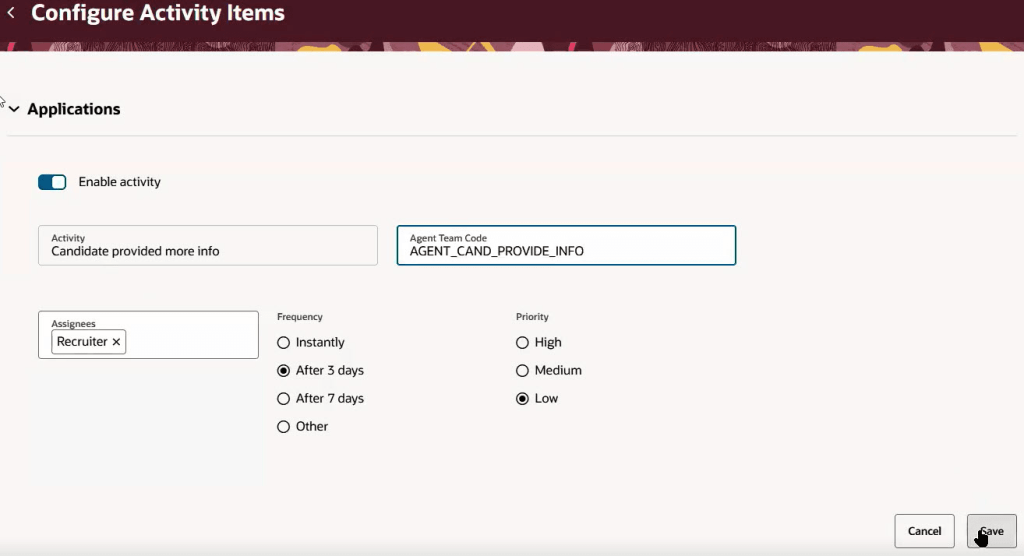
The next feature, Activity Centres: Automatically Launch AI Agents from Activities, builds on this by making AI agents a standard part of how Activity Centres operate across Recruiting, Sourcing and Interview processes. Organisations can configure published HCM workflow agents to respond automatically when activities are generated, carrying out actions or sending notifications without manual input. By assigning an agent to an activity through a simple configuration and running the scheduled process, the system can identify activities that require action and trigger the relevant agent. As the agent progresses, it updates its status so the system can track whether tasks are in progress, complete or need to be retried.
The value here is in keeping workflows moving without constant user involvement. Activities no longer sit waiting for someone to pick them up or remember the next step. Instead, the system helps move tasks forward and keeps stakeholders informed. This leads to quicker task completion and more consistent execution across recruitment stages, helping to reduce delays in the hiring process. It also improves coordination between recruiters, sourcing teams and interviewers by reducing the reliance on manual follow-ups and emails.

Another key update introduces a more structured and scalable way to support AI-driven content across the external candidate experience. Oracle has moved away from the earlier Prompt Lab approach and standardised on workflow agents that sit behind AI Assist capabilities on career site pages. These preconfigured agents, managed through AI Agent Studio, support a range of scenarios including generating job summaries for search, creating career site content, surfacing relevant assets on job descriptions and providing job fit insights to candidates. As these agents are designed to be reusable and channel agnostic, they can be applied consistently across the candidate journey while still allowing organisations to tailor them.
From a business perspective, this creates a more flexible and modern foundation for candidate engagement. Content generation becomes easier to manage and more consistent, reducing duplication and manual effort. Candidates benefit from richer and more relevant information, helping them better understand roles and suitability before applying. Importantly, this aligns with Oracle’s longer-term direction, giving customers a clearer path forward with a solution that is easier to extend, maintain and evolve as AI capabilities continue to mature.
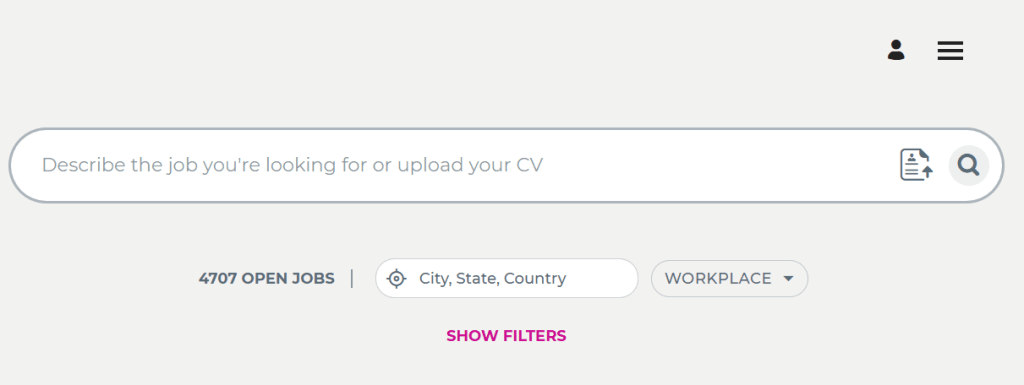
Smart Search is another enhancement that improves the job search experience in a practical way. Rather than being limited to fixed locations, candidates can now search based on proximity to any location that matters to them, including their current position. The introduction of a search radius provides a more realistic view of available opportunities, helping candidates focus on roles within a reasonable commute. Features such as browser-based location detection also remove friction, making it quicker to find relevant roles.
This is likely to improve both candidate satisfaction and application quality. Candidates are more likely to find roles that genuinely fit their circumstances, while organisations benefit from more relevant applicants. As Smart Search is expected to become the default in a future release, it is worth reviewing your current configuration, particularly the use of fixed versus proximity-based search, to ensure it reflects how your workforce operates.
For organisations using ‘Apply with Indeed’, it is important to plan ahead as this functionality will be discontinued in 27A due to changes in Indeed’s integration model. Transitioning to Direct Apply will help avoid disruption and provides a more seamless and modern candidate experience while ensuring continuity as the legacy functionality is retired.

Turning to Redwood enhancements, the Generate Job Requisition Posting Description Using AI Agent feature brings AI-assisted job description creation directly into the Redwood experience. Using a workflow agent, content can be generated across key sections such as the summary, responsibilities and qualifications. For recruiters and hiring managers, this makes it quicker and easier to create clear and consistent job adverts without starting from scratch.
The shift to an agent-based approach also provides a more robust and future-ready foundation, replacing earlier prompt-based methods while maintaining a familiar experience. For organisations, this means reduced manual effort, greater consistency in how roles are presented and ultimately a stronger candidate experience through clearer, more engaging job descriptions.
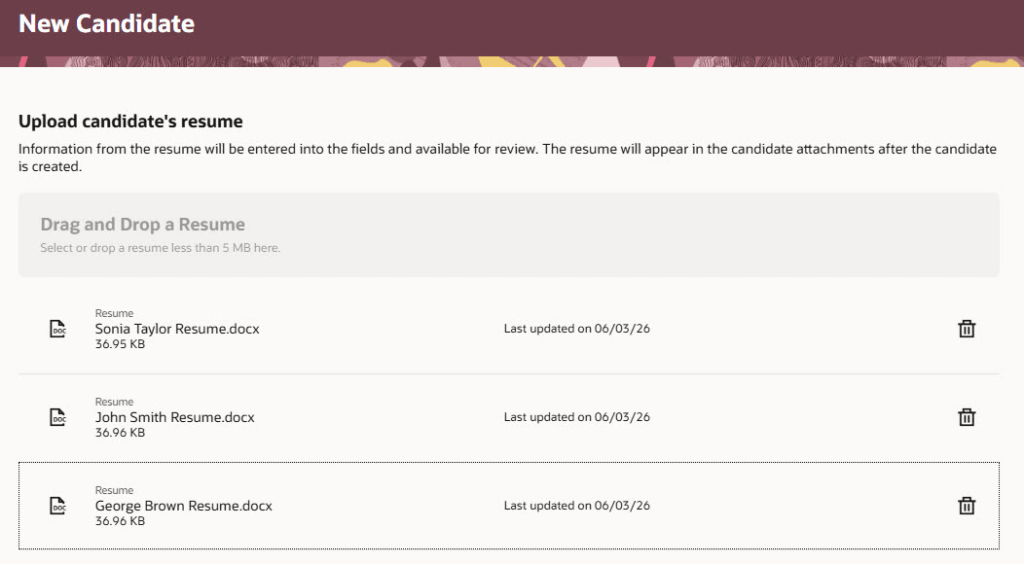
Another update, driven by customer feedback through the Ideas Lab, is Bulk Candidate Creation by Uploading Resumes. This allows recruiters to upload multiple CVs at once, with AI extracting key information and automatically populating candidate profiles. Rather than manually entering details for each individual, recruiters can review and refine the extracted information within the candidate record, balancing efficiency with data quality.
The benefit here is a significant reduction in administrative effort and a faster turnaround from receiving CVs to having candidates ready in the system. It also helps teams manage higher volumes more effectively, particularly during peak recruitment periods, while ensuring consistency in how candidate records are created.
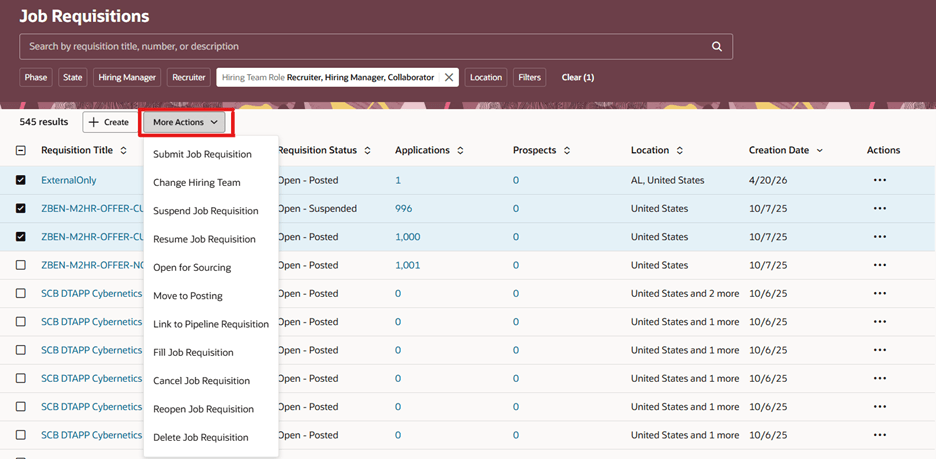
Finally, Bulk Actions on the Job Requisitions List makes it easier to manage large volumes of requisitions. Recruiters can now update multiple records in a single action rather than working through each one individually. This includes moving roles through the lifecycle, opening them for sourcing or updating hiring teams. The ability to update the hiring team across multiple requisitions is particularly useful when responsibilities change, removing repetitive manual updates.
For users, this delivers a clear improvement in efficiency and scalability. Bulk actions reduce time spent on administrative tasks and help teams keep pace during busy periods, while asynchronous processing allows larger updates to run smoothly in the background. The result is a more streamlined and consistent way of managing requisitions at scale.
Oracle often introduces additional features as the quarter progresses, so it is worth keeping an eye out for further updates. If anything particularly impactful emerges, I will share a follow-up. In the meantime, if you are planning your 26C adoption or want to explore the updates in more detail, take a look at my latest write-up covering the Core HR enhancements.
Please note all screenshots are the property of Oracle and are used according to their Copyright Guidelines

 K8 Mead