
I’ll admit it. This is probably the first time I’ve written a blog focused on Oracle CX. Most of my content tends to centre around HCM, ERP, SCM, AI Agent Studio, or the wider Oracle Fusion platform. However, over the last few months I’ve been spending a lot more time working with Oracle Helpdesk. As Helpdesk sits within the Oracle CX product suite, that has naturally led me to take a closer look at some of the innovation happening within CX.
When I discovered that Oracle had developed an AI-powered assistant specifically designed to help organisations accelerate their move from the Classic user experience to Redwood, I was intrigued. Redwood migrations are a challenge that many Oracle customers are facing, and the idea of using AI not just to answer questions, but to actively guide and support that journey, felt like an interesting glimpse into where enterprise AI is heading.
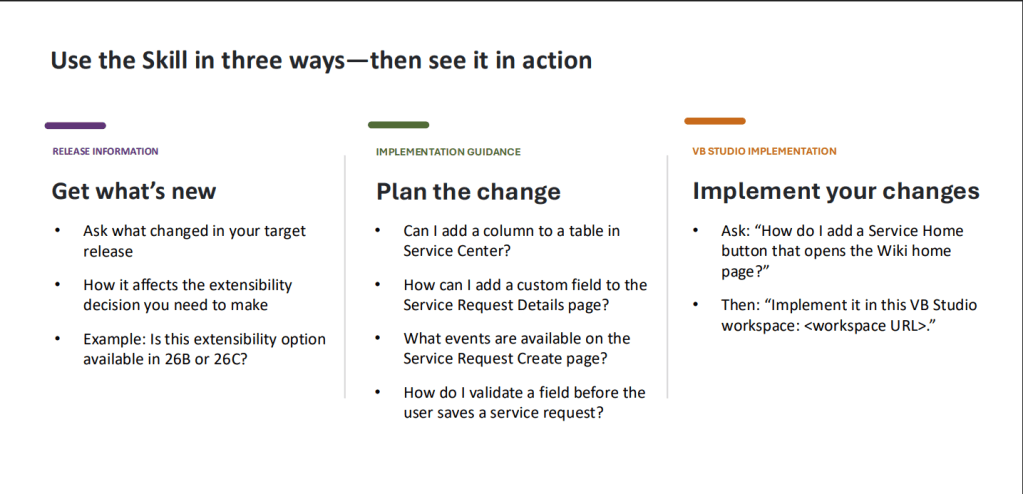
It’s worth calling out an important caveat before I go any further. This particular capability is currently designed for Oracle CX Service and its associated extensibility framework. It is not available for HCM, ERP or SCM. However, what interested me as much as the solution itself was the fact that the CX product team is actively exploring and proving patterns that could potentially influence future AI-assisted implementation and configuration experiences across other Oracle product areas.
One of the biggest challenges with Redwood adoption is not usually understanding why you should move. Oracle has been clear about the benefits for some time. Redwood provides a more modern user experience, improved efficiency, greater flexibility through Visual Builder Studio, intelligent recommendations, and access to functionality that is only available within the Redwood user interface.
The real challenge is often understanding how to get there. Customers frequently ask questions such as: How do I recreate an existing extension in Redwood? Is a particular extensibility option available in my target release? What is the supported way to add custom functionality to a specific page? How do I avoid building something that won’t survive the next quarterly update? These are exactly the types of questions implementation teams spend significant amounts of time researching.
What caught my attention was that Oracle’s approach isn’t simply to place a large language model in front of documentation and hope for the best. Instead, the assistant is designed to provide grounded guidance using curated, release-aware sources that are specific to Fusion Service extensibility. The aim is to help users understand supported approaches, identify limitations, and surface any missing information required to answer the question accurately. That distinction is important.
One of the biggest misconceptions about enterprise AI is that the value comes from the model itself. In reality, the value often comes from the quality of the information that sits behind it. A generic AI model may be incredibly capable, but if it doesn’t understand the specific product, release, extensibility framework, or support boundaries involved, its answers can quickly become unreliable.
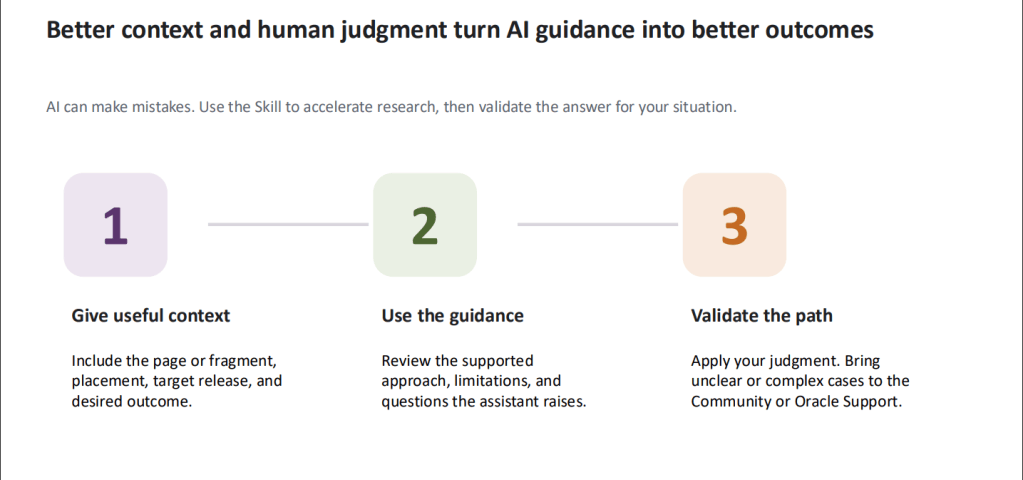
The CX team appears to have recognised this. The assistant routes questions to curated repositories of release-specific information and clearly highlights uncertainty or gaps where additional context is needed. Rather than positioning AI as an infallible expert, it is positioned as an accelerator for research and decision making. I also liked the emphasis on human judgement.
The guidance repeatedly reinforces that users should provide context, review the recommendations, and validate the proposed approach before implementation. In other words, AI helps you get to an answer faster, but it doesn’t remove the responsibility to apply experience and critical thinking. That’s a message I’ve been repeating in many of my recent AI-focused blogs, regardless of whether we’re talking about Agentic Apps, generative AI, or implementation accelerators.
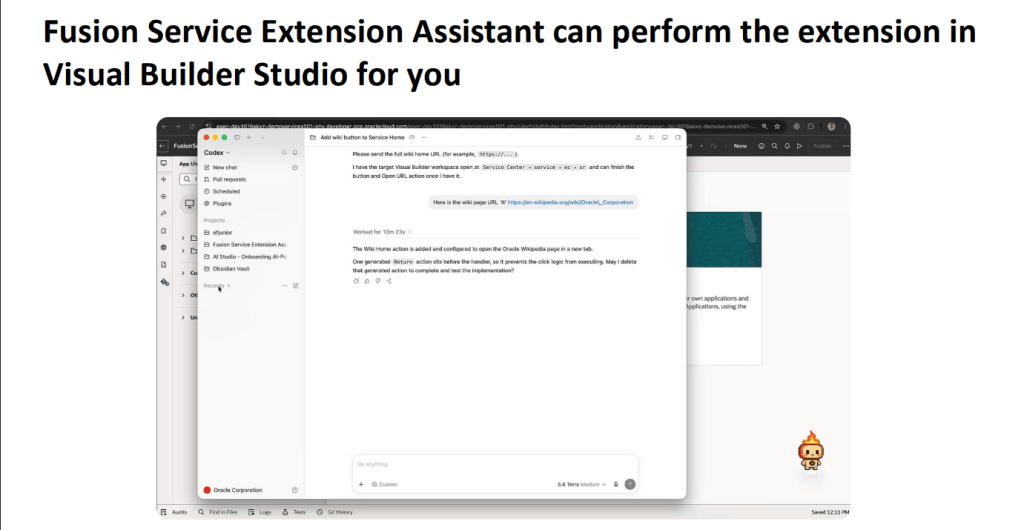
Perhaps the most interesting aspect is where this could lead. Today, the capability focuses on Fusion Service extensibility and Redwood migration activities. It can help users understand new release functionality, identify supported implementation patterns, and even assist with Visual Builder Studio-related work.
Tomorrow, could we see similar experiences helping HCM administrators understand Redwood customisations? Could ERP teams receive guided support when adapting role-based pages? Could SCM implementation consultants get release-aware recommendations about supported configuration options?
Those are questions only Oracle can answer. But what seems clear is that the CX team is exploring a practical application of AI that goes beyond simply generating content. Instead, it aims to reduce implementation effort, improve confidence, and help customers reach the right outcome more quickly. For me, that’s where enterprise AI becomes genuinely interesting. Not when it replaces expertise, but when it helps organisations make better use of it.
Please note that all screenshots are the property of Oracle and are used in accordance with Oracle’s Copyright Guidelines.

