
It’s quarterly release time again, and Oracle Fusion Absence Management 26D is one of those releases that probably won’t grab headlines. There’s no shiny new AI capability. No major redesign of the absence process. No feature that’s going to fundamentally change how organisations manage leave. What there is, however, is a collection of enhancements that solve genuine problems.
Some of these updates close long-standing gaps between Absence Management, Time and Labor, Payroll and Project Costing. Others make life easier for administrators. There’s even a small but welcome improvement that makes organisational events much more visible to employees. Individually, none of these features are ground breaking. Collectively, they make the product noticeably better.
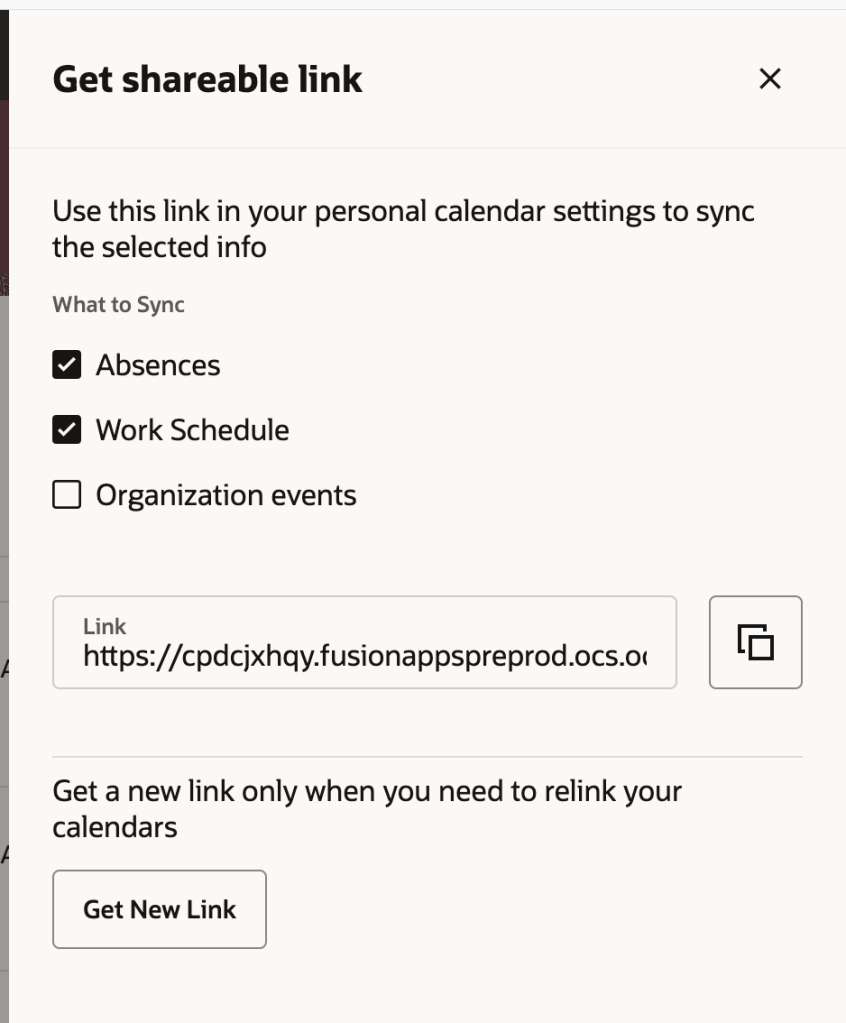
If I had to pick the feature that will have the biggest day-to-day impact, it’s probably Organisation Calendar Events in Calendar and Calendar Synchronisation. Many organisations maintain company shutdowns, public holidays, site closures, special events, or other important dates within organisation calendars. The problem has always been visibility. Unless employees actively looked in Oracle, those events were easy to miss.
With 26D, employees can now synchronise organisation calendar events alongside their absences and shifts using Oracle’s existing calendar integration. That means important organisation events can appear directly in the calendar applications people already use every day. For employees, it’s a small change that removes a surprising amount of friction. Instead of checking multiple systems to understand what’s happening, everything becomes visible in one place.
Oracle has also improved the Redwood calendar experience itself by allowing users to open calendar events and immediately see additional details such as descriptions, categories and timings without having to search elsewhere for information. It’s a simple enhancement, but one that’s likely to improve awareness and reduce confusion around organisation-wide events.
Oracle continues its journey towards a fully Redwood-based HCM experience, and in 26D the Leave Agreements administration page receives the Redwood treatment. While this might sound like another routine Redwood migration, it’s actually a worthwhile improvement for absence administrators. The previous experience wasn’t particularly intuitive and often required moving between different screens to manage agreements and related information. The new Redwood page brings everything together in a single location, making it much easier to search, filter, review and maintain leave agreements.
For organisations that manage complex collective agreements, union arrangements or other entitlement frameworks, reducing administrative effort is always welcome. This won’t fundamentally change how leave agreements work, but it does make them significantly easier to manage. And that’s often what good Redwood design should do.
One of the quieter additions in 26D is also one of the most sensible. Oracle has introduced a dedicated security role that provides access to the Absences and Entitlements page without requiring organisations to rely on broader HR Specialist access. That may not sound exciting, but it addresses a challenge many customers face when trying to align Oracle security with real-world operating models.
Not every organisation wants absence administrators to have the wider access typically associated with HR roles. Until now, customers often had to make compromises or develop workarounds. The new role provides much more flexibility when designing security models and supports the principle of providing users with only the access they actually need. For organisations with dedicated absence administration teams, that’s a genuinely useful addition.
This next enhancement will be particularly valuable for organisations using Oracle Project Costing. Historically, absence entries captured through Time and Labor didn’t always flow cleanly into Project Costing, creating gaps when organisations were trying to understand the true cost of project resources.
That might not sound significant initially, but when you’re managing project budgets or analysing resource utilisation, missing absence costs can distort the picture. With 26D, eligible absence entries can now be transferred to Project Costing while retaining the relevant project information. The result is more complete project cost data and fewer manual workarounds to reconcile information across systems. This is one of those features that many organisations may never notice directly, but finance teams and project managers will certainly appreciate the improved accuracy behind the scenes.
In my view, this is probably the most important update in the release: Transfer Calculated Time Entries for Absences to Payroll, Many organisations use Time and Labor calculations to generate additional payments such as overtime, shift premiums and other pay-related adjustments. The problem was that when those calculations were associated with absences rather than worked time, Payroll didn’t always receive the complete picture. That could create reconciliation challenges and introduce additional administrative effort during payroll processing. 26D closes that gap.
Calculated entries associated with absences can now be transferred through to Payroll alongside the underlying absence information. What sounds like a technical integration enhancement actually delivers a very practical benefit: payroll calculations become more complete, more accurate and require less manual intervention. For organisations with complex shift patterns, premium payments or heavily unionised environments, this could remove a long-standing source of frustration. And honestly, it feels like one of those features that should always have worked this way.
Absence Management 26D isn’t a release built around a single headline feature. Instead, Oracle has focused on improving existing processes, tightening integrations and making administration easier. The calendar enhancements make absence-related information more visible to employees. The new Redwood Leave Agreements experience provides a cleaner administration experience. Security becomes more flexible. Project costing becomes more accurate. Payroll receives more complete absence-related calculations.
The interesting thing about this release is that Oracle has focused on the areas customers typically only notice when something isn’t working properly. Whether it’s absence-related payments not reaching Payroll, project costing not reflecting employee leave, or staff struggling to find important organisation calendar events, these aren’t glamorous problems, but they’re the sort of issues that create extra administration, reconciliation work and user frustration. 26D won’t transform the way you manage absence, but it does remove a number of small pain points that many organisations have simply learned to live with. For me, that’s what makes this a stronger release than it first appears.
Please note that all screenshots are the property of Oracle and are used in accordance with Oracle’s Copyright Guidelines.

 K8 Mead