
It’s quarterly release time again and Oracle has delivered a surprisingly practical set of updates for Procurement in 26D. There’s plenty of AI in this release, which won’t come as a surprise given Oracle’s recent direction. What I found interesting, though, is that many of these features aren’t about replacing procurement professionals or automating entire processes. Instead, they’re focused on removing friction. Making it easier to buy something. Easier to raise a request. Easier to manage contracts. Easier for suppliers to work with you. And honestly, that’s where I think the biggest value often comes from.
Most employees aren’t procurement experts. They don’t know the difference between a catalogue requisition, a non-catalogue request or an intake process. They simply need a laptop, a contractor, some software or a piece of equipment. The more effort they spend working out how to navigate procurement processes, the less time they’re spending on their actual job. That’s the theme that runs through Oracle Procurement 26D.
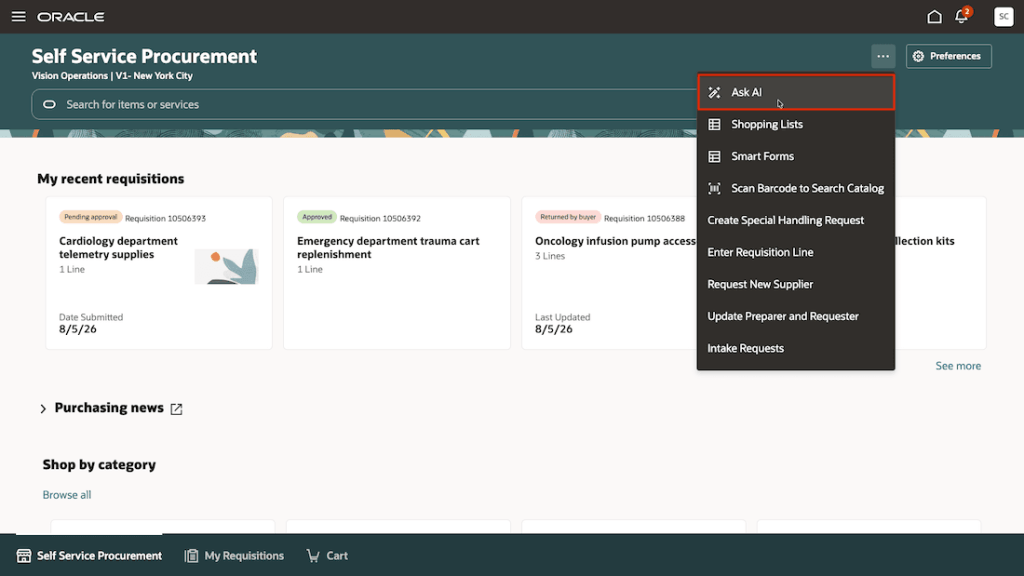
One of my favourite additions in this release is the new Procurement Request Concierge. If you’ve followed Oracle’s investment in AI across HCM, you’ll probably recognise the concept straight away. Rather than expecting users to understand which process they need, Oracle lets them start with a simple conversation.
An employee can describe what they’re trying to achieve and the Concierge works out the most appropriate route. Behind the scenes it might direct them to a catalogue purchase, an intake request, a procurement policy adviser or another specialised procurement assistant. I think this is an important shift.
For years, organisations have invested significant effort in training employees how to use procurement systems. Oracle is increasingly turning that around and teaching the system how to understand employees instead. That may seem like a subtle difference, but it has the potential to improve adoption, reduce incorrect requests and make procurement feel far less intimidating for occasional users.
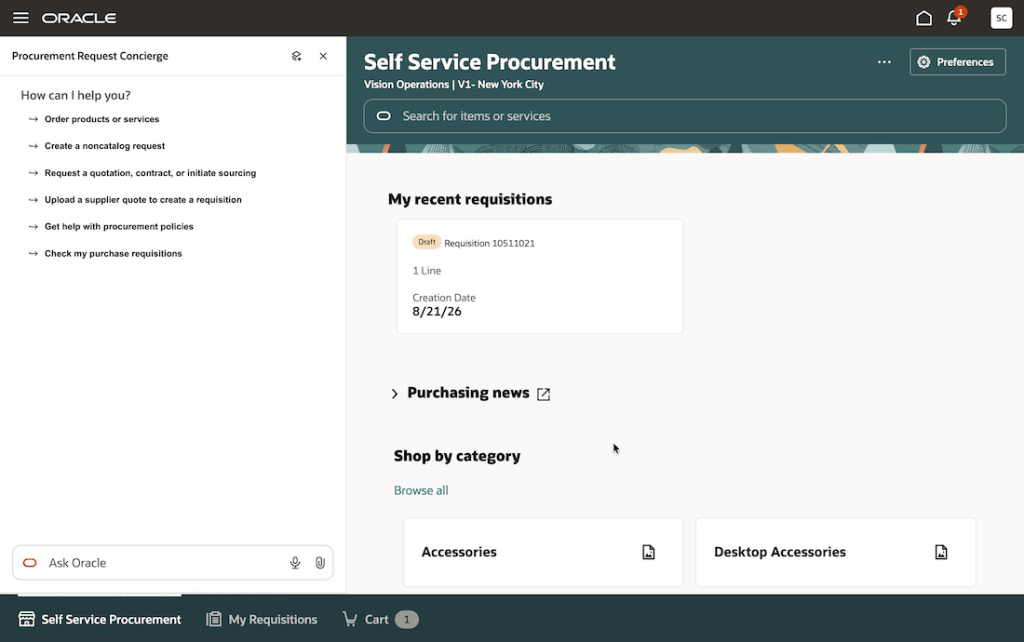
Oracle has also continued enhancing the Intake Request Creation Assistant. The individual improvements are relatively small, but together they make the experience significantly more natural. The assistant can now understand units of measure, handle currencies more intelligently, capture supporting documents and retain information that doesn’t neatly fit into predefined fields. Oracle has also introduced AI-generated request summaries to help reviewers quickly understand what’s being requested.
What I like about these enhancements is that they’re focused on a real problem: people don’t speak in structured procurement forms. Users naturally describe what they need in their own words. Historically, procurement systems expected employees to translate those requirements into a format the system could understand. Increasingly, Oracle is teaching the system to do the translation instead. That’s exactly how AI should be used. The best AI isn’t always the most visible AI. Sometimes it’s simply the technology that quietly removes the annoying bits of a process.
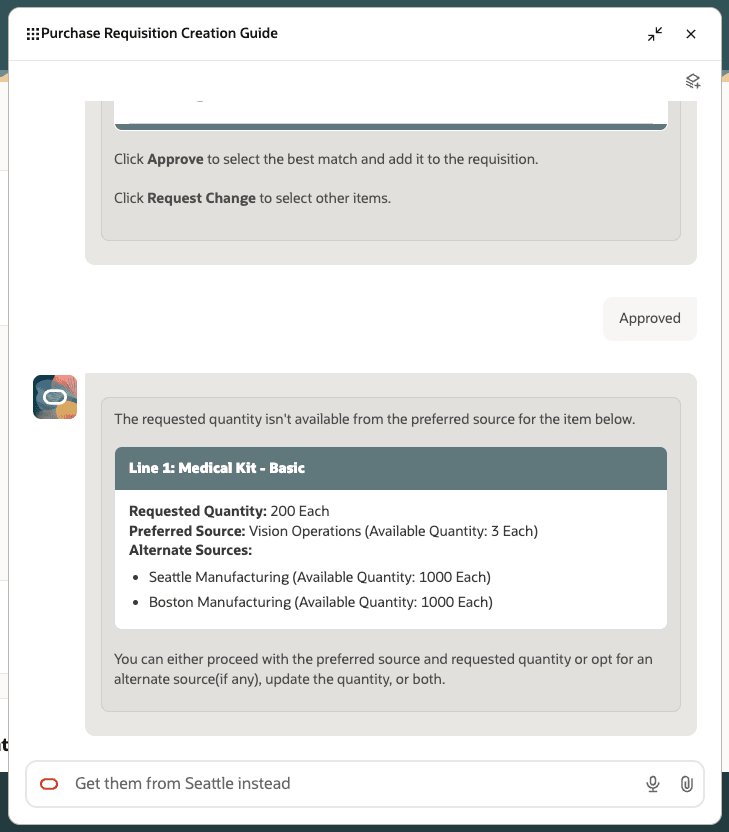
Two enhancements to the Purchase Requisition Creation Guide stood out for me because they address challenges many organisations face every day. The first is multilingual support. For global organisations, English often becomes the default language for business systems, even when it isn’t the first language of many employees. Allowing employees to interact with procurement assistants in their preferred language reduces barriers and makes the technology accessible to a much wider audience.
The second enhancement improves visibility into internal material sourcing. If stock isn’t available from a preferred internal source, requesters can now see alternative sourcing options immediately, rather than discovering availability issues later in the process. Neither feature is particularly flashy. Both are likely to save users frustration. And that’s often a much better measure of success.
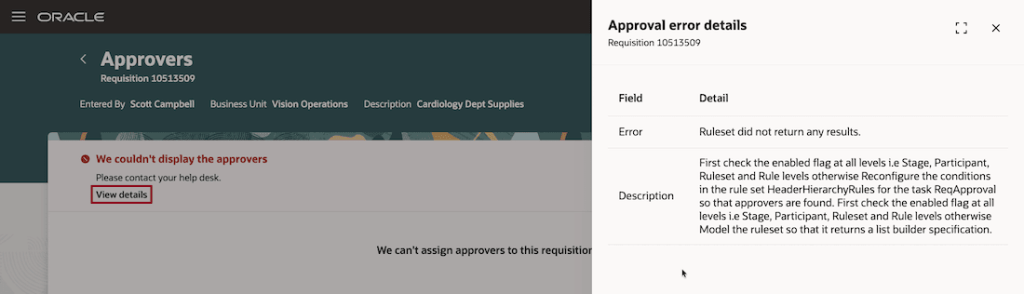
One of the updates that caught my attention has nothing to do with AI. Oracle has improved the way approval errors are communicated to users. Historically, requisitions could sometimes appear stuck with little indication of what had gone wrong. That inevitably leads to support calls, emails and frustration as users try to work out what happened. In 26D, error messages are clearer, more informative and provide better diagnostic information when something goes wrong. Whilst this isn’t ground breaking, improvements like this often have a disproportionate impact on user satisfaction because they address genuine everyday frustrations.
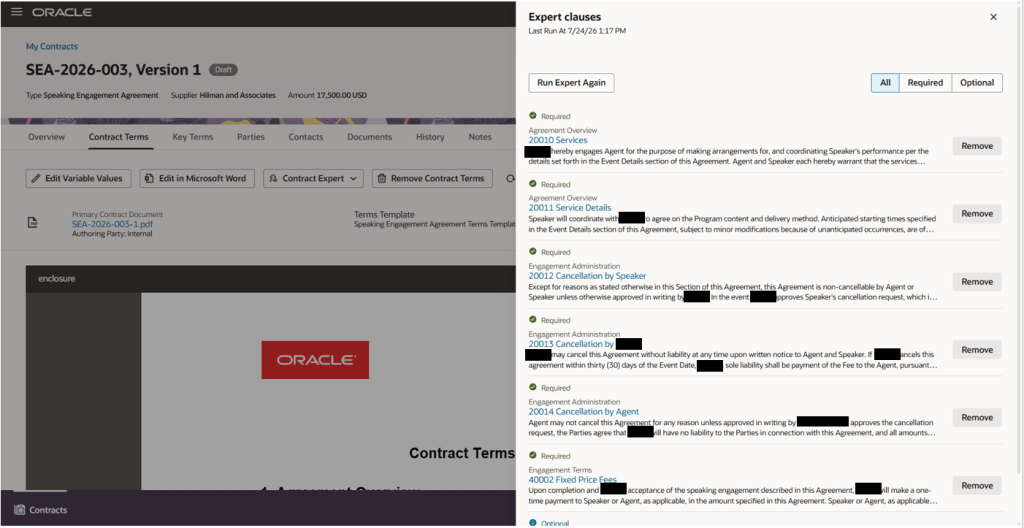
The biggest enhancements in 26D arguably sit within Enterprise Contracts. Both features focus on tasks that have traditionally required substantial manual effort. The first is AI-powered contract ingestion. Many organisations have large collections of contracts sitting in shared drives, document repositories and archive systems. Bringing those contracts into a structured contract management solution has often required significant manual effort and review. Oracle can now use AI to help classify those documents, extract key information and create contract records. If you’re undertaking a contract transformation programme, consolidating legacy systems or simply trying to improve contract visibility, this could significantly reduce the effort involved.
The second enhancement builds on Contract Expert. Rather than relying solely on traditional rules, Oracle can now evaluate contracts against policy guidance and recommend or automatically apply appropriate clauses. For me, the real value isn’t the AI itself. It’s consistency. As organisations grow, maintaining consistent contractual terms becomes increasingly difficult. Features that help ensure the right clauses are included at the right time can improve governance and reduce risk without creating additional work for contract authors. That’s the sort of practical AI adoption I like to see.
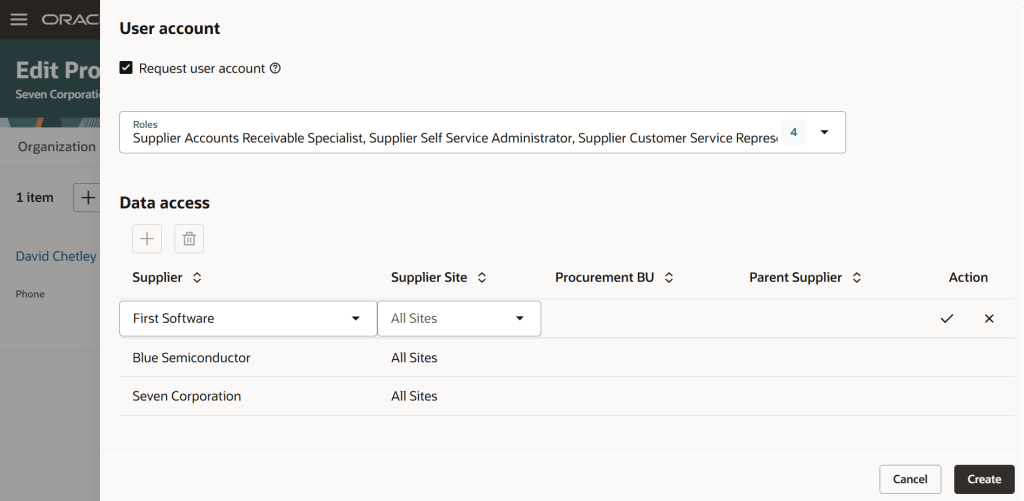
Several of the 26D enhancements focus on suppliers rather than internal users. Supplier contacts can now manage multiple supplier relationships using a single account, reducing the need for multiple logins and simplifying administration. Oracle has also introduced a new Redwood experience for supplier invoicing and payment management, creating a more modern and streamlined interface for suppliers submitting invoices and tracking payments. It’s easy to focus entirely on employee experience when reviewing release notes, but supplier experience matters too. The easier you make it for suppliers to do business with you, the smoother your procurement processes become overall.
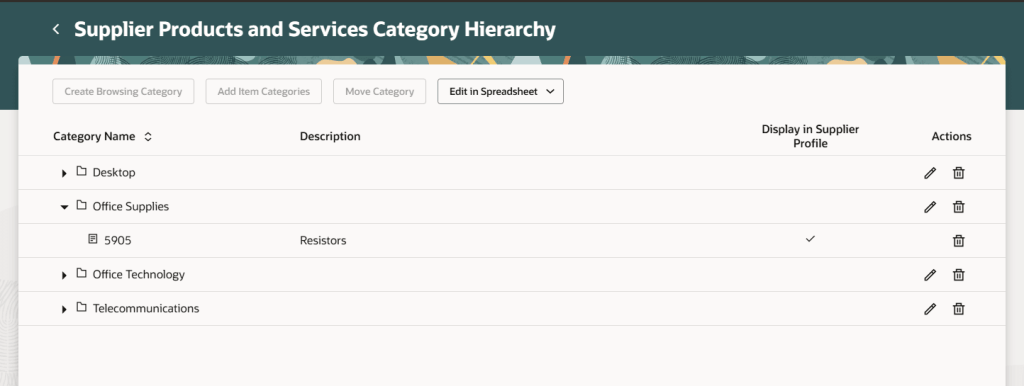
Like almost every Oracle release at the moment, 26D also continues the wider Redwood journey. Additional Supplier Management setup pages are now available in Redwood, reducing the need for administrators to move between classic and Redwood experiences. It’s not the biggest story of the release, but it reflects Oracle’s continued progress towards delivering a more consistent user experience across the entire procurement suite.
What I like about Procurement 26D is that Oracle hasn’t tried to solve procurement with a single headline-grabbing feature. Instead, we’re seeing dozens of improvements that make procurement easier for everyone involved. Employees get a simpler starting point. Requesters receive more intelligent guidance. Contract managers gain tools that improve consistency. Suppliers benefit from a more streamlined experience.
Yes, AI is everywhere in this release. But the most valuable features aren’t necessarily the ones shouting about AI. They’re the ones quietly helping people complete tasks faster, make better decisions and spend less time fighting the system. That’s not always the most exciting story. For most procurement teams, though, it’s probably exactly the right one.
Please note all screenshots are the property of Oracle and are used according to their Copyright Guidelines.


