
I’ve written about Oracle AI Success Navigator a few times now, and I’ve always liked the principle behind it. But with 26.2, I think we’re starting to see something more significant happening. Success Navigator is moving beyond simply helping customers understand their Fusion estate and what Oracle recommends they consider next. Increasingly, it is starting to help connect those insights to decisions, roadmaps, implementation and adoption.
And that matters because most Oracle Fusion customers don’t have a shortage of information. In fact, I’d argue that the problem is often the opposite. There are quarterly releases, new AI capabilities, Redwood changes, business process improvements, configuration recommendations and an ever-growing list of things that you could be doing.
The harder questions are much more practical. Which of those things actually matter to us? What should we prioritise? And how do we turn that into something we can realistically deliver? That, for me, is where Oracle AI Success Navigator 26.2 starts to get really interesting.
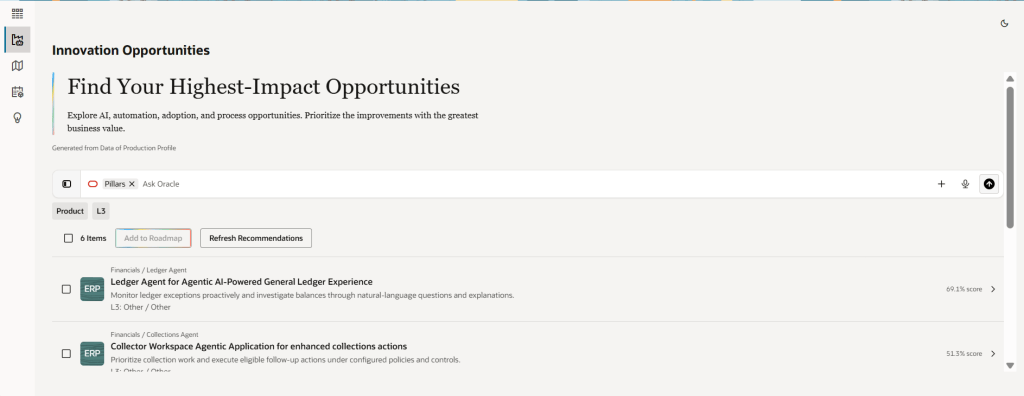
One of the changes that immediately caught my attention is Innovation Opportunities. Rather than expecting customers to work through everything Oracle has released and decide what might be relevant, Success Navigator will use information from the customer’s Account Profile to surface relevant Fusion capabilities and suggested actions. Customers can review those opportunities and, where appropriate, add them directly into their Adoption Roadmap. It sounds like a relatively simple change, but I think it addresses a very real problem.
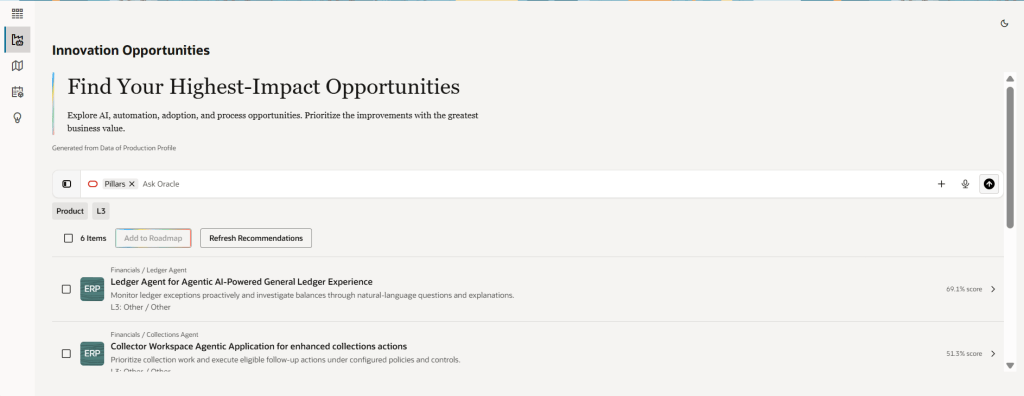
I speak to customers regularly who know there is functionality within Fusion they aren’t using. Sometimes they aren’t sure what they are entitled to. Sometimes they know about a capability but haven’t had the time to investigate whether it is relevant. And increasingly, particularly with AI, the sheer pace of new functionality makes keeping up difficult.
Success Navigator starts to change the question from: “What has Oracle released?” to: “What could actually make a difference to our organisation?” For me, that is a much more useful conversation. There is an important caveat though. A recommendation isn’t a business case. Just because something is technically available doesn’t mean it should automatically go onto the implementation backlog. You still need to consider process maturity, data, security, integrations, change capacity and, most importantly, the business outcome you are trying to achieve. I see Innovation Opportunities as providing a much better starting point for those conversations, not replacing them.
Then we get to Agentic Implementation. This is probably the area that gives us the clearest indication of where Oracle is heading, although it is important to separate what is available in 26.2 from what has been announced for the future. At AI World in Las Vegas, Oracle introduced its plans for specialised implementation agents covering Discovery, Design, Configuration, Testing, Integration and Innovation. Central to that vision is the Oracle Fusion Setup and Configuration Registry, or FSCR, which Oracle describes as an authoritative, machine-readable source for Fusion setup, configuration and product-defined best practice. FSCR isn’t really a feature of this AI Success Navigator release yet. It is better thought of as part of the emerging architecture behind where Oracle wants Agentic Implementation to go. But for me, it is still one of the more interesting parts of the overall direction.
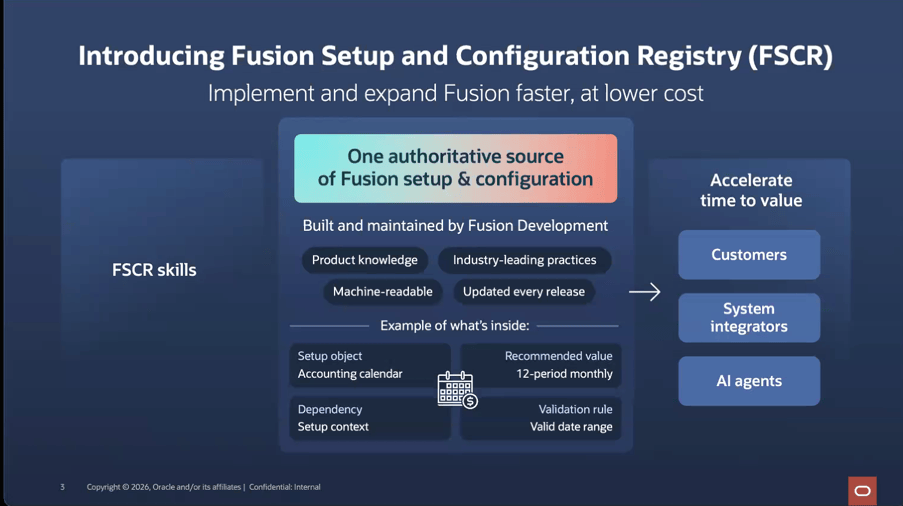
For years, implementations have relied on consultants taking product knowledge, documentation, previous experience and customer requirements and translating all of that into designs, configuration workbooks, setup activities and test scenarios. The promise of FSCR is that more of that underlying Oracle product knowledge could become machine-readable. Configuration options, dependencies, sequencing, execution, testing and validation could increasingly become reusable AI skills that implementation agents can work with.
Importantly, Oracle’s model still includes expert review, with AI-generated configurations able to be reviewed, adjusted and approved before deployment. So I don’t see this as “AI replaces the implementation team”. I think that is far too simplistic.
Instead, I see the potential for implementation teams to spend less time on repeatable mechanics and more time on the things that genuinely require experience and judgement: understanding the organisation, challenging processes, dealing with exceptions, designing controls, considering security, managing integrations, assuring what AI has produced and making sure the solution actually delivers the intended business outcome. That is potentially quite a fundamental shift.
Oracle has talked about some significant improvements in design and configuration effort from its early work in this area. I’d still be cautious about turning those into generic productivity claims, particularly while FSCR and the associated implementation capabilities are still emerging. For now, I see this less as a headline feature of 26.2 and more as a signpost towards what AI Success Navigator could become.
Another change that may receive less attention than the agents, but could be extremely useful in practice, is the evolution of Adoption Roadmaps, Release Readiness and the Update Planning Center. Success Navigator already supports quarterly Fusion release planning. With 26.2, Oracle is also introducing monthly maintenance guidance alongside improvements intended to make it easier to explore features, prioritise innovations and track progress. For me, this brings us closer to continuous innovation.
A quarterly release really shouldn’t be a frantic exercise every three months where teams download a spreadsheet, identify the mandatory features, send dozens of emails, decide what they can realistically test and then repeat everything the following quarter. There should be a continuous process for understanding change, assessing impact, deciding what to adopt, planning testing and change activities, recording decisions and then coming back afterwards to see whether the expected value was actually achieved. Bringing more of that into the same environment could help move release management away from being a periodic technical exercise and towards becoming part of the organisation’s ongoing Fusion operating model.
The Configuration Assessment updates also deserve some attention. The existing capability already helps customers look at the relationship between Fusion entitlements, configuration and usage, including identifying processes that are configured and used, configured but not used, or neither configured nor used. Oracle has confirmed Configuration Assessment updates for 26.2, although the detailed enhancements weren’t fully documented in the material I reviewed.
I think the opportunity here is bigger than simply finding unused configuration. If something has been configured but isn’t being used, why isn’t it being used? Was the functionality never properly embedded? Is the process wrong? Has training been missed? Is security preventing people from accessing it? Is an integration getting in the way? Or was it configured years ago and simply isn’t relevant anymore? That creates a very different optimisation conversation.
Instead of starting with a fairly generic question like “How can we get more from Fusion?”, you can begin with evidence about the customer’s existing environment and work out where there is genuinely an opportunity to improve. The technology provides the starting point. The important part is still interpreting what that evidence means for the business.
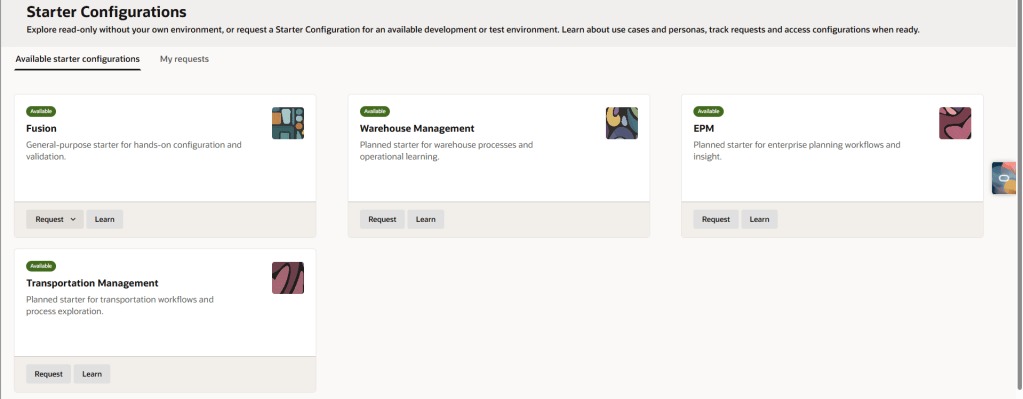
Oracle is also redesigning the Starter Configuration experience and refreshing its Business Processes content in 26.2. The detailed changes haven’t yet been fully published, but I think the principle behind Starter Configuration remains really useful. Let people see something tangible earlier.
Business users don’t necessarily want to spend weeks discussing an abstract future-state process captured in documents and diagrams. Being able to look at a working Fusion environment, walk through personas and processes and then have a fit-to-standard conversation can make design much more meaningful.
The interesting part for me is what happens when you connect that experience to Agentic Implementation. Discovery, process design, configuration and testing potentially start becoming much more connected rather than being separate implementation phases with documents passed between them. That connection between guidance and execution is where the direction of Success Navigator becomes much clearer.
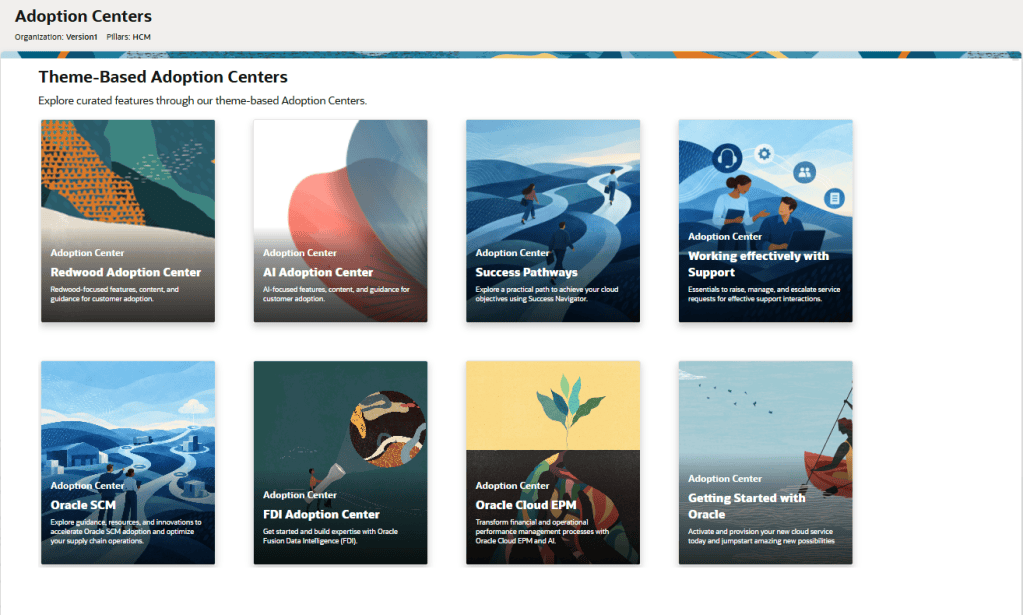
Finally, Oracle is introducing new Adoption Centers with resources focused on product adoption, achieving business outcomes and working effectively with Support. And this brings me back to something I say quite often about AI and transformation. Technology availability does not equal adoption. You can recommend the right feature, configure it perfectly and release it successfully. That doesn’t mean anybody is going to use it properly.
People still need to understand why something is changing. Processes need to change around the technology. Managers need to reinforce new behaviours. Training and communications need to be relevant to the people actually doing the job. And somebody needs to come back afterwards and ask: Did this actually deliver what we expected? I actually think AI makes that part of transformation more important, not less. As more of the technical implementation activity becomes automated or agent-assisted, the proportion of effort needed around judgement, assurance, people and organisational change potentially becomes greater.
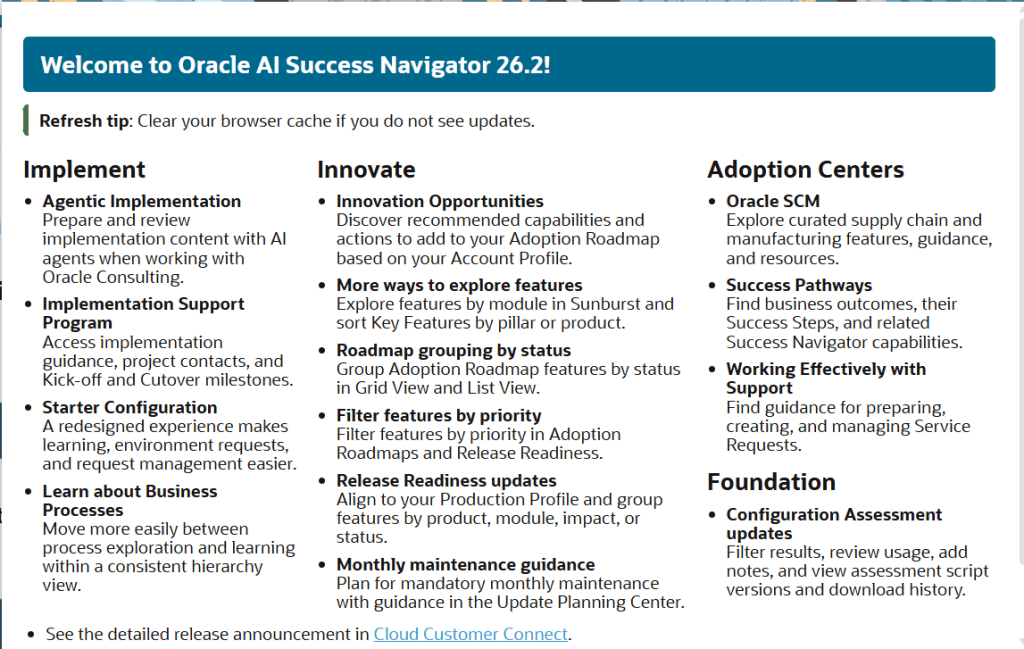
When I step back from the individual 26.2 enhancements, this is the real story for me. Success Navigator is beginning to form a much more connected lifecycle: Understand where you are. Identify opportunities. Decide what matters. Plan the change. Implement it. Adopt it. Measure it. Then optimise again. That is much closer to how customers actually need to manage a continuously evolving SaaS platform.
It is also why I’m particularly interested in how Innovation Opportunities, FSCR and Agentic Implementation develop. If Oracle can provide more product intelligence and repeatable execution through the platform, it changes where customers and implementation partners should spend their time. Less effort interpreting documentation and recreating standard configuration knowledge. More effort understanding the business, designing the right transformation, managing risk, integrating the wider technology landscape and making sure new capability translates into measurable value.
For me, that is where AI in enterprise applications becomes much more interesting. Not simply: “What can AI do?” But: “What can we now spend our time doing because AI can take care of more of the repeatable work?” Oracle AI Success Navigator 26.2 feels like another step towards answering that question. And I suspect the shift from guidance to action is going to become much more important than any individual feature in this release.
Please note all screenshots are the property of Oracle and are used according to their Copyright Guidelines.


