
I’ve been following Oracle AI World remotely from the UK this year rather than being out in Las Vegas, but there has certainly been no shortage of announcements to digest. After Day 1, I wrote about what felt like a clear shift in the conversation: from AI helping people work to AI getting work done.
Day 2 built on that, but from a different angle. If AI is going to do more of the work, what needs to sit underneath it to make that possible? The data. The context. The infrastructure. The compute. The security. And the wider ecosystem that brings all of those things together. For me, that was the story running through Day 2.
One of the comments from Clay Magouyrk’s keynote that really stood out to me was a simple change in language. A year ago: “AI changes everything.” Today: “AI changed everything.”
It might only be one word, but I think it captures where we are rather well. We’re moving beyond talking about AI as something that’s coming. The focus now is increasingly on what happens when AI becomes part of the way organisations actually operate.
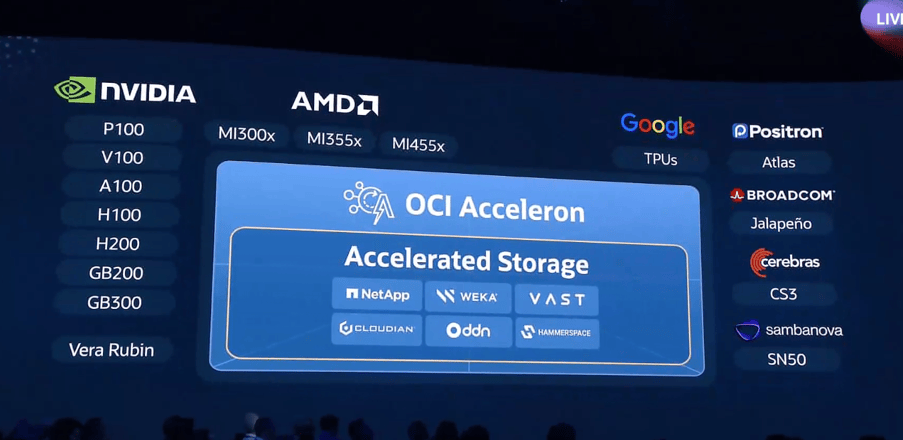
The keynote covered advances across media, security, infrastructure and data, alongside the choice of AI accelerators available on Oracle Cloud Infrastructure. Another phrase I noted was “Think of it as one big computer.” That sense of scale is important. This isn’t just about adding more AI features to the applications we already use. The foundations of enterprise technology are evolving to support an increasingly AI-driven world.
A number of the announcements from Day 2 caught my attention. Oracle’s work with OpenAI. The expansion of native AI and data services on OCI with Snowflake. Google TPUs coming to OCI. And the Oracle AI Data Platform. It would be easy to look at those as separate announcements. I think there’s a bigger theme here. Choice.
Enterprise AI isn’t going to be built around a single model, a single source of data or a single technology. Different organisations, workloads and use cases will need different things. And as AI continues to evolve at its current pace, being able to bring those things together becomes increasingly important. For customers, I don’t think this is really about wanting more technology or more complexity. It’s about having the flexibility to choose the right technology for the job.
I’ve written before that every AI conversation eventually becomes a data conversation. Nothing I heard on Day 2 changed my mind about that. If anything, it reinforced it.
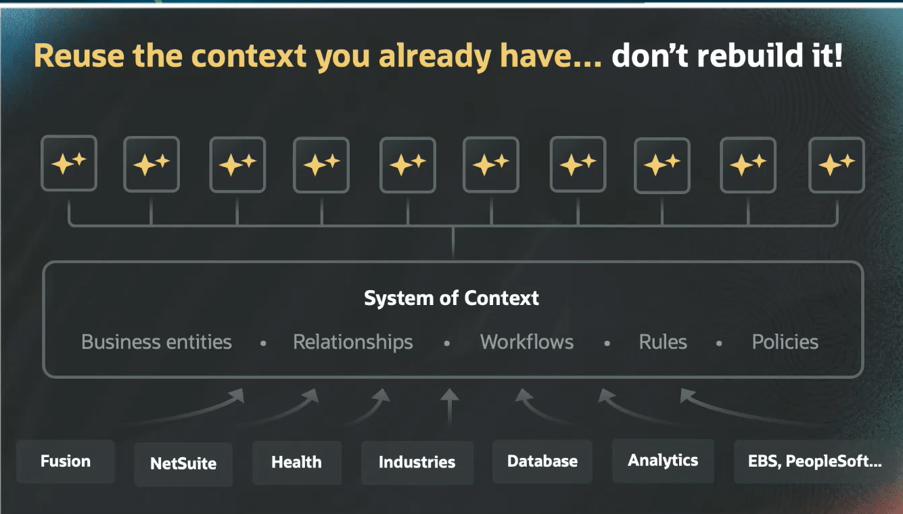
One of the sessions I found particularly interesting was Oracle AI Data Platform: Enterprise Context for Agentic AI at Scale. Even the title gets to something I think is going to become increasingly important: context.
For years we’ve talked about the importance of getting enterprise data into the right place, in the right format and at the right quality. AI doesn’t make that problem disappear. And as AI becomes more agentic, the importance of context only grows. It’s no longer just about having access to data.
The bigger question is whether AI has the information and enterprise context it needs to support useful outcomes. That’s an important distinction. Giving an AI assistant information so that it can help somebody make a decision is one thing. As we move towards AI doing more of the work itself, the foundations around it become much more important too.
Something else that stood out to me across Day 2 was just how important infrastructure has become to the AI story. The Powering the Next Era of Enterprise AI keynote reflected that broader infrastructure conversation, including references to renewable energy such as wind and solar.
It’s easy to get excited about what an AI agent can do. But enterprise adoption quickly introduces a different set of questions. Where does the data come from? Where do AI workloads run? How are they secured? What controls need to sit around them? How do organisations manage cost and capacity as the use of AI grows?
These might not be the announcements that generate the most eye-catching demos, but they’re increasingly important enterprise questions. The infrastructure underneath AI matters.
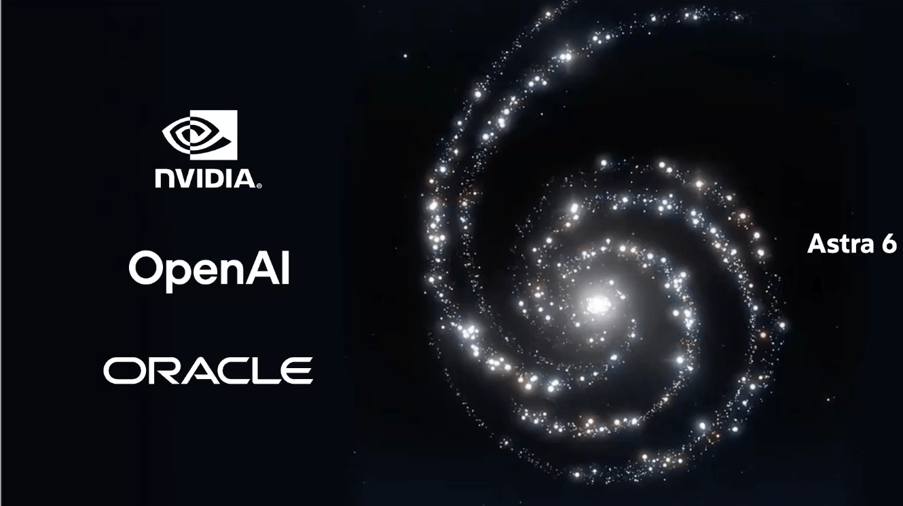
Another announcement that caught my attention was Oracle’s AI services practice powered by OpenAI technology. Again, what interested me wasn’t the individual announcement as much as what it says about the direction of travel. Think about how quickly the enterprise AI conversation has developed.
Initially, much of the excitement was around the models themselves. Then came copilots and assistants. More recently we’ve seen the conversation move towards agents and agentic applications. Now we’re talking increasingly about data platforms, enterprise context, AI infrastructure and the services needed to put all of those pieces together. To me, that’s a sign of a market growing up. Because having increasingly powerful AI isn’t enough. It still needs to solve real business problems.
So, after following Day 2 remotely, what am I taking away from it? Day 1 was about AI moving from helping people work to getting work done. Day 2, for me, was about the foundations that allow that to happen.
We’ve spent the last few years asking what AI can do. Can it summarise this? Can it create that? Can it answer this question? Can we build an agent to handle that process? Those questions aren’t going away. But I think the next questions are potentially much more interesting. What data does the AI have access to? Does it have the right business context? Where does it run? What controls sit around it? And can we scale all of that without simply creating a new generation of enterprise silos?
That’s where I think the conversation is heading. The organisations that get the most value from AI won’t necessarily be the ones that adopt the most AI. They’ll be the ones that build the right foundations around it.
Because if Day 1 showed us where enterprise AI is heading, Day 2 was a useful reminder of what we need underneath it to get there. The AI is only part of the story.
Please note all screenshots are the property of Oracle and are used according to their Copyright Guidelines.

