
If you’ve been working with Oracle Fusion for any length of time, you’ll know that getting data out of Fusion is often just as important as getting data into it. Whether it’s feeding a data warehouse, supporting reporting requirements, populating a data lake, or increasingly providing the data needed to power AI initiatives, organisations are extracting more Fusion data than ever before.
Traditionally we’ve had a number of options available to us, including HCM Extracts, BI Publisher and BICC. They all have their place and continue to solve different business challenges. But Oracle has recently introduced something new that could become a significant part of its long-term data extraction strategy: the Read Optimised Data Store (RODS).
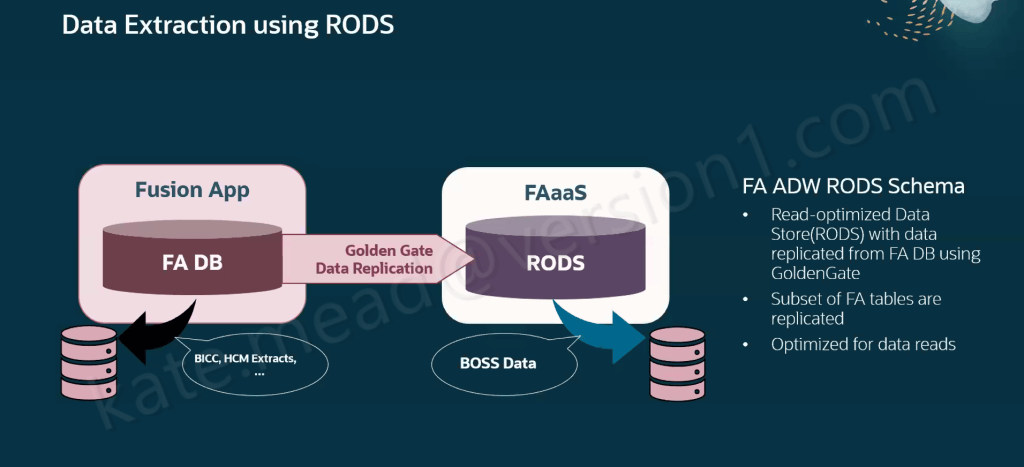
So, what is RODS? At a high level, RODS is exactly what the name suggests: a read-optimised copy of Fusion data designed specifically for extraction and reporting workloads. Instead of running large extraction jobs against the live transactional database, Oracle replicates selected Fusion data into a separate environment using GoldenGate technology. Extraction processes then run against this replicated data store rather than the core application database. The goal is simple. Make high-volume data extraction faster while reducing the impact on day-to-day Fusion operations.
For many organisations, extraction volumes continue to grow. Data is no longer only being extracted overnight for a monthly report. Today’s integrations, analytics platforms, AI services and operational reporting solutions often require much larger volumes of data and much greater frequency.
Historically, there has always been a balance between extracting the data you need and consuming resources that could otherwise be used by the application itself. RODS changes that dynamic. Because extraction workloads are separated from the transactional environment, organisations can run large-scale extracts without placing the same demand on the Fusion application database. That could be particularly valuable for customers with significant reporting requirements or complex integration landscapes.
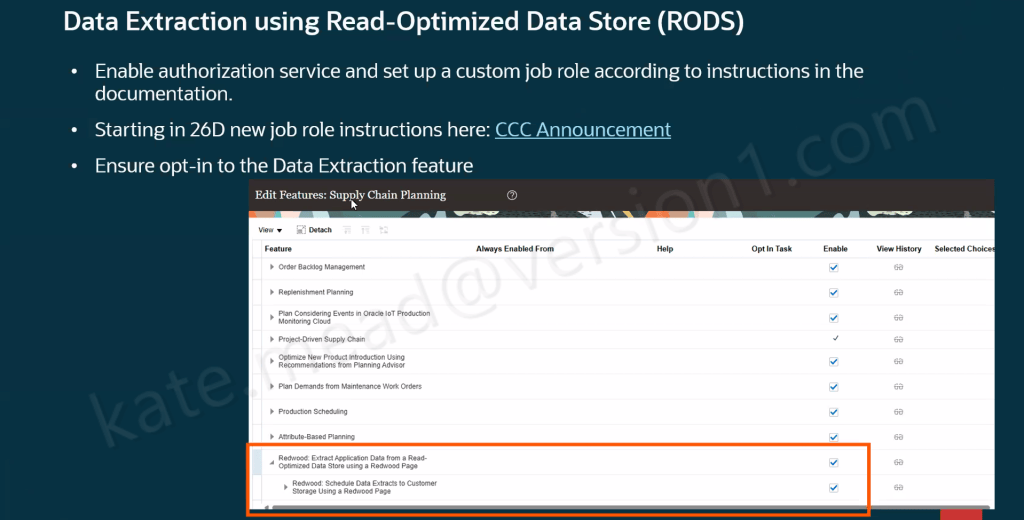
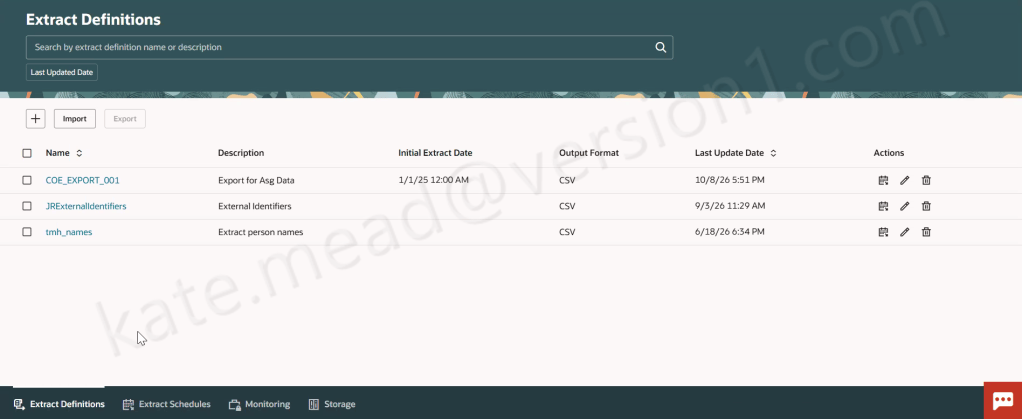
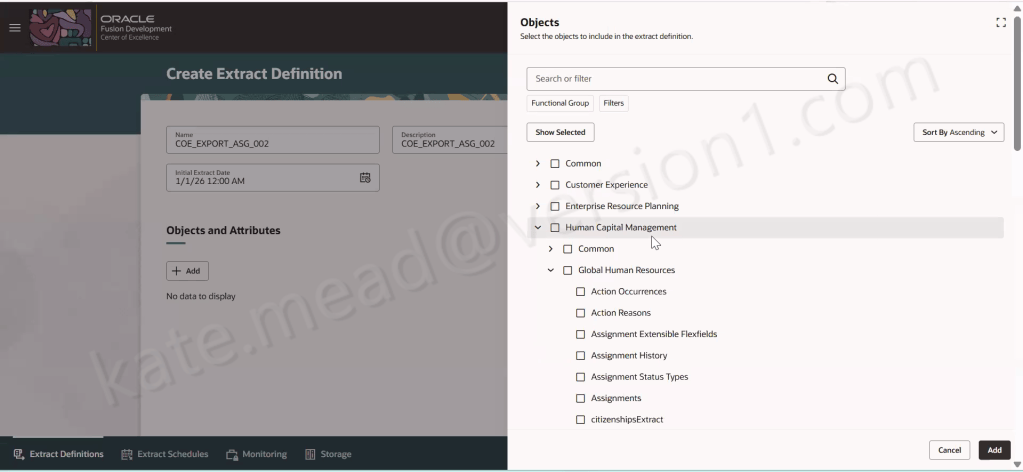
RODS is supported by Oracle’s new Data Extraction Tool (DET), which provides the framework for defining, scheduling and managing extracts. The Data Extraction Tool supports both full and incremental extracts and can output data in either CSV or JSON format. For organisations building modern data platforms, that’s likely to be exactly what they need. Clean, structured data delivered quickly and efficiently.
Does this replace HCM Extracts? No. And I think that’s an important point to understand. Whenever Oracle introduces a new capability, one of the first questions customers ask is whether it replaces what’s already there. The answer, at least today, is no.
HCM Extracts remain incredibly powerful, particularly where organisations require complex formatting, business logic, Fast Formula processing or highly tailored output files. RODS isn’t trying to solve those problems. Instead, it is focused on extracting large volumes of data efficiently and making that data available for downstream consumption. In reality, I suspect most organisations will continue to use a combination of technologies depending on the requirement.
The most interesting aspect for me isn’t necessarily the technology itself. It’s Oracle’s direction of travel. Oracle has openly discussed RODS as the long-term strategic direction for high-volume extraction and replication workloads, with many seeing it as the natural successor to BICC. That doesn’t mean existing extraction methods are going away anytime soon, but it does suggest where Oracle’s investment and innovation are likely to be focused moving forward. For customers making long-term architectural decisions, that’s worth paying attention to.
One area where I think RODS could become increasingly important is AI. As organisations start deploying more AI services, AI agents and autonomous processes, access to timely, high-quality operational data becomes critical. Oracle has confirmed that data replication into RODS occurs in near real-time, creating opportunities for more responsive analytics, automation and AI-driven decision making. Whilst we’re still at the early stages of seeing how customers will use this in practice, the link between modern data architectures and enterprise AI is becoming increasingly obvious.
RODS probably isn’t a feature that will get end users excited. Most employees will never know it exists. But for technical teams, data teams, integration specialists and architects, it could become a very important capability. The ability to extract large volumes of Fusion data quickly, without impacting transactional workloads, addresses a challenge many organisations have wrestled with for years.
I don’t see RODS replacing every extraction method. HCM Extracts, BI Publisher and other tools still have an important role to play. What I do see is Oracle laying the foundations for the next generation of Fusion data extraction, one that is built around scale, performance and increasingly the data demands of analytics and AI. If you’re currently using BICC extensively or are designing your future Fusion integration architecture, RODS is definitely something I’d be taking a closer look at.
Please note all screenshots are the property of Oracle and are used according to their Copyright Guidelines.

