
It’s that time again, quarterly release time, and Oracle Recruiting 26D is shaping up to be one of the more interesting releases we’ve seen for a while. At first glance, it’s easy to assume this is simply another AI-heavy update. After all, almost every major enhancement includes some form of advisor, agent or generative capability. But looking a little deeper, I think there’s a more interesting story here.
For years, recruiting technology has largely focused on helping recruiters process candidates more efficiently once a vacancy exists. A requisition opens, recruiters search for candidates, screening begins, interviews are arranged and eventually an offer is made. Release 26D starts to challenge that model.
Many of the new capabilities are focused on helping organisations anticipate hiring demand, build pipelines earlier, make more informed decisions and reduce administrative effort throughout the recruitment lifecycle. In other words, moving from reactive hiring towards proactive recruiting.
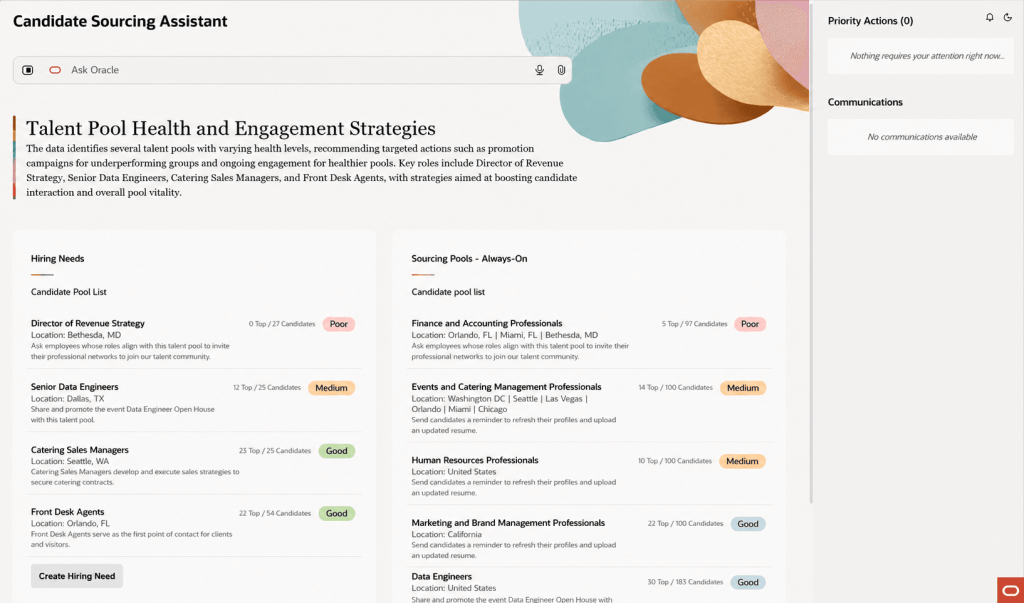
The feature that caught my attention most is Candidate Sourcing Workspace. Most recruitment teams know the pressure that comes with a new vacancy. As soon as a requisition is approved, the clock starts ticking. Recruiters begin searching, hiring managers want candidate shortlists immediately, and the race is on to identify suitable people. Oracle is trying to change that.
The new Candidate Sourcing Workspace allows recruiters to build and maintain talent pipelines before a requisition even exists. Using previous hiring patterns and anticipated demand, Oracle can help recruiters identify and nurture potential candidates in advance, creating a pool of talent ready to engage when opportunities arise.
Rather than starting every search from scratch, recruiters can draw from existing talent pools, review AI-generated candidate summaries and quickly identify the strongest matches for anticipated hiring needs. For organisations that regularly recruit into similar roles, this could have a significant impact on time-to-hire. More importantly, it allows recruiters to spend less time hunting for candidates and more time building relationships with them. That’s a much more strategic use of everyone’s time.
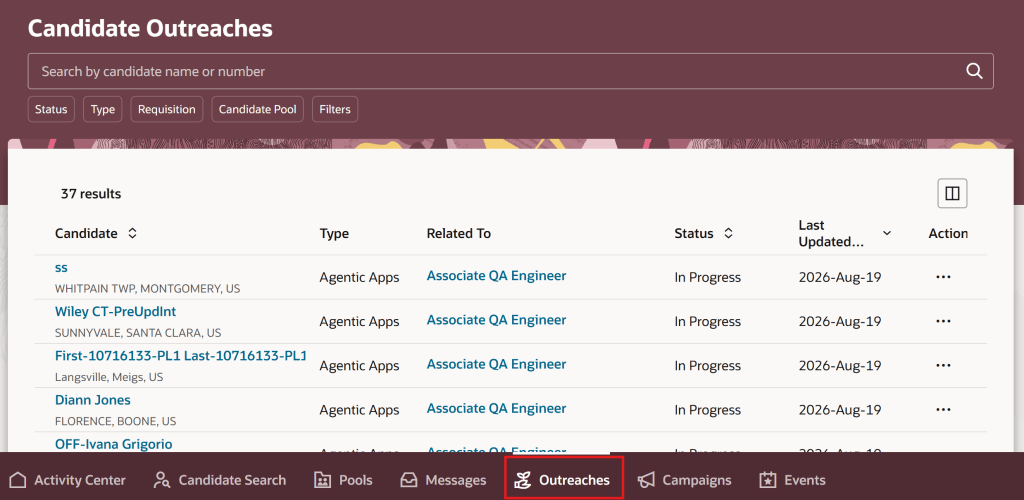
Supporting the new sourcing workspace is an enhanced outreach experience that brings together all candidate engagement activity into a single view. That might not sound particularly exciting on paper, but anyone who has ever managed a large recruitment campaign knows how easy it is for conversations to lose momentum. Candidates don’t respond immediately, follow-ups are forgotten, and promising prospects gradually disappear from the process. Oracle is addressing that problem with automated reminders, consolidated outreach tracking and AI-generated summaries of candidate responses. The result is a much clearer picture of who has been contacted, where conversations stand and what action should happen next.
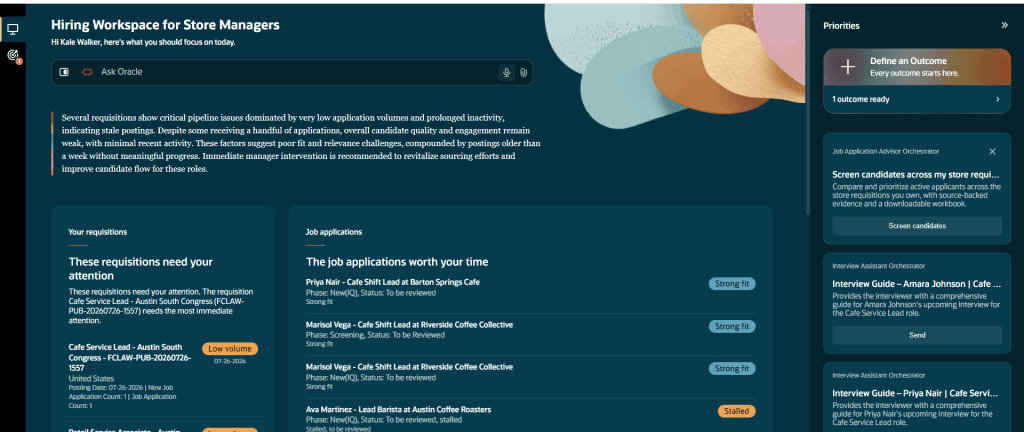
Another interesting addition is the new Hiring Workspace for Store Manager. Although initially aimed at retail organisations, the broader theme here is relevant to any organisation managing high-volume recruitment. The workspace allows managers to ask natural-language questions such as: “What requires my attention today?” or “Where is hiring off track?” and receive a structured response that highlights issues, priorities and recommended actions.
What I like about this feature is that Oracle isn’t simply presenting data differently. The platform is actively helping managers understand what requires attention and what they should do next. That may sound like a subtle distinction, but it’s an important one. Most recruitment systems already provide dashboards and reports. The challenge isn’t usually accessing information. It’s understanding what action should be taken based on that information. This workspace starts to bridge that gap.
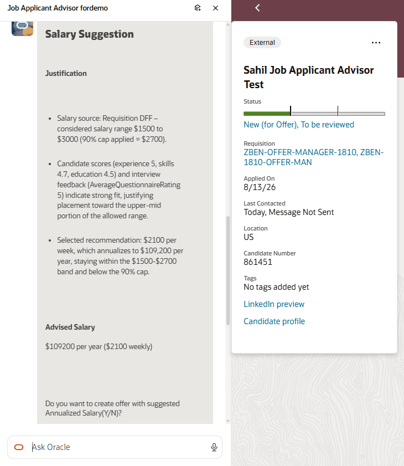
Probably the most practical AI enhancement in the release is the new Compensation Recommendation and Job Offer Creation Advisor. Creating a competitive offer has traditionally involved a mixture of salary benchmarking, internal comparisons and professional judgement. It can also be surprisingly time-consuming. Oracle’s new advisor pulls together relevant information from the requisition, candidate assessments and internal salary data to provide a recommended salary range before helping create the draft offer itself.
What particularly stood out to me is Oracle’s emphasis on explainability and guardrails. The recommendations are based on defined business criteria and Oracle explicitly states that protected characteristics such as age, gender, race and disability are not used when generating recommendations. In a world where organisations are rightly paying more attention to AI governance and pay equity, that’s an important message. Will recruiters still want human oversight? Absolutely. But reducing the administrative effort involved in preparing offers while supporting consistency of decision-making feels like a genuinely useful application of AI.
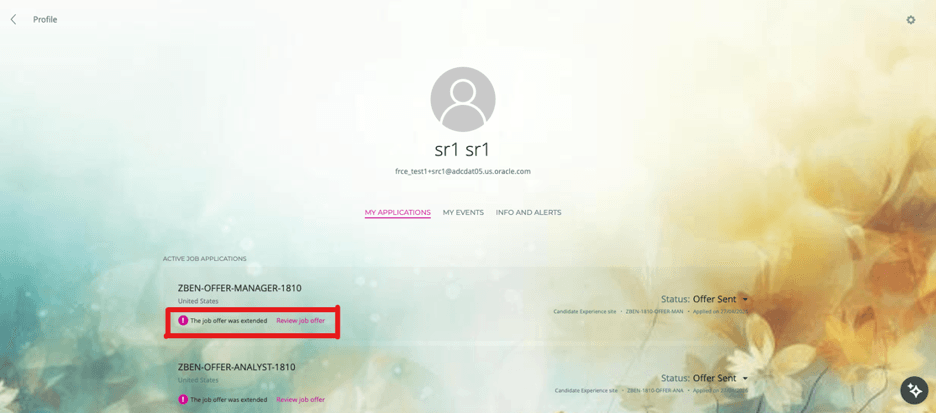
Not every valuable enhancement in 26D relies on AI. Oracle has also simplified how candidates access and respond to job offers by making offers available directly through candidate-facing experiences. External candidates can access offers through career sites, while internal candidates can access them through Opportunity Marketplace. They can review offer documentation, accept or decline offers and access completed documentation after acceptance.
It’s a relatively simple change, but one that removes a common point of friction. Offer emails can be missed, filtered or buried in busy inboxes. Giving candidates a consistent place to access offer information feels like a sensible improvement that should help remove avoidable delays from the process.
While most of the release focuses on new innovation, there is one update that deserves immediate attention. Oracle has confirmed that Digital Assistant (ODA) Fusion Apps templates for Recruiting will no longer be supported from November 2026. If your career site currently relies on Oracle Digital Assistant, now is the time to begin planning your transition. Oracle’s recommended path forward is Career Coach, which becomes the strategic candidate assistance experience going forward. This isn’t something I’d leave until the last minute. November 2026 will arrive much faster than many organisations expect, and early planning will help avoid unnecessary disruption.
What stands out to me about Recruiting in 26D is that Oracle appears to be focusing on the right problems. The most valuable features aren’t necessarily the ones generating content faster. They’re the ones helping organisations build stronger talent pipelines, make more consistent hiring decisions and remove friction from the recruitment process.
That’s why Candidate Sourcing Workspace was the feature that caught my eye. If organisations can move from scrambling to find candidates every time a requisition opens to maintaining an always-on pipeline of talent, that has the potential to transform recruitment performance far more than any chatbot ever could. There are still plenty of AI announcements in this release, but for once they feel connected to genuine business outcomes rather than being technology in search of a problem. And if you’re still relying on Oracle Digital Assistant on your career site, don’t overlook the deprecation announcement. November 2026 will arrive faster than you think.
Please note all screenshots are the property of Oracle and are used in accordance with Oracle’s Copyright Guidelines.

 K8 Mead