
Before we get started, a quick thank you to one of my blog readers. This article came about following a direct request from a customer who asked if I could explain what is happening with Oracle Learning Offerings and the new Learning Paths functionality. It’s the first time I’ve been specifically asked to write a blog on a particular Oracle Fusion topic, and after looking into it I realised they’re probably not alone in being confused.
If you’ve recently seen references to Learning Paths, heard that Offerings are going away, or wondered what Redwood means for Oracle Learning, you’re not the only one. Oracle is changing terminology, introducing new Redwood-native learning objects and modernising Learning administration at the same time. That makes it difficult to understand exactly what is changing and, more importantly, what it means for customers who have spent years building and managing learning content in Oracle Learning. So let’s unpack it.
One of the biggest sources of confusion is that two separate changes are happening at the same time. In Oracle Fusion Learning 26B, Oracle rebranded Specialisations as Learning Paths. Oracle states that the self-service learning experience now consistently presents Specialisations as Learning Paths, although administrators may still see the old terminology in some classic administration pages for the time being.
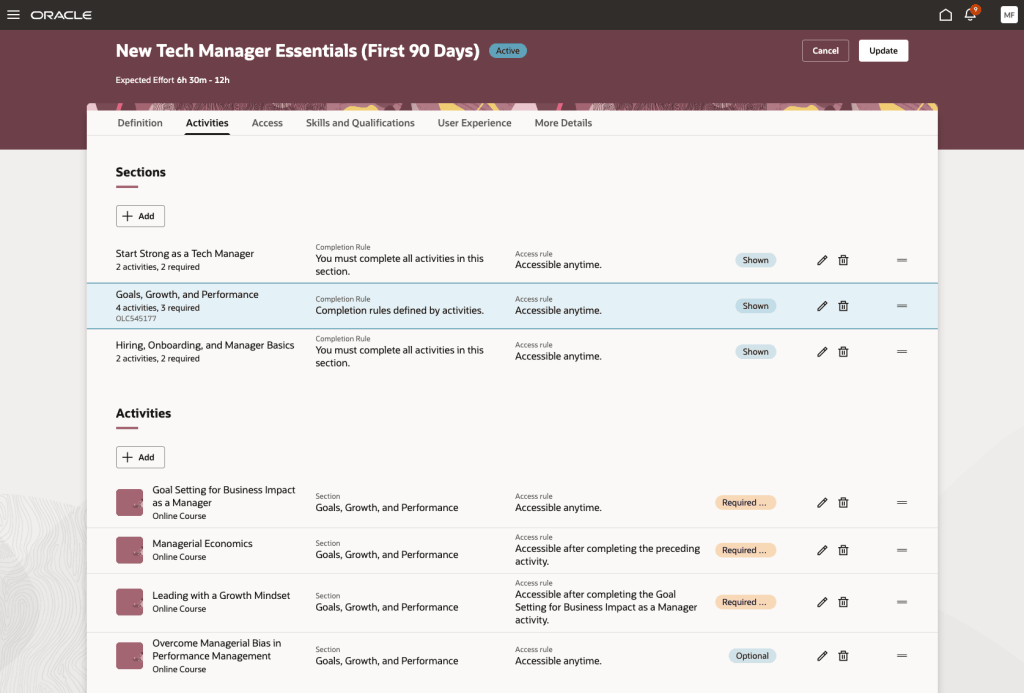
Learning Paths are therefore the new name for what many Learning administrators have known as Specialisations. They are designed to provide a structured learning journey containing multiple learning items, helping organisations create role-based, compliance-based or career-development learning programmes. They are not a direct replacement for a single Offering.
For many years, Oracle Learning followed a fairly structured hierarchy. A typical eLearning item might look something like this: Course → Offering → Activity. This provided flexibility but often resulted in multiple objects needing to be created and maintained for even relatively simple learning content. If you wanted to publish a straightforward self-paced training course, you typically found yourself creating several related objects before learners could access the content. It worked, but it wasn’t always intuitive.
Oracle has been redesigning Learning as part of its broader Redwood strategy. One of the most significant developments arrived in 24D with the introduction of the new Redwood Self-Paced Learning experience. Oracle describes this as a redesigned process that combines what were previously separate activities into a single workflow, bringing together content, activities and learning publication within one experience.
The goal is simple: reduce complexity; simplify administration; improve usability and create a more modern learner experience. Rather than forcing administrators through multiple setup steps, Oracle is moving towards a more streamlined content creation model.
So are Offerings being removed? This is where things get interesting. There is a lot of discussion within the Oracle Learning community about Offerings becoming less central to the Learning architecture. Industry commentators have suggested Oracle’s long-term direction is towards Redwood-native learning objects rather than the traditional Offering-centred model. However, what is important is separating community interpretation from Oracle’s documented position.
What Oracle has clearly documented is:
- Specialisations are becoming Learning Paths.
- Redwood Self-Paced Learning introduces a simplified approach to managing self-paced learning content.
- Oracle continues to invest heavily in Redwood Learning experiences.
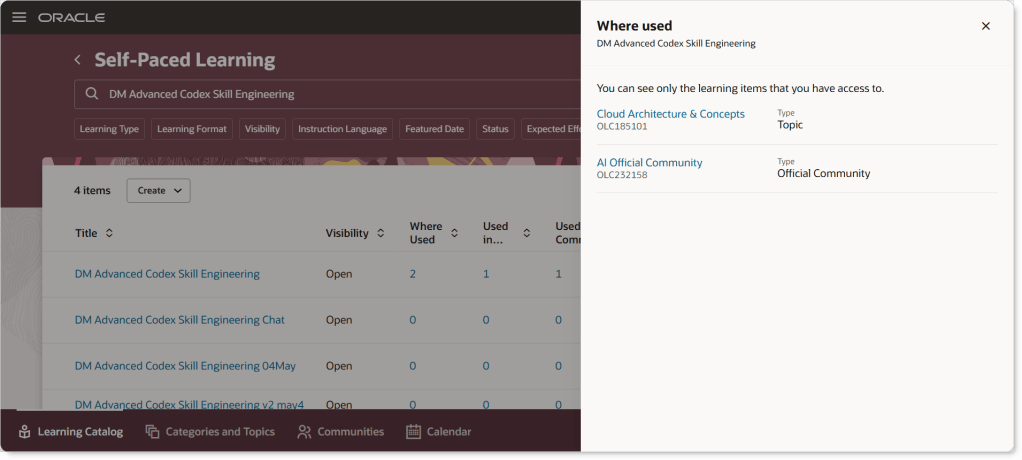
What I have not yet found in Oracle readiness documentation is a statement saying: “Learning Paths replace Offerings.” In fact, these are different concepts serving different purposes. Think of a Learning Path as a curriculum rather than an individual training item. A Learning Path might include: multiple self-paced learning items; instructor-led training; assessments; recommended learning sequences or mandatory prerequisites. In other words, Learning Paths help define what learners should complete and in what order. They are ideal for: new starter onboarding; leadership programmes; compliance journeys; certification pathways and role-based development programmes. This is broadly the same purpose that Specialisations have always served, just under a new name.
For most organisations, I don’t think there is a need to panic. My advice would be: first, start becoming familiar with Redwood Learning administration if you haven’t already. Second, review how much you rely on traditional Course and Offering structures for new content creation. Third, start thinking about Learning Paths from a learner journey perspective rather than viewing them as a replacement for individual training content. Most importantly, don’t assume that every mention of Learning Paths is related to Offerings. In many cases Oracle is simply referring to the rebranding of Specialisations rather than introducing a direct replacement for existing Offerings.
Having worked with Oracle Learning for many years, I can understand why customers are asking questions. The terminology changes are significant, and because they are arriving alongside the wider Redwood transformation it’s easy to assume everything is changing at once. What I find encouraging is Oracle’s clear focus on simplifying Learning administration. The historic Course, Offering and Activity model could be powerful, but it could also feel overly complex for straightforward learning scenarios. Redwood Self-Paced Learning is a good example of Oracle reducing that complexity and making content easier to create and maintain.
For now, my advice is simple: treat Learning Paths as the evolution of Specialisations, keep an eye on Oracle’s Redwood Learning roadmap, and avoid assuming that Learning Paths are a direct one-for-one replacement for Offerings. The reality is a little more nuanced than that.
And finally, thank you again to the customer who suggested this topic. If there are other areas of Oracle Fusion you’d like me to explore in a future blog, feel free to get in touch. It seems I’ve accidentally opened the suggestions box.
Please note all screenshots are the property of Oracle and are used according to their Copyright Guidelines.

 K8 Mead