
Most finance teams have heard the promise for years: invoices arrive, the system processes them automatically, and AP teams focus on exceptions rather than data entry. The reality has often been different. Supplier formats vary, invoice data is inconsistent, and teams still spend significant time correcting, validating and chasing issues before invoices can be paid.
Oracle’s latest Payables Agent capabilities feel like a more realistic attempt to solve that problem. What makes this release interesting isn’t a single AI feature. It’s how Oracle has combined document recognition, compliance controls and operational monitoring into a single process.
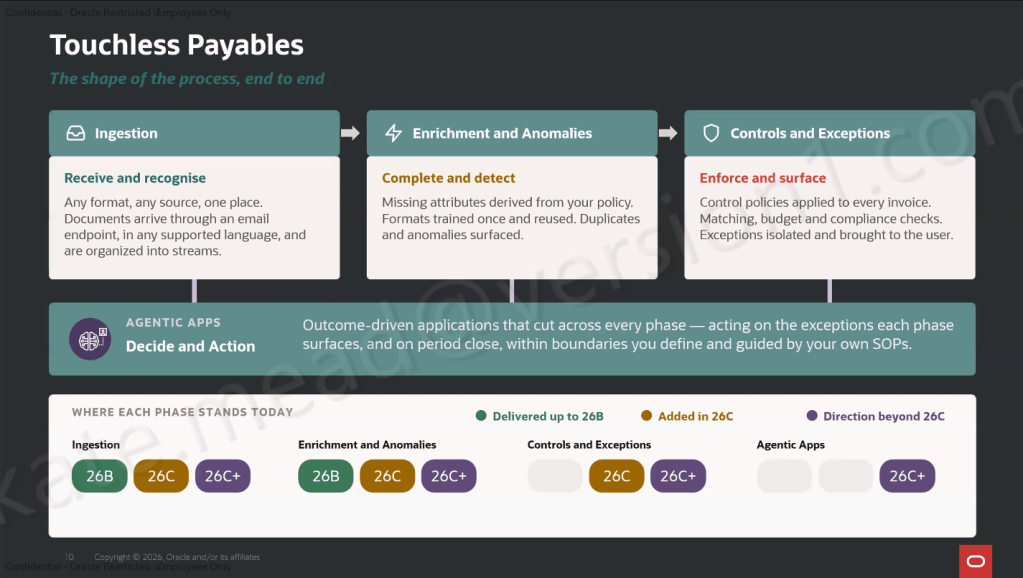
One of the biggest changes is Oracle’s move from Intelligent Document Recognition (IDR) to Document IO. For customers, the important point isn’t the technology change. It’s the outcome. Oracle can now recognise a broader range of invoice formats, including handwritten invoices, while continuing to benefit from existing IDR learning.
When new supplier formats arrive, users can map fields once and allow future invoices to be processed automatically. Functional teams can manage this themselves without relying on technical development. That has the potential to reduce one of the most common bottlenecks in invoice processing: onboarding new suppliers.
What interested me most wasn’t document recognition. It’s Oracle’s shift towards exception-based processing. Rather than asking AP teams to review every invoice, Oracle is attempting to surface only the transactions that genuinely need attention. That includes duplicate detection, policy validation, account coding checks and anomaly identification before invoices reach the payment stage. For organisations with high invoice volumes, that’s where the real efficiency gains are likely to be found.
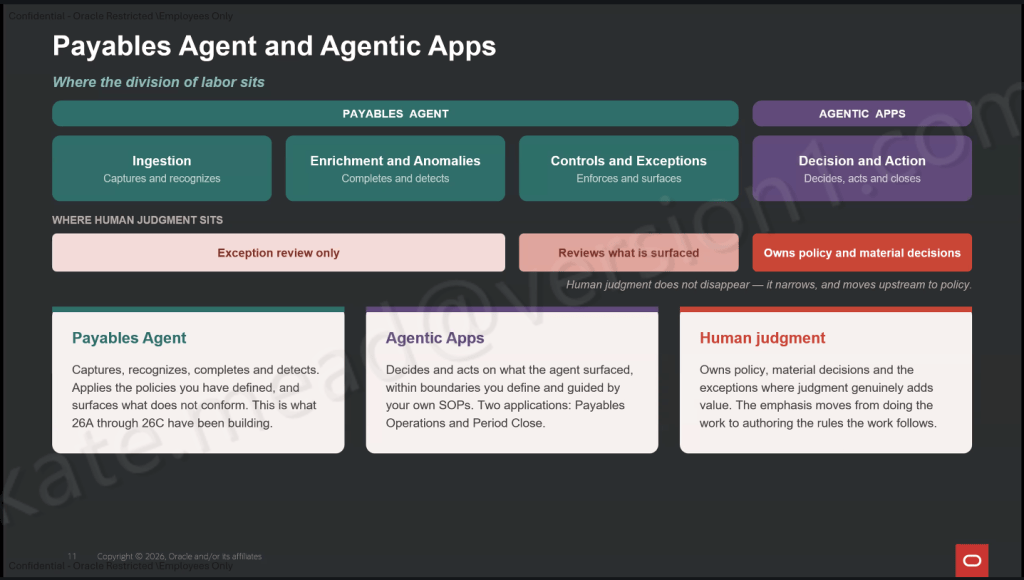
One capability that may be overlooked is Compliance and Control. This sits alongside existing Oracle defaulting rules rather than replacing them. It helps fill gaps by completing missing information and continuously assessing invoices against defined policies. The result is fewer manual reviews and more consistent application of controls.
For finance leaders focused on auditability and compliance, this could prove just as valuable as the AI-powered document recognition itself. The success of Payables Agent won’t be determined by how impressive the technology sounds. It will depend on three things:
- The quality of the document training.
- How well compliance policies are configured.
- Whether teams embrace exception-based working practices.
Get those right and AP teams can spend less time entering data and more time resolving issues that genuinely need human judgement.
What Oracle is building here feels less like another AI announcement and more like a practical evolution of Accounts Payable automation. The combination of Document IO, Compliance and Control, and the Payables Operations Workspace gives organisations a clearer path towards touchless invoice processing than we’ve seen before. It’s not completely hands-off, and it still requires thoughtful configuration. But for organisations looking to reduce manual effort while improving control and visibility, there’s plenty here worth exploring.
Please note that all screenshots are the property of Oracle and are used in accordance with Oracle’s Copyright Guidelines.


